
Everything You Need to Know About Italian Train Travel
Italy trains are one of the best ways to experience the country — connecting ancient cities, coastal towns, and Alpine regions with a network that is fast, frequent, and easy to book. Whether you're taking an Italian train between Rome and Milan, exploring Tuscany on regional trains, or moving between Venice, Florence, and Naples on the main high speed corridor, trains in Italy make it easy to travel the country without a car. Italian train travel is served by modern rolling stock, comfortable seating, free WiFi on most services, and a ticketing system accessible in English through HighSpeedTrains.
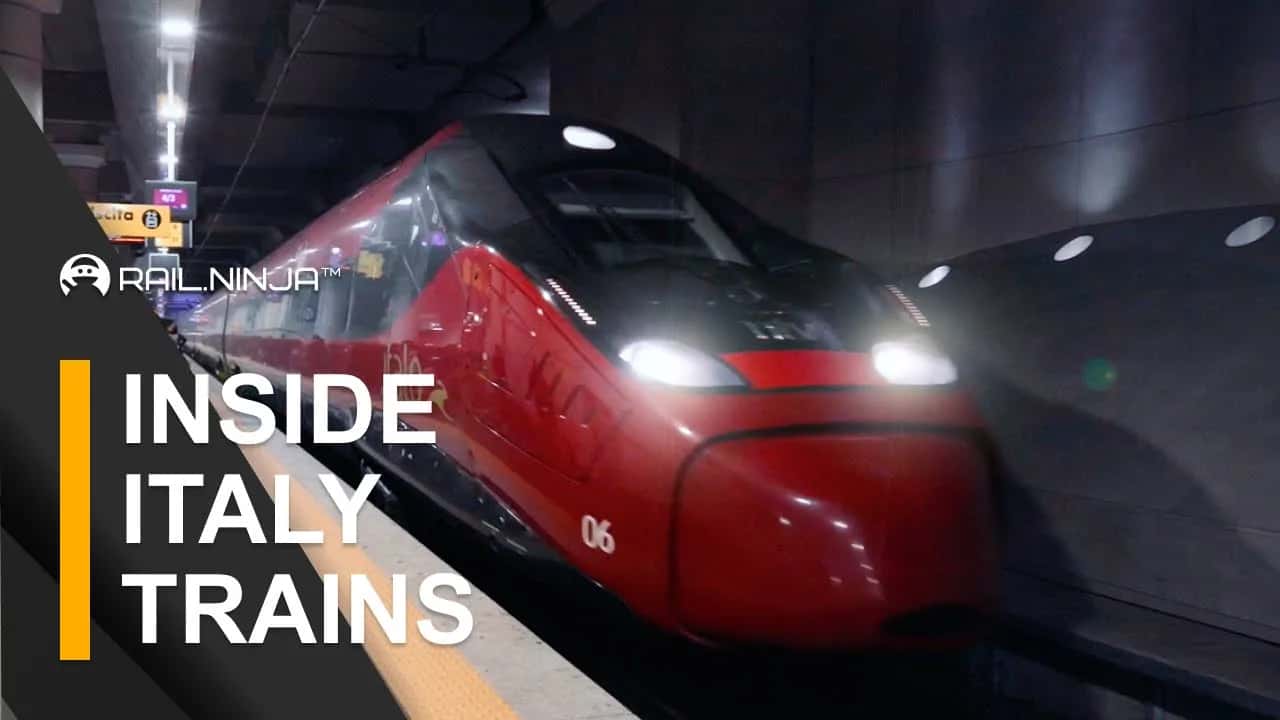
The Italian train network covers the entire peninsula from Turin and Milan in the north to Palermo in the south, with high speed rail forming the backbone of intercity travel. The flagship services are Le Frecce — Italy's family of high speed trains operating on dedicated high speed lines — which reach a top speed of 300 km/h and connect major cities along the Bologna, Florence, Rome, and Naples corridor in journey times that make flying unnecessary. Alongside Le Frecce, Italo Evo trains offer a high speed alternative on the same routes, with a modern onboard experience and a range of ticket options.
Beyond high speed rail, trains in Italy also include Intercity trains on conventional lines and a broad network of regional trains serving smaller towns and destinations across all regions — meaning the vast majority of the country is reachable entirely by rail.
Italian High Speed Trains — Le Frecce
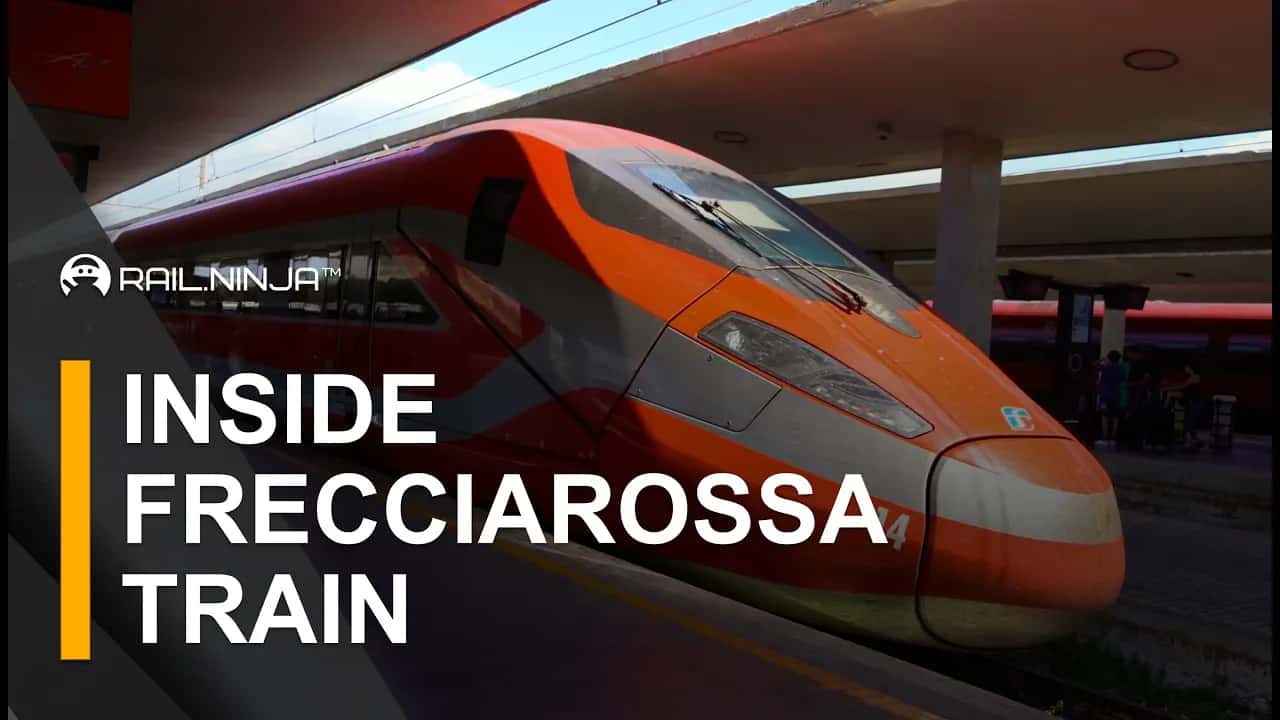
Le Frecce — meaning "The Arrows" — are Italy's high speed trains and the centrepiece of Italian high speed rail. They run on dedicated high speed lines across the main north–south corridor and are divided into three categories, each with a different maximum speed and service level.
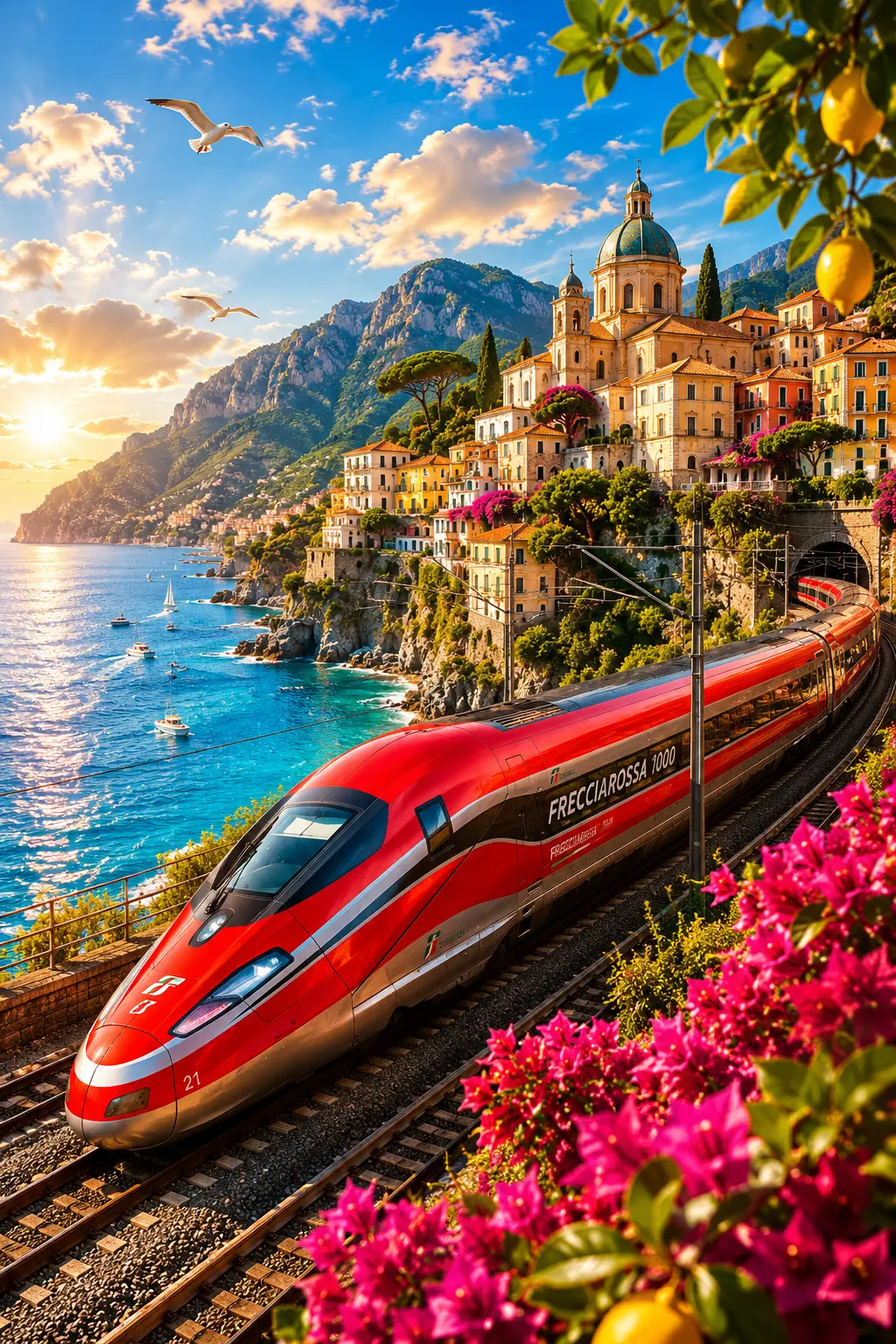
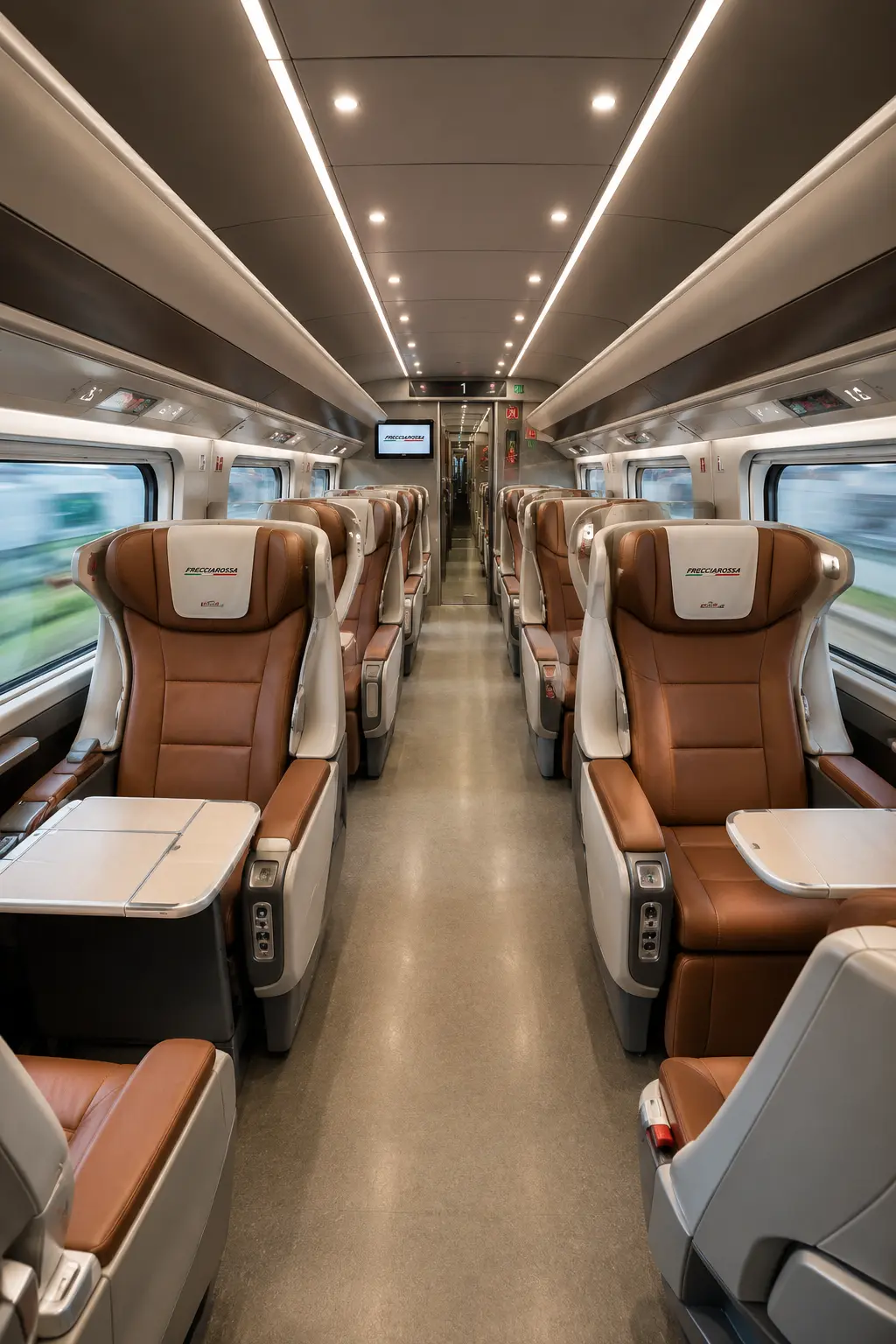
Frecciarossa — the Red Arrow — is the fastest train in Italy, with a maximum operating speed of 300 km/h and an average speed that makes it the quickest way to travel between Milan, Bologna, Florence, Rome, and Naples. Frecciarossa trains are equipped with four travel classes — Standard, Premium, Business, and Executive — and offer free WiFi, power sockets, a restaurant car, and at-seat service in upper classes. The Milano Centrale to Rome journey takes as little as 2 hours 55 minutes at high speed.
Frecciargento — the Silver Arrow — reaches a maximum speed of 250 km/h and operates on both dedicated high speed lines and conventional lines, making it ideal for routes that include cities not directly on the main high speed corridor. Frecciargento trains offer first class and second class seating with a comfortable onboard environment and a reliable high speed service throughout.
Frecciabianco — the White Arrow — runs on traditional lines using modern technology, connecting cities in areas not yet served by high speed infrastructure and offering a quality rail travel experience on conventional line routes across the country.
Popular Le Frecce routes include Rome to Milan, Milan to Venice, Rome to Florence, Florence to Venice, and Venice to Florence.
Popular questions
The fastest trains in Italy are the Frecciarossa, operating on dedicated high speed lines with a maximum operating speed of 300 km/h. These modern high speed trains connect Milan, Bologna, Florence, Rome, and Naples at an average speed that makes them significantly faster than travelling by car or domestic flight when airport time is included. The Rome to Milan journey takes under three hours, and Naples can be reached from Rome in just over one hour on the high speed service.
Le Frecce trains are Italy's high speed train family, divided into three categories. Frecciarossa — the Red Arrow — is the fastest, reaching 300 km/h on dedicated high speed lines between major cities including Milan, Florence, Rome, and Naples. Frecciargento — the Silver Arrow — operates at up to 250 km/h on both high speed lines and conventional lines, serving a wider range of destinations across the Italian rail network. Frecciabianco — the White Arrow — runs on traditional lines using modern technology, connecting cities not yet reached by high speed infrastructure.
The easiest way to buy train tickets in Italy is to book online in advance through HighSpeedTrains. You'll receive an instant e-ticket, choose your exact seat, and avoid queues at the station. Booking in advance is particularly important on high speed routes like Rome to Milan, Milan to Venice, and Florence to Rome, where seats on popular departures fill up quickly. Seat reservations are compulsory on all Le Frecce and Italo Evo services and are included automatically at the time of booking.
Yes — Italy has international train connections to several destinations across Europe. High speed and overnight international trains link Milan and Rome with Paris, Zurich, Vienna, and Barcelona, with many services running through the Alps on scenic mountain routes. These international trains make it possible to travel across much of Europe without flying, with instant e-tickets and seat selection available at the time of booking.
A Eurail pass is valid on many trains across the Italian network, including Le Frecce high speed services and regional trains. Seat reservations are still compulsory on high speed trains including Frecciarossa and Frecciargento, and reservation fees apply separately even with a pass. You can add seat reservations for all services that require them at the time of purchase.
Italian high speed trains are among the best-equipped in Europe. Frecciarossa trains offer free WiFi, power sockets at every seat, air conditioning, and a restaurant car serving hot meals, snacks, and beverages throughout the journey. First class and Executive class add wider seats, extra legroom, complimentary at-seat service, and a quieter onboard environment. Italo Evo trains offer free WiFi, comfortable seating, and a café area on board. On regional trains, facilities vary by route — services are reliable and well suited for shorter journeys across Italy.
Seat reservations are compulsory on all Le Frecce high speed trains — Frecciarossa, Frecciargento, and Frecciabianco — as well as on Italo Evo services. You cannot board these trains without a valid reservation. On Intercity trains, reservations are strongly recommended and are typically included in the ticket. Regional trains generally operate without compulsory reservations on shorter routes. Seat reservations are included automatically for all services that require them when you book through HighSpeedTrains.
Italian high speed train tickets are typically released up to 120 days before departure, and seats on popular routes like Rome to Milan, Milan to Venice, and Rome to Florence fill up well ahead of travel. Booking in advance gives you the widest choice of departure times and travel classes. Many tickets are non-refundable, so confirming your travel dates before purchasing is advisable. For more flexibility, exchangeable fare types are available and clearly indicated at the time of booking.
Yes — most trains in Italy include a child offer for younger travellers. Children under a certain age travel free when accompanied by an adult on many Italian train services, and reduced fares apply for older children depending on the train type. The adult fare is used as the base from which child rates are calculated. Child ticket options are displayed alongside adult fares so you can select the right ticket for everyone in your group at the time of booking.
Italy's high speed network makes city-to-city rail travel fast and convenient. Rome to Milan takes under three hours on a Frecciarossa, covering over 500 km. Milan to Venice takes around two hours 25 minutes, Rome to Florence around one hour 25 minutes, and Florence to Naples around three hours — all on dedicated high speed lines. Journeys between two cities that once took five hours or more on conventional lines now take well under three hours on modern high speed trains. For connections beyond the main corridor, Intercity trains and regional trains provide comfortable onward links to smaller destinations.
Italy's high speed rail network is one of the most developed in Europe, with dedicated high speed lines running along the main north–south corridor connecting Turin, Milan, Bologna, Florence, Rome, and Naples. These lines allow trains to reach speeds of up to 300 km/h, cutting journey times dramatically compared to conventional line travel. The network is served by both Le Frecce trains and Italo Evo, giving travellers a choice of operator on the most popular train routes. From the main corridor, connections branch out to Venice, Verona, Genoa, and other major cities via a combination of high speed lines and upgraded conventional routes. Plan your Italian train travel and book all routes through HighSpeedTrains.