
Malaga to Madrid Trains
Malaga to Madrid Trains
Taking the high speed train is the fastest and most comfortable way to travel from Málaga to Madrid. The Málaga to Madrid train covers the 417 km long distance route in as little as 2 hours 44 minutes, linking the Costa del Sol with the heart of the Spanish capital. The high speed line between Madrid and Málaga, inaugurated in 2007, runs through Antequera and Córdoba, where AVE trains reach speeds of up to 310 km/h, giving an average speed of around 150 km/h including stops.
With trains departing from early morning until the evening, the Málaga to Madrid route is served by several train companies: Renfe AVE, Avlo, Iryo and OUIGO. This competition means more departures per day, cheaper fares and a better choice of comfort classes, from low-cost seats to first class with gourmet food. Train travel also produces far fewer CO₂ emissions than flying or driving, making it the greenest way to travel between the two cities.
All high speed services from Málaga to Madrid depart from Málaga María Zambrano station, located about 15 minutes' walk from the historic city center and linked to the airport by Cercanías public transport. The station has cafés, shops and a Vialia shopping centre, so it's easy to grab coffee or tapas before your journey starts. Remember to arrive at least 30 minutes before departure, as luggage passes through a quick security check. Trains arrive at Madrid Puerta de Atocha, the city's main station, located right in the city center next to the Prado Museum and a short metro ride from the Royal Palace and Plaza Mayor. Some services continue to Chamartín, in the north of the capital.
The average journey time on the Málaga to Madrid train is around 2 hours 50 minutes. The fastest train takes 2 hours 44 minutes in our current timetable, while the longest trip takes just over 3 hours 10 minutes, as journey time can vary depending on the number of stops at Antequera, Puente Genil and Córdoba. That makes the train journey much shorter than driving, which takes around 5 hours by car, or taking the bus, which needs 6 to 7 hours. Flying may look shorter on paper, but once you add airport transfers, security and boarding, the high speed train is usually the quicker option from city center to city center. Remember that you stay seated the whole time, with free WiFi and power outlets, meaning you can work or relax on board and arrive in Madrid ready to start your day.
The cheapest way to get from Málaga to Madrid by train is to book a low-cost service on Avlo trains or OUIGO trains in advance. Promotional fares start from around €7 to €15, and fares on our booking page start from £27. The ticket price can vary depending on the day, time and train companies you choose: the average price is around €52 when bought on the day, while booking about 35 days in advance often gives the best price. The cheapest tickets sell out quickly for Friday and Sunday departures and during holidays, so plan your next trip early. Discounts also help: on Renfe trains, children aged 4 to 13 get 40% off, and there are reduced fares for seniors, large families and young travelers. A round ticket can also save money compared with two single tickets, and flexible fares let you change or request a refund for an additional fee.
To find cheap train tickets, search and compare all operators on one page. On the Highspeedtrains.com website you can check train times and every ticket price for your date, compare Renfe AVE, Avlo, Iryo and OUIGO side by side and buy train tickets in a few clicks. Our search table shows the cheapest option for each departure, making it easy to pick the deal that suits your budget. Train tickets are sent by email, and you simply show the QR code on your phone when you board. Booking high speed train tickets in Spain several weeks or even months in advance is recommended: for the best price, book as soon as sales open, choose a midday or late evening departure, and avoid the busiest days.
Four brands from three train companies operate high speed services on the Málaga to Madrid route. Renfe, the Spanish national operator, runs the premium AVE trains and the low-cost Avlo, and operates the longest high speed network in Europe and one of the largest in the world. Avlo trains have only one class, with extras such as seat selection or a larger bag available if you pay extra. Iryo trains, operating since late 2022, offer modern carriages designed with minimal environmental impact and three comfort classes. OUIGO, the French low-cost operator, runs double-decker trains with plenty of seats and low fares. All the different trains share the same line and stations, so the main differences are price, comfort and onboard services rather than speed.
Yes. All high speed services on this route are direct trains, so you don't need to change trains. Every Málaga to Madrid train runs from Málaga María Zambrano station to Madrid Puerta de Atocha without transfers, and some continue to Chamartín. There are 13 departures per day on average and up to around 20 trains per day on the busiest days, with trains departing roughly every 60 to 90 minutes. Direct trains are the best way to travel with children, pets or lots of luggage, as you stay in the same seat for the whole ride. From Madrid Puerta de Atocha there are easy onward connections to Barcelona, Zaragoza, Alicante and the rest of Spain.
The first train from Málaga to Madrid leaves at 05:47 and the last train departs at 20:00. In the morning, six trains leave between 05:47 and 11:56, making it easy to spend a full day in the capital, while five afternoon trains depart between 14:22 and 17:52 and two evening trains leave between 18:47 and 20:00. The first train arrives in Madrid before 09:00, ideal for business meetings, and the last train arrives shortly after 23:00. Train times vary depending on the day of the week and season, so always check the schedule for your date before you book.
Onboard services vary depending on the operator. AVE trains offer a buffet carriage serving hot and cold drinks, coffee, snacks and light meals, and all AVE services include free WiFi, power sockets and onboard entertainment through the PlayRenfe platform, with films and TV series you can stream on your own device. Iryo trains provide a catering service with food served at your seat, plus free Wi-Fi and entertainment in every class. OUIGO trains offer a café-bar with snacks and cold drinks, while Avlo trains have vending machines and a simple snack service. On some services, a trolley service passes through the carriages. All trains have air conditioning, power outlets, accessible facilities and luggage areas, and guide dogs travel free.
Standard class on the Málaga to Madrid train offers comfortable reclining seats, legroom, power outlets and free WiFi, and is more than enough for a trip under 3 hours. On Renfe AVE, the Básico and Elige fares correspond to standard class, while Confort class gives wider seats in a 2+1 layout with extra legroom, and Prémium adds meals and drinks served at your seat. Iryo offers Inicial class, Singular and Infinita, the top tier with gourmet food and added comfort. OUIGO has two comfort classes, Essential and Plus, with more legroom in Plus. Avlo trains have only one class. First class is worth the additional cost if you want space to work or prefer a quieter carriage.
Luggage rules vary depending on the operator. Renfe AVE allows up to three items per person, including one cabin suitcase, one large bag and a small personal item. Avlo includes one piece of hand luggage within the maximum dimensions set by the operator, and a larger suitcase costs an additional fee, while OUIGO and Iryo include hand luggage and let you pay extra for bigger bags. Musical instruments are allowed if they fit the luggage allowance, a folded bike can travel as luggage on most services, and a small pet in a carrier is allowed on AVE trains, often for an additional fee. Remember to check the latest rules before your journey starts.
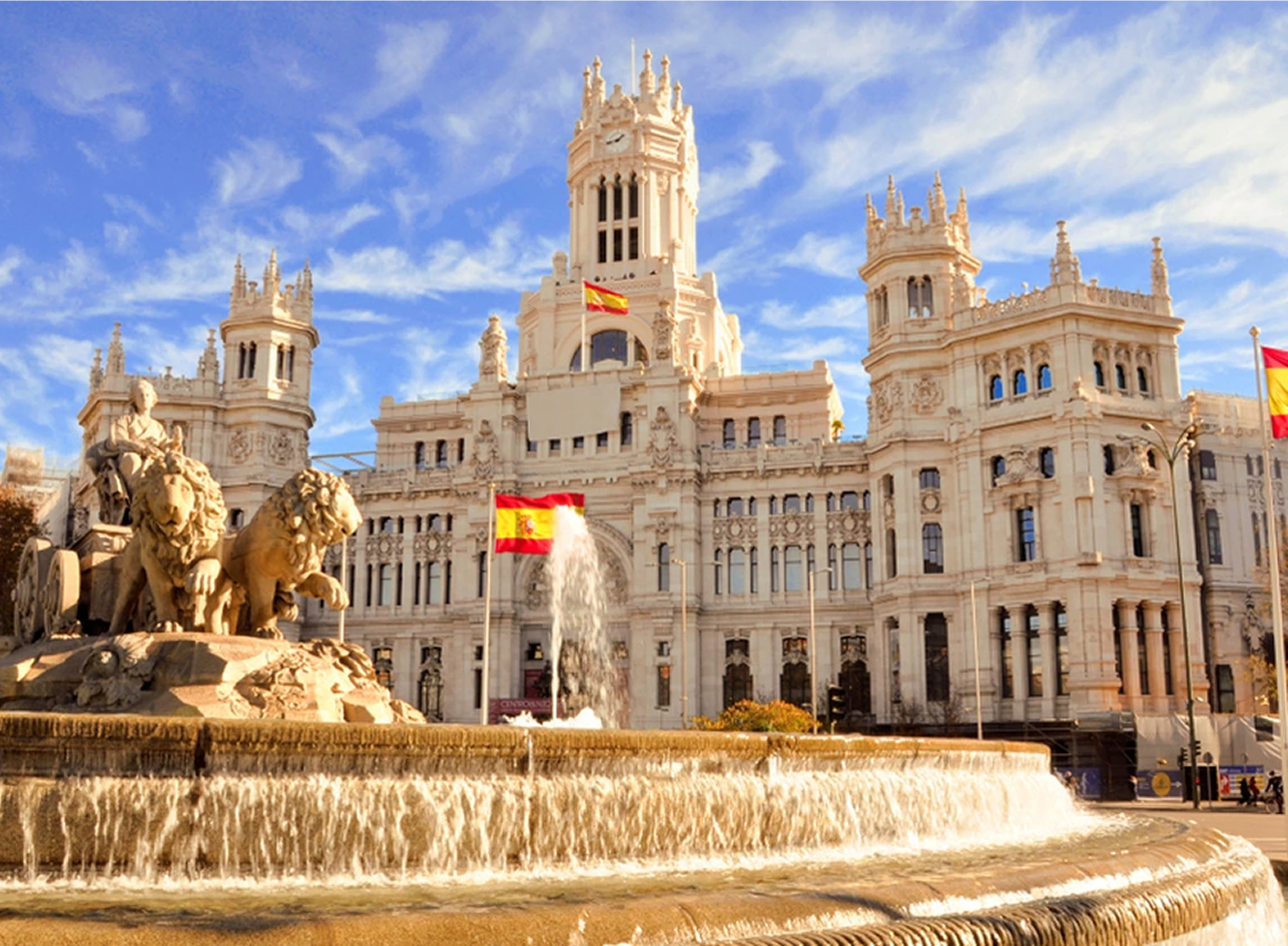
Trains arrive at Madrid Puerta de Atocha, the capital's largest station, located on the edge of the city center. From Madrid Puerta de Atocha, public transportation makes it easy to reach the rest of the city: the metro and Cercanías trains connect to Sol, Gran Vía and Chamartín in minutes, and many buses and taxis wait outside. The Royal Palace and Plaza Mayor are around 25 minutes on foot or a short metro ride away, while the Prado, Reina Sofía and Retiro Park are right next to the station. It's the ideal place to start exploring the culture, tapas bars and museums at the heart of the Spanish capital.