
Vienna to Salzburg Trains
Vienna to Salzburg Trains
Trains from Vienna to Salzburg take 2h 25m, departing from Vienna's central station (Wien Hauptbahnhof, near Südtiroler Platz) and running roughly every 30 minutes throughout the day; buy tickets in advance through the station or online to reserve a seat and enjoy a bit of a discount compared to buying on the day, since fares are subject to change and typically rise closer to the travel date. Standard and First Class both include free Wifi and power outlets for the journey. For comparison, direct flights from Vienna to Salzburg take about 50 minutes, with Flynas a popular airline for this route and tickets starting at €30 when booked early; Vienna Airport has an 80% on-time performance rate, so it's worth arriving at least two hours before your flight to avoid missing it, especially during peak months, which require earlier airport arrival times — January is the busiest month for flights to Salzburg, while November is the quietest, giving more availability and often better fares. Driving from Vienna to Salzburg covers 298.1 km, a long journey best suited to those who want flexibility over speed, and buses from Vienna to Salzburg take around 11h 30m on average, with FlixBus operating this route and bus tickets starting at €34, though the average bus ticket price runs closer to €62 — rideshare options cost around €15 and take 3h 51m, a solid middle-ground option if public transport timing doesn't line up with your next trip.
Vienna is known for its imperial history and grand boulevards, with a large number of world-class museums packed into the MuseumsQuartier, a major cultural district, alongside Schönbrunn Palace and Hofburg Palace as key attractions. The city is ideal for those seeking extensive cultural exploration, and the Vienna State Opera remains a leading venue for classical music performances, complemented by a rich coffeehouse culture known for its traditional cafés — expect to spend 3 to 5 days here to properly cover the main sights. Salzburg, by contrast, is compact and easily explored on foot, with a cultural scene heavily influenced by Mozart; Getreidegasse is known for hosting Mozart's Birthplace, and Salzburg is recognized as the birthplace of Wolfgang Amadeus Mozart himself.
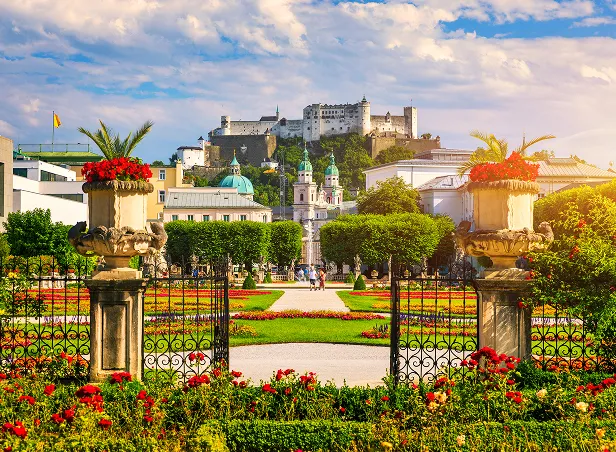

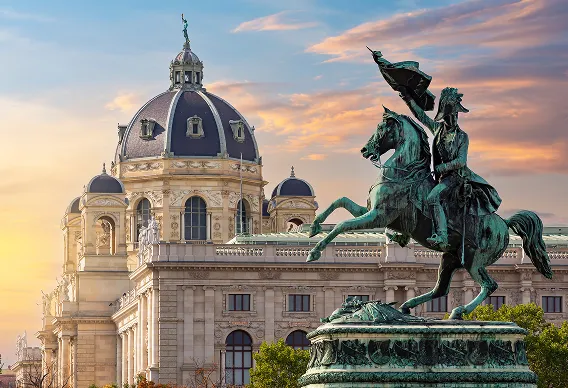
The distance from Vienna to Salzburg by train is 295 kilometres (approximately 183 miles), connecting Austria's imperial capital with the birthplace of Mozart along one of the country's most frequently served and well-run intercity rail corridors. Both ÖBB and Westbahn use Salzburg Hauptbahnhof as their arrival point, which is located in the heart of the city and within easy walking or tram distance of Salzburg's historic Old Town, the Hohensalzburg Fortress, and Mirabell Palace. Driving the same distance takes around two hours and 45 minutes under normal conditions, but introduces the complexity of motorway tolls on the Austrian A1, parking in Salzburg's congested city centre, and the kind of traffic unpredictability that the train entirely eliminates. With 41 average daily departures running from 04:57 through to 23:28, the Vienna to Salzburg corridor is one of the most intensively served intercity routes in Austria, and choosing the right departure time is simply a matter of convenience rather than careful planning.
The shortest travel time on the Vienna to Salzburg route is 2 hours and 25 minutes, achieved by the fastest ÖBB Railjet express services. ÖBB runs two Railjet trains every hour between Vienna Hauptbahnhof and Salzburg Hauptbahnhof, with express services completing the journey in 2 hours and 22 minutes and standard services taking around 2 hours and 53 minutes, while Westbahn runs double-deck trains twice an hour from Vienna Westbahnhof taking approximately 2 hours and 28 minutes. With 41 average daily departures, the first train leaving Vienna at 04:57 and the last at 23:28, the timetable is one of the most generous of any intercity route in Central Europe, making it easy to plan a day trip or a flexible one-way journey without being locked into a single departure. Both operators offer free Wi-Fi, power outlets at all seats, and comfortable seating across multiple classes, making the two and a half hours a relaxed and productive window of travel rather than an inconvenience.
Tickets on the Vienna to Salzburg route start from $43 when booked in advance, with fares varying considerably depending on the operator, class of travel, and how early you book. ÖBB's advance-purchase Sparschiene fares start from around $22 in second class or $33 in first class, but these are specified-train-only fares with limited availability at each price level and are non-refundable, so flexibility comes at a premium. Westbahn advance tickets can be as low as $15 and are available to purchase right up to one minute before departure via the app, making the private operator a particularly competitive option for budget-conscious travellers. The practical approach is to compare both operators on your specific travel date: ÖBB offers the restaurant car and slightly more premium experience at higher classes, while Westbahn offers competitive fares and its distinctive double-deck carriages. Friday is generally the cheapest day to travel on this route, while Thursdays tend to attract the highest average prices.
Both operators run excellent trains and neither will disappoint, but the differences are worth knowing before booking. ÖBB's Railjet departs from Vienna Hauptbahnhof, the city's main station with metro connections and some services extending directly to and from Vienna Airport, while Westbahn departs from Vienna Westbahnhof, which may be more convenient depending on where you are staying in the city. In Salzburg, both operators arrive at Salzburg Hauptbahnhof. The Railjet has a restaurant car with at-seat service in first and business class, while Westbahn trains have vending machines for drinks and snacks rather than a staffed dining car. The Westbahn's double-deck carriages offer a notable advantage for scenery: sitting on the upper deck gives a significantly better view above the noise barriers that line much of the route, making it the preferred choice for travellers who want to make the most of the window views. For the fastest connection with the most onboard amenities, the Railjet wins; for price and upper-deck scenery, Westbahn has the edge.
The scenery on the fast direct route between Vienna and Salzburg is pleasant but not spectacular on the standard route, with hills, fields, and open Austrian countryside rather than mountains for the majority of the journey. The opening stretch out of Vienna passes through the flat plains of Lower Austria before the landscape gradually becomes more rolling and wooded as the train approaches Upper Austria. Around one and a half hours into the journey, sitting on the left side of the train gives the first glimpses of alpine grandeur as the distant peaks begin to appear on the horizon, growing steadily closer as Salzburg approaches. A practical note for travellers wanting the best views: much of the route runs alongside noise barriers, and the Westbahn's upper deck gives a considerably better vantage point above them — a detail worth knowing before you choose your seat. For travellers not in a hurry, an alternative scenic southern route via the UNESCO-listed Semmering Railway and the Tauern Railway through the mountains of southern Austria takes considerably longer but delivers a dramatically more spectacular journey through the Alps, and is worth considering for anyone for whom the scenery is as important as the destination.
Yes — ÖBB's Railjet runs directly between Vienna's central station and Salzburg Hauptbahnhof, with no need to change trains; the journey takes 2h 25m, with departures roughly every 30 minutes throughout the day from Wien Hauptbahnhof near Südtiroler Platz.
Generally, yes — with tickets starting around €20, the train beats both flying and the bus on value, since the average bus ticket price runs €62 for a journey of around 11h 30m, a long journey compared to the train's roughly 2.5 hours.
Not really, despite the short 50-minute flight time with airlines like Flynas — Vienna Airport has an 80% on-time performance rate, and arriving two hours early, plus transfer time on both ends, usually erases any time saved compared to the direct train.
Buses from Vienna to Salzburg take around 11h 30m on average, with FlixBus operating the route and fares starting at €34, while driving covers 298.1 km — both are considerably slower than the train, and rideshare at around €15 for 3h 51m can be a useful middle option if train timing doesn't work.
The best duration for a visit to Vienna is 3 to 5 days, given its large number of world-class museums and attractions, while Salzburg, being compact and easily explored on foot, is well covered in 2 to 3 days.
Vienna is known for its imperial history and grand architecture, with Schönbrunn Palace and Hofburg Palace as key attractions, alongside the MuseumsQuartier, a major cultural district packed with galleries and museums, and a rich coffeehouse culture worth savoring over a slow afternoon.
Salzburg's cultural scene is heavily influenced by Mozart, with Getreidegasse hosting Mozart's Birthplace and Hohensalzburg Fortress standing as a notable medieval castle above the historic center, a UNESCO World Heritage Site, alongside Mirabell Palace and Gardens, famous for their beauty.
Travel options for Vienna - Salzburg include the direct train, flying, driving, and the bus, with the train generally the best way to complete the journey without dealing with airport security, traffic, or long waits — of course, each option has trade-offs depending on budget and how much time you have.
Yes — Vienna Airport offers connections onward to Germany, the USA, and beyond, making it a practical first step for travelers combining a Salzburg trip with a longer international itinerary rather than flying in and out of Salzburg directly.
Central Station (near Südtiroler Platz) is Vienna's main rail hub, easily reached by public transport, including the U1 subway line, trams, and buses, making it simple to catch a ride to Vienna Station well ahead of departure without worrying about traffic.
Booking last minute on this route can get expensive, so it's worth keeping an eye out for deals and booking a few weeks ahead rather than waiting until the week of travel, especially during busier months like October.
The best time to travel is generally outside peak season, both for lower prices and to sign up for a seat reservation without issue — most train tickets allow you to cancel or change plans for a small fee, though it's worth checking the fare conditions before booking to confirm.