
Everything You Need to Know About Train Travel in South Korea
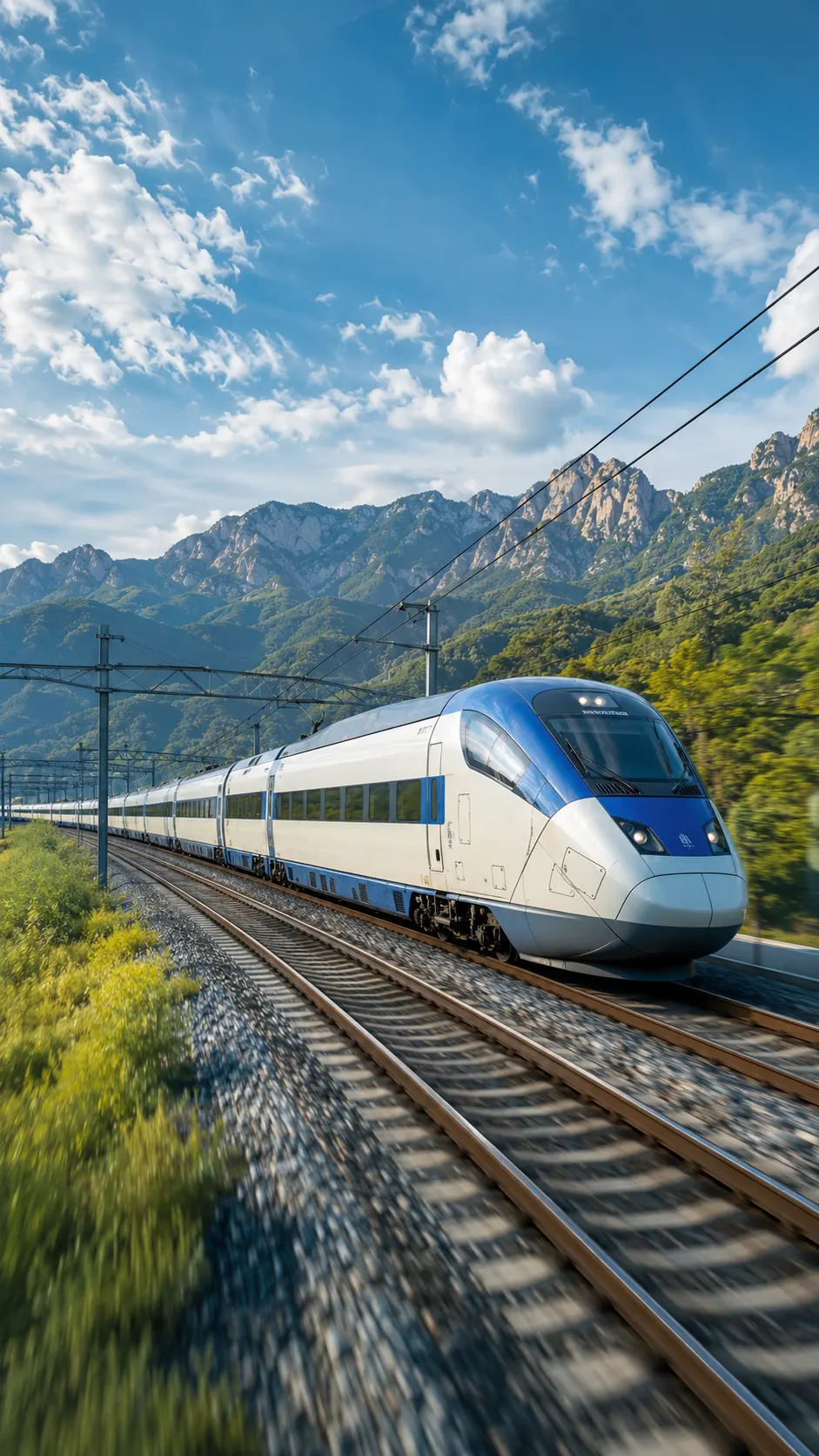
South Korea trains are one of the fastest, most efficient, and most visitor-friendly ways to explore this extraordinary East Asian destination — shooting through mountain valleys, past ancient temples, along dramatic coastlines, and between glittering modern cities in a way no road or flight can match. Whether you're booking train tickets on KTX trains from Seoul to Busan, riding the KTX-Eum to the scenic east coast via the Gangneung Line, or exploring the historic Gyeongbu Line south toward Daegu and Gyeongju, trains in South Korea offer journeys that are as rewarding as the destinations themselves.
South Korea's railway network radiates from Seoul Station, connecting major cities across the country and providing fast, comfortable rail links to Busan, Daejeon, Daegu, Gwangju, Gyeongju, and Ulsan. The Korea Train eXpress — better known as KTX — has operated since 2004 and is run by Korail, South Korea's national railway operator. KTX high speed trains reach a maximum speed of up to 305 km/h, making it possible to travel from Seoul to Busan in as little as 2 hours 15 minutes. The newest KTX-Cheongryong, launched in May 2024, reaches 320 km/h — making it the fastest train on Korea's high speed rail network.
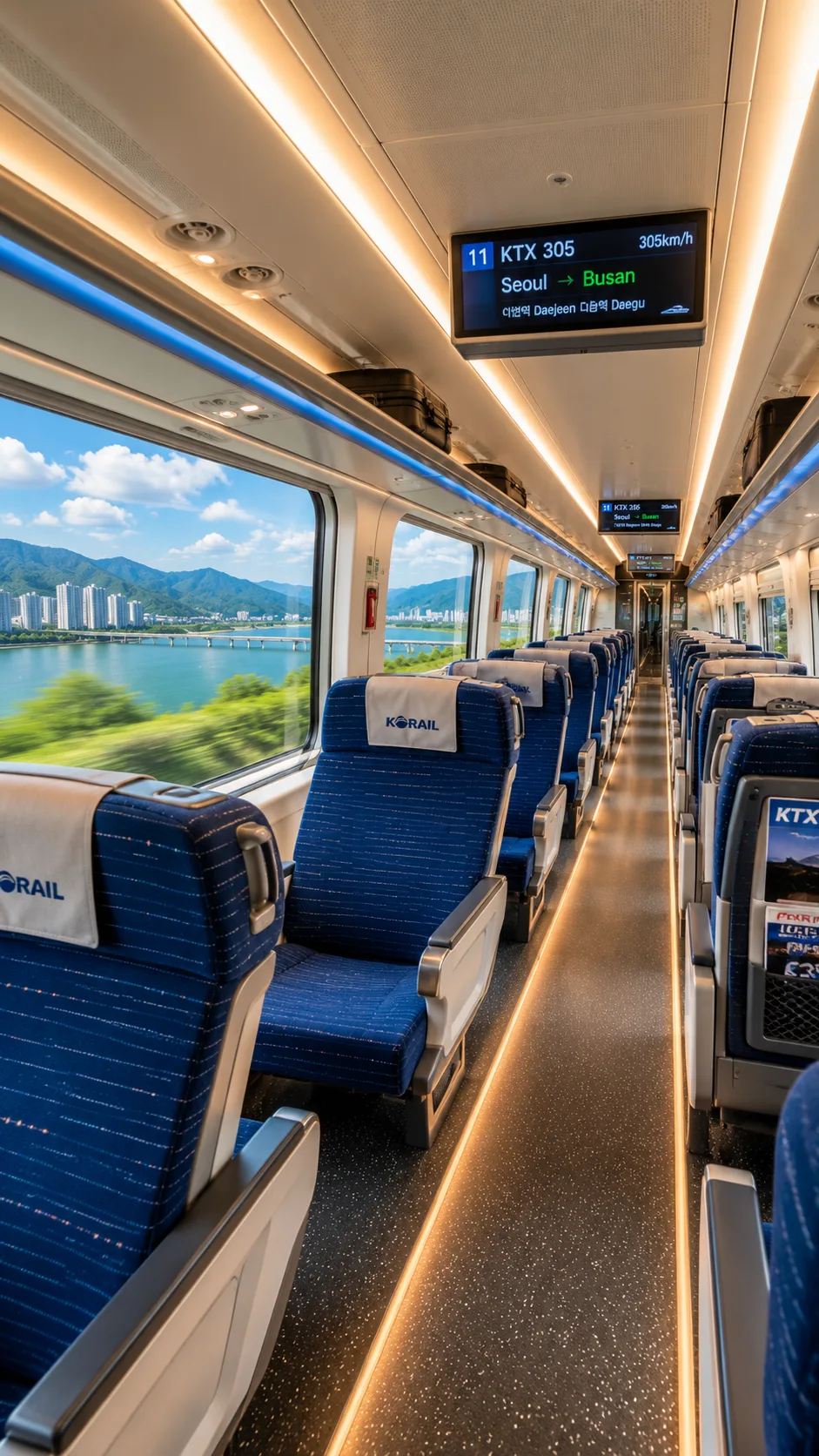
Korean trains are modern, clean, and comfortable, with reclining seats, power outlets, air conditioning, and food services including onboard trolleys and vending machines on most long distance trains. Every year, tens of millions of passengers travel on KTX trains and other Korean trains — from KTX Sancheon trains on the Gyeongbu Line to Mugunghwa trains on regional routes — making these trains some of the most-used in Asia. Book train tickets in advance for the best fares — popular trains on the Seoul and Busan corridor sell out quickly during Korean public holidays and peak travel seasons. Each ticket purchased online can be shown via mobile phone at the station, keeping check-in time to just 20–30 minutes before departure. With trains departing every few minutes on the busiest routes, Korean trains offer a level of frequency and convenience that makes the car or domestic flights largely unnecessary.
On Board South Korea Trains
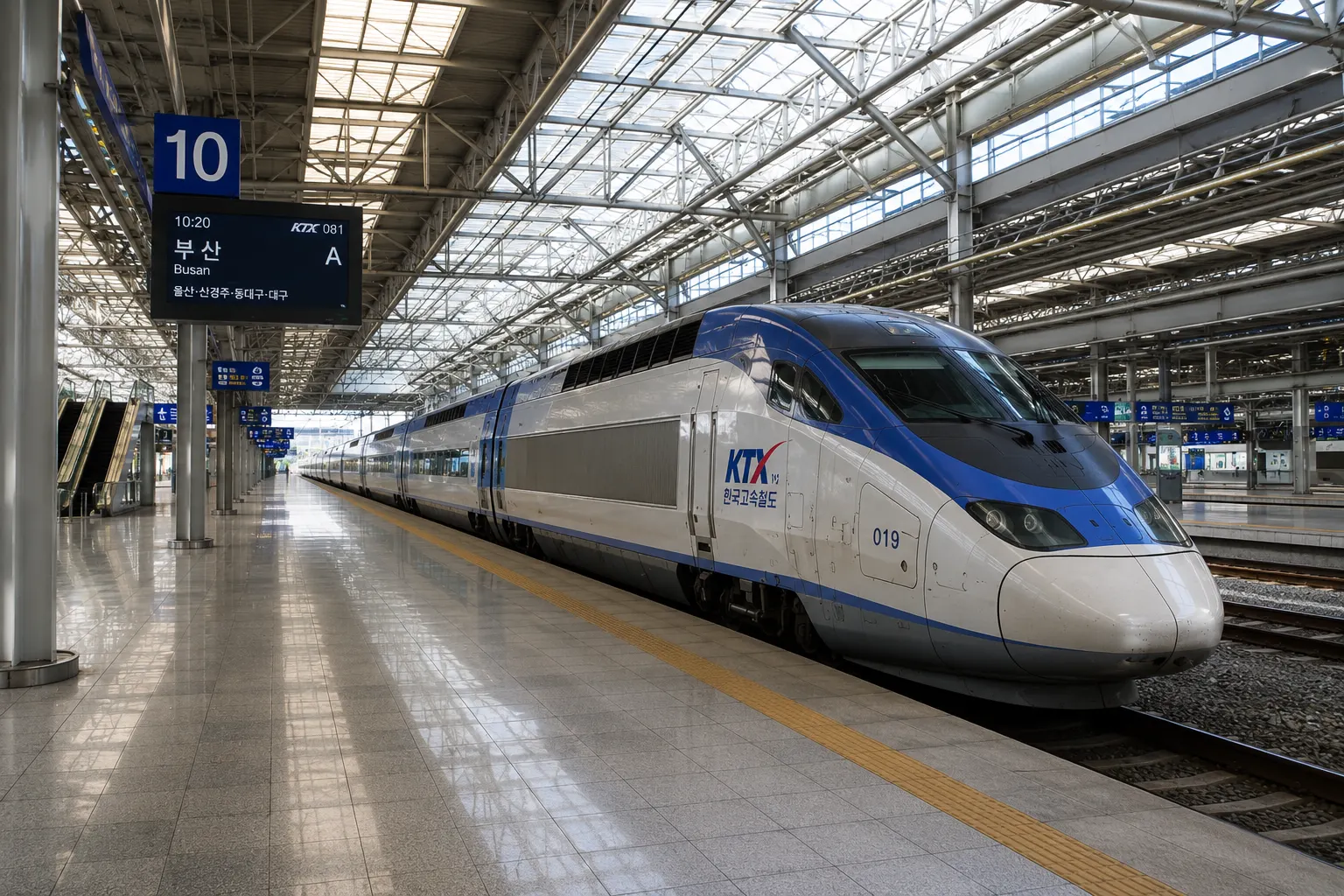
Experience the speed and precision of KTX trains, South Korea's flagship high speed trains and the backbone of long distance travel across the Korean railway system. Operated by Korail, KTX trains connect Seoul with every major city in South Korea at speeds of up to 305 km/h, covering routes that once took hours by car or regular trains in a fraction of the time. The Seoul to Busan route — 417 km across the length of the Korean peninsula — takes as little as 2 hours 15 minutes on the fastest KTX high speed train service.
There are four generations of KTX trains in service, each representing a leap forward in Korea's high speed trains development. The original KTX-I — derived from the French TGV and in service since the initial KTX system launched in 2004 — seats up to 935 passengers and continues to operate on the Gyeongbu Line between Seoul and Busan. The KTX-I has limited power outlets between windows and slightly denser seating than later models, but remains a reliable presence on the busiest Korean trains corridor. A second generation — sometimes referred to as KTX-II — was developed as a fully Korean-built evolution of the original; the KTX-II line of development produced the KTX Sancheon, which became the most numerous high speed trains in service across Korean railways today. KTX Sancheon trains are sleeker, quieter, and more comfortable than the KTX-I, with individual power outlets at every seat, improved standard class seats, and a maximum speed of 305 km/h. The SRT Super Rapid Train, operated by SR Corporation from Suseo Station in southern Seoul, uses a version of the KTX Sancheon design — the KTX Sancheon Class 120000 — and is virtually identical in speed and comfort to KTX Sancheon trains. KTX Sancheon trains operate across the Gyeongbu Line, Honam Line, and Gyeongjeon Line; on the Seoul and Busan corridor alone, KTX Sancheon trains depart every few hours or even more frequently at peak times.
Popular questions
The main operator of South Korea trains is Korail (Korea Railroad Corporation), South Korea's state-owned national railway company, which runs KTX trains on the Gyeongbu Line, Honam Line, Gangneung Line, and other high speed and conventional lines. SR Corporation operates SRT Super Rapid Train services from Suseo Station. Both operators run high speed trains reaching maximum speeds of 300–320 km/h. Train tickets for all Korail trains including KTX trains can be booked online, or at vending machines and ticket counters at Seoul Station, Busan Station, and other major KTX stations across South Korea.
Booking Korea train tickets online is quick and convenient. Passengers can compare schedules, check seat availability, and buy tickets for KTX trains months before departure via High-Speed trains. Most KTX train tickets go on sale up to one year in advance online. At the station, vending machines and staffed counters at Seoul Station and other major KTX stations accept foreign cards and display English menus. The check-in time at Korean train stations is around 20 to 30 minutes before departure — far shorter than at any airport.
Yes, booking train tickets in advance is strongly recommended for travel on KTX trains and other South Korea trains. Tickets for the Seoul to Busan route and other popular Korean trains sell out during Korean public holidays, cherry blossom season (late March to early April), and autumn foliage season (October to November). Online ticket bookings open up to one year before departure; station bookings open one month in advance. Book early for the lowest fares and best seat availability across all KTX trains and regular trains — whether you're booking KTX Sancheon trains on the Gyeongbu Line, KTX-Eum trains to the east coast, or Mugunghwa trains to smaller cities.
Trains in South Korea are very frequent, especially on major routes like Seoul to Busan. KTX trains operate regularly throughout the day, with many departures.
Yes, South Korea's trains are equipped with accessibility features, including spaces for wheelchairs, accessible stations, and elevators.
Yes, the Korail Pass offers unlimited travel on trains for foreign tourists. It provides convenient access to KTX, InterCity, and regional trains, and can be purchased online or at major stations.
Yes, bicycles are allowed on South Korean trains, but a separate ticket is required, and you may need to store the bike in a designated area or compartment.
The KTX high-speed train is the best way to travel between major cities like Seoul, Busan, and Daejeon. It's the fastest, most comfortable, and most efficient mode of transportation for long distances in South Korea.
The Gyeongbu Line is South Korea's busiest high speed rail corridor, connecting Seoul and Busan via Daejeon, Dongdaegu, Ulsan, and Singyeongju. KTX trains stop at different stations along the Gyeongbu Line depending on the service — express KTX trains stop only at a few major stations, while other services stop at more. The Gyeongbu high speed railway was built in two phases: the first phase from Seoul to Daegu opened in 2004 as part of the initial KTX system, and the second phase from Daegu to Busan completed in 2010. Today the Gyeongbu Line handles dozens of KTX Sancheon trains and KTX-I trains per hour across Korean railways, carrying millions of passengers on the Seoul Busan route every year. The high speed KTX train service on this corridor — including the high speed ktx train from Seoul to Busan, the high speed ktx train to Daejeon, and all intermediate stops — represents the backbone of Korean railways. The KTX-II generation of development, which produced the KTX Sancheon, has been the dominant fleet on the Gyeongbu Line for over a decade; the KTX II designation covers both KTX Sancheon Class 110000 and Class 140000 trainsets widely deployed across this corridor.
Yes, KTX trains offer two travel classes. Standard class seats are in a 2+2 reclining configuration with power outlets and air conditioning. First class and Superior class seats offer a wider layout, more legroom, and on the newest KTX-Cheongryong, personal screens behind each seat. SRT trains also provide first class and standard class options with similar onboard amenities. On all Korean trains, passengers can buy a ticket for either class online, via the Korail app on their mobile phone, or at the station. First class seats include complimentary light meals and refreshments on selected KTX services.
Seoul Station is the largest and most important train station in South Korea — the main departure point for KTX trains on the Gyeongbu Line to Busan, Daejeon, and Daegu, and the Gangneung Line to Gangneung. Located in central Seoul, the station connects directly to Seoul Metro Lines 1 and 4 and the AREX Airport Railroad Express line to Incheon Airport, making it the natural starting point for any South Korea train journey. Yongsan Station, a short distance away, is the hub for Honam Line trains to Gwangju and Mokpo. Suseo Station in southeastern Seoul is the departure point for all SRT trains.
The KTX-Eum is a compact, fully Korean-built high speed train introduced in January 2021. Unlike larger KTX trains, the KTX-Eum operates on both dedicated high speed rail tracks and conventional lines, giving it access to scenic destinations including Gangneung, Andong, Donghae, and Jeonju that other KTX trains cannot reach. KTX-Eum trains seat 381 passengers across standard class and superior class carriages, with power outlets and modern interiors. They are the primary KTX trains on the Gangneung Line and among the most popular Korean trains for east coast scenic journeys.