
Budapest to Prague Trains
Budapest to Prague Trains
Taking the train is one of the most popular ways to travel between Budapest and Prague, two of the most beautiful capitals in Central Europe. The Budapest to Prague train follows a scenic rail route along the Danube through Hungary and Slovakia, calling at Bratislava and Brno before reaching the Czech capital. Direct EuroCity trains, operated by Hungarian Railways (MÁV) together with Czech and Slovak partners, run roughly every two hours during the day, and RegioJet trains add low cost services with free Wi-Fi and complimentary drinks. The fastest trains complete the journey in 6 hours 53 minutes, and an overnight train lets you travel while you sleep.
Compared with a flight, the train takes you from city center to city center with no airport transfers, no strict luggage limits and a much lower carbon footprint. You can relax in spacious seats, work at a table, visit the restaurant car or simply enjoy the changing landscapes of Hungary, Slovakia and southern Moravia from the window. Some EuroCity trains continue beyond Prague to Dresden, Berlin and Hamburg in Germany, and easy connections via Vienna link the route with Austria and Switzerland, so the Budapest to Prague train is also a great first leg of a longer rail trip across Europe.
Most trains depart from Budapest-Keleti station, while some services use Budapest-Nyugati, so always check the station on your ticket. All direct trains arrive at Prague Main Station (Praha hlavní nádraží), a short walk from Wenceslas Square and the Old Town. Arrive at the station 20 to 30 minutes before departure, find your platform on the departures board and board with your e-ticket or QR code on your phone. Seat reservations are recommended on direct international trains during peak times, especially on summer weekends and holidays.
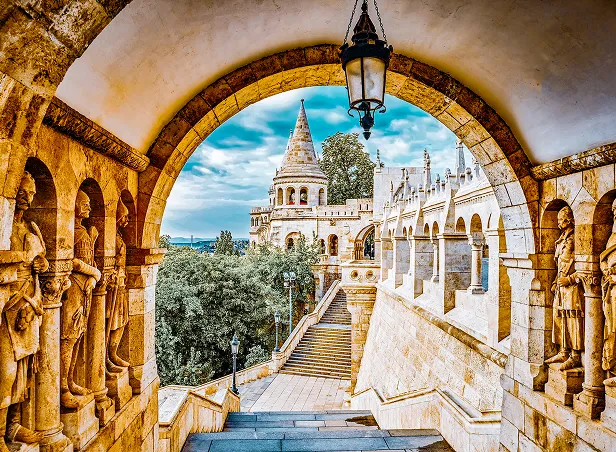
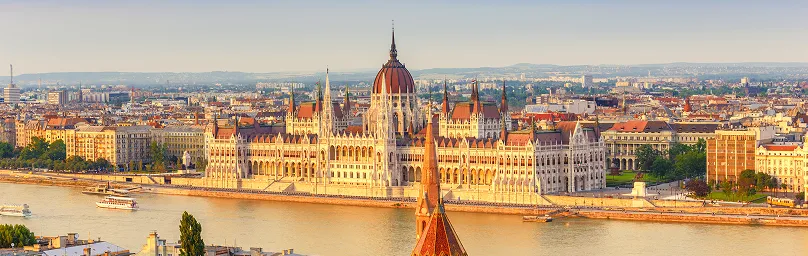
The fastest trains from Budapest to Prague take 6 hours 53 minutes, and most direct services take between 6 hours 50 minutes and 7 hours 40 minutes. The average journey time across all connections is around 8 hours 4 minutes, as some itineraries include a change or a longer stop. The rail distance is about 525 km, passing through three countries: Hungary, Slovakia and the Czech Republic. The train journey is longer than a flight, but it runs from one city center to the other, so there's no check-in, security or airport transfer. Many passengers find the time passes quickly thanks to comfortable seats, power outlets, free Wi-Fi and views of the Danube valley and the Moravian countryside.
Cheap train tickets from Budapest to Prague start at around €16.90 when booked in advance, while fares on our site start from $48. Ticket prices vary based on the operator, time of day and class, and prices usually increase when tickets are purchased on the day. Advance booking for train tickets typically opens 3 to 6 months ahead, and the lowest fares on EuroCity trains and RegioJet trains sell out first, especially on Fridays, Sundays and during school holidays. To get the best price, compare operators, travel midweek and choose a low cost class or second class seat. Return journey tickets can be booked at the same time, making it easy to plan the whole trip.
The first train from Budapest to Prague departs at 05:30, and five trains leave in the morning between 05:30 and 11:58. There is one afternoon departure at 14:58 and one evening train at 19:30. The last train departs at 22:50: it's an overnight service with couchettes and sleeper cars, so you save a night in a hotel and arrive in Prague early in the morning. Train times can change during engineering works and holidays, so always check the schedule for your date before you book.
Yes, direct trains are available without the need for transfers between the cities. EuroCity trains connect Budapest and Prague roughly every two hours, and RegioJet operates up to three direct services daily. Including connections with a change in Bratislava, Brno or Vienna, there are around 20 to 22 trains per day on the route, but a direct train is always the easiest choice, as you don't need to change trains or carry luggage between platforms. Baggage policies on trains are much more relaxed than on airlines, and you can bring large suitcases without an extra fee.
Seat reservations are not always compulsory, but they are strongly recommended on direct international trains during peak times. On EuroCity trains a reservation guarantees you a seat for the whole journey, and on RegioJet every ticket already includes a reserved seat. Night trains always require reservations for couchettes and sleeper cabins. Reservations usually cost a few euro and can be added when you buy train tickets online. If you travel with a rail pass, remember that it covers the fare but not the reservation fee, so book your seat in advance on busy days.
EuroCity trains offer two classes. Second class is well equipped, with spacious seats, air conditioning, power outlets and plenty of luggage space, while first class adds wider seats, extra legroom, quieter carriages and, on some services, in-seat meal service. On-board amenities on EuroCity trains include a restaurant car with hot meals, snacks and drinks. RegioJet has different travel classes, from Low Cost class to Standard, Relax and Business, with free Wi-Fi, complimentary drinks and an entertainment portal on board. The night train offers seats, couchettes and private sleeper cabins with accessible toilets and washbasins.
For most travelers, the train is the best way to travel from Budapest to Prague. Buses take around 6 to 7 hours but typically offer less comfort, while a Ryanair flight takes just over an hour but requires airport transfers, check-in and security, making the door to door time similar. Driving by car means around 5 to 6 hours plus tolls and parking. The train lets you move around, work, read or enjoy the scenery in a relaxed atmosphere, and rail travel has a far lower carbon footprint than flying, which is a big advantage for eco-conscious passengers exploring Europe.
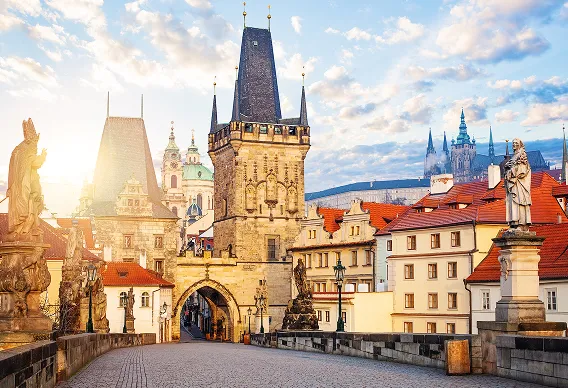
Your journey starts at Budapest-Keleti or Budapest-Nyugati station, both well connected by metro to the rest of the city. Trains arrive at Prague Main Station, from where you can walk or take the metro to the Old Town and Wenceslas Square in minutes. From there, it's easy to explore the city's highlights: Charles Bridge, Prague Castle above the river, the Lennon Wall in Malá Strana and the historic Jewish Quarter. Prague's historic centre is a UNESCO World Heritage site, and its centuries of history and unique atmosphere make it the perfect end to a trip through Central Europe.