
Everything You Need to Know About Train Travel in China
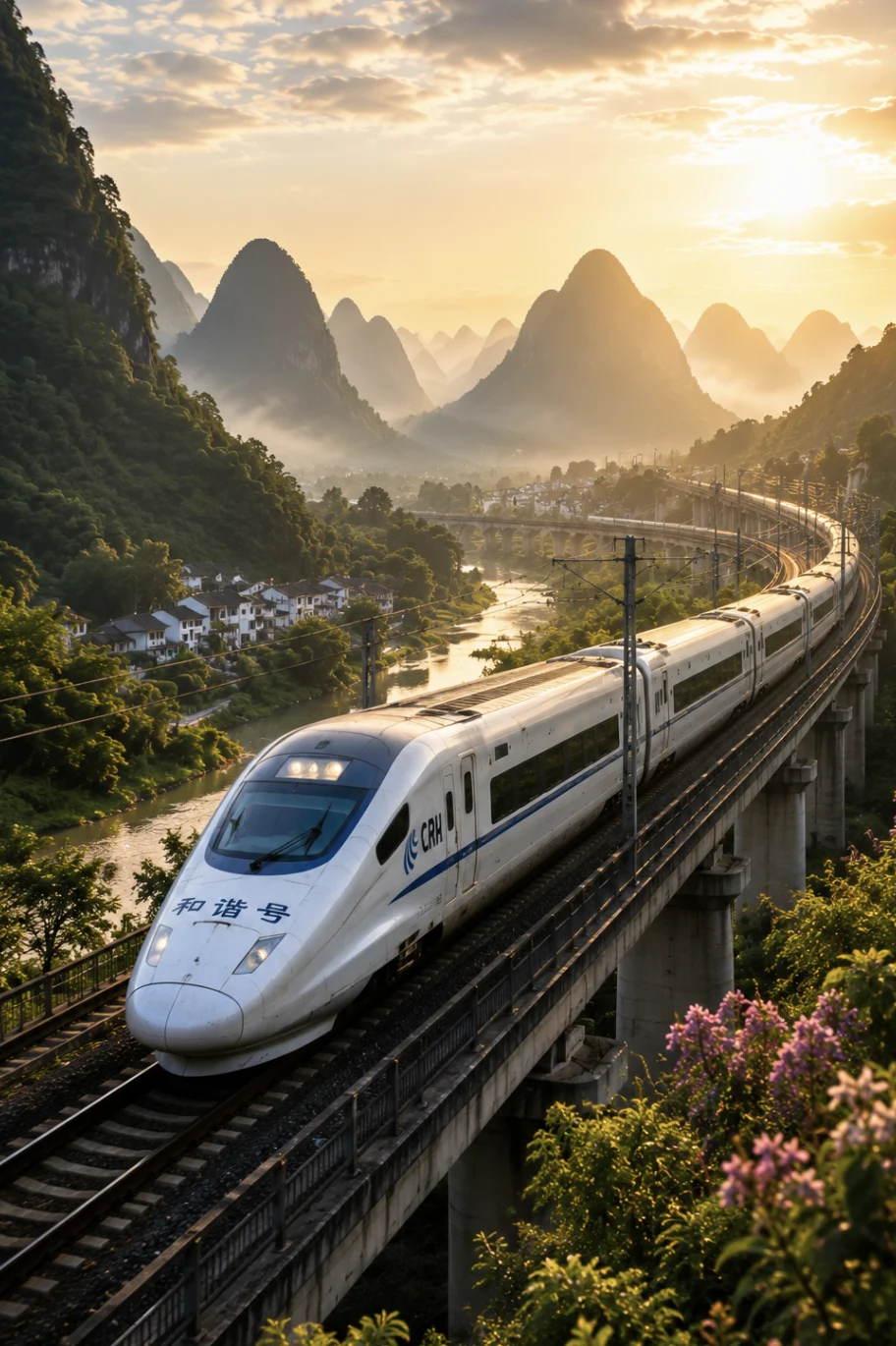
China trains are the fastest, most extensive, and most impressive way to explore the world's most populous country — shooting across vast plains, through mountain tunnels, over giant river bridges, and between some of the most dynamic cities on earth at speeds no other railway system can match. Whether you're booking train tickets for a G train from Beijing to Shanghai, riding Fuxing high speed trains south toward Guangzhou, exploring the world-famous Beijing South Station, or boarding an overnight sleeper train across western China, trains in China offer train travel experiences that are as extraordinary as the destinations themselves. China trains have revolutionized travel across the country: train travel in China has replaced domestic flights on hundreds of routes, train travel between Chinese cities is faster and more comfortable than driving, and train travel is far cheaper than flying on most intercity corridors. With China Railway operating over 50,000 km of high speed rail lines across a railway system that connects virtually every major city and large city in the country, train travel in China has been transformed into the most convenient, affordable, and sustainable way to get around. China's high speed trains, Chinese trains on conventional lines, and overnight sleeper trains together form a seamlessly integrated rail network that makes planning a multi-city China trip by train both practical and rewarding.
China's railway network — managed and operated by China Railway (China State Railway Group Co., Ltd.), the state-owned railway company responsible for all passenger trains and freight trains — is the largest in the world by total length. The total length of China's high speed railway lines alone exceeds 50,000 km — that's more than the rest of the world's total high speed rail combined — and the broader railway system spans over 159,000 km of total track across the country.
On Board China Trains
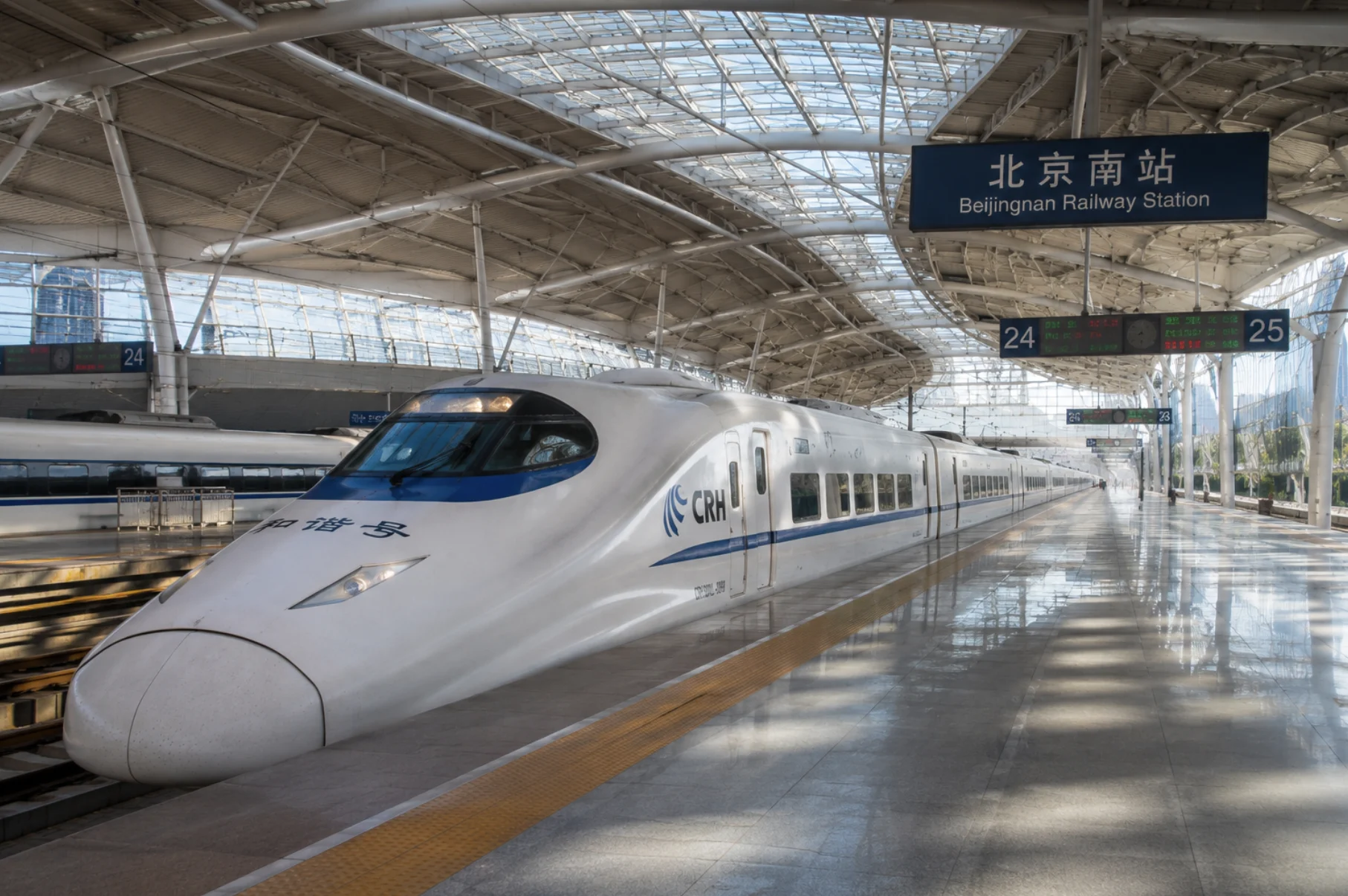
Experience the speed and scale of China's high speed trains — the most advanced bullet train network on earth. China Railway operates several categories of trains, each identified by a letter prefix that indicates the train type, speed, and service level. G trains are the fastest and most prestigious of all China trains, operating on dedicated high speed rail infrastructure at speeds of up to 350 km/h. G trains connect China's major cities on flagship high speed services including Beijing–Shanghai (4 hours 18 minutes from Beijing South Station), Beijing–Guangzhou (around 8 hours), and Beijing–Xi'an (around 4.5 hours). G trains depart from purpose-built high speed railway stations — including Beijing South Station, Shanghai Hongqiao Station, Guangzhou South Station, and Shenzhen North Station — that are separate from older conventional railway stations. Beijing South Station is the main departure hub for G trains on the Beijing–Shanghai and Beijing–Guangzhou corridors, handling hundreds of G train departures daily with vast waiting rooms, multiple ticketing halls, and seamless metro connections.
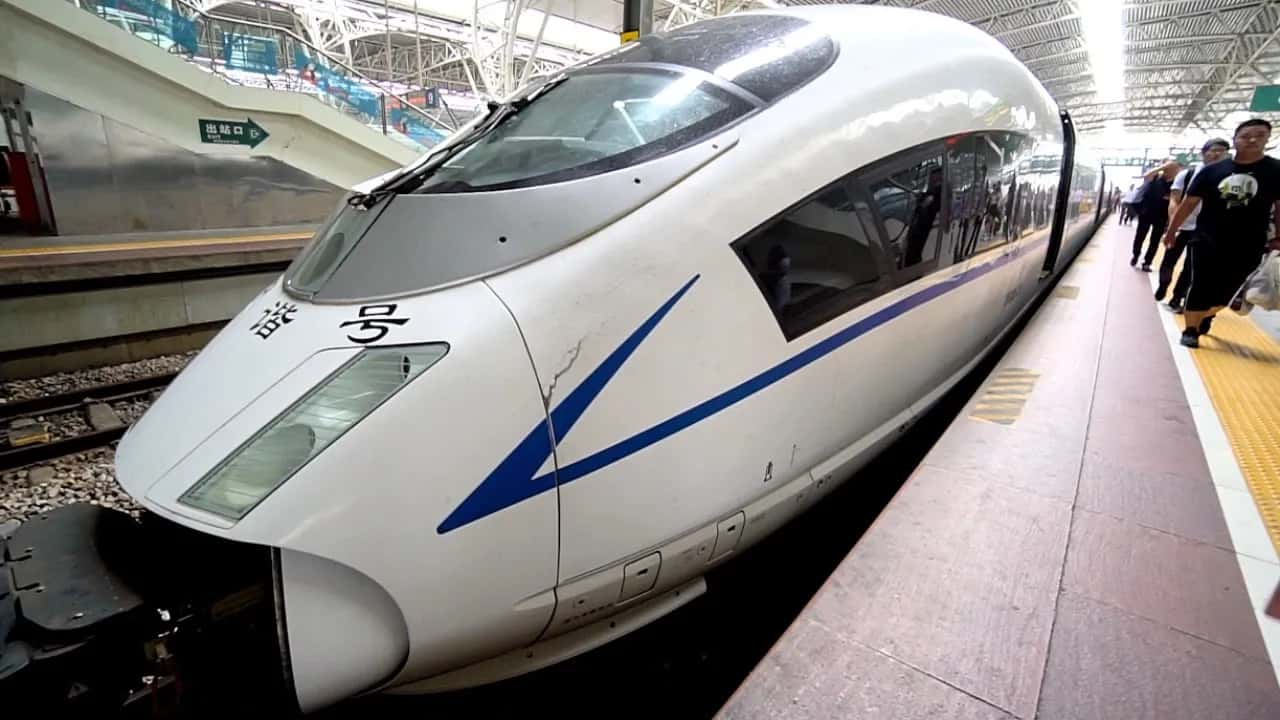
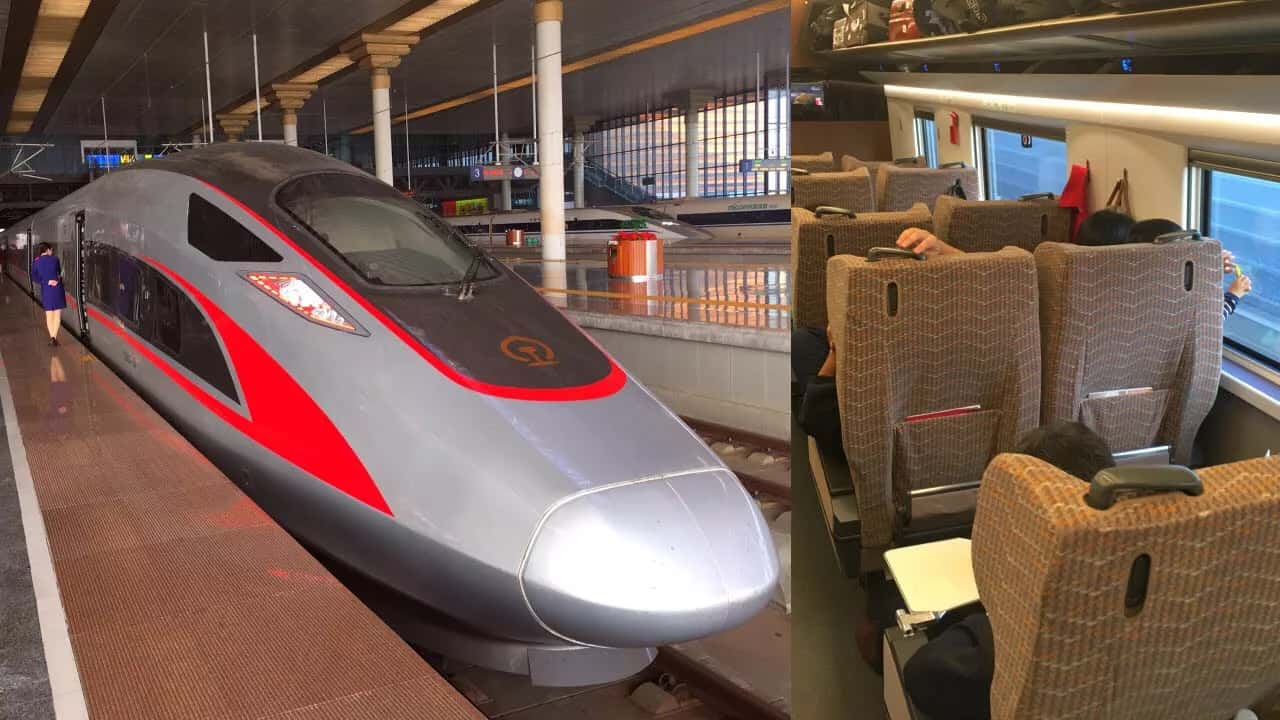
High-speed trains, including the CRH2, CRH3, CRH5, and CRH380 — were developed from 2007 onward and introduced high speed train travel to China at a national scale. CRH trains quickly expanded the HSR network to cover all major Chinese cities at speeds of 200–350 km/h. CRH trains of various types are still in widespread operation across the Chinese railway system, carrying hundreds of millions of passengers on China Railway high speed services every year. The maximum speed of CRH380 trains in commercial operation is 350 km/h, and CRH trains on the Beijing–Shanghai high speed railway operated at 350 km/h maximum speed from 2017 onward. The Fuxing series (CR400AF and CR400BF) represents China's fully indigenous next generation of high speed trains, with all intellectual property owned by China Railway and a top speed of 350 km/h — the fastest scheduled train speed in the world. Fuxing trains run at 350 km/h on the Beijing–Shanghai route and at 300–350 km/h on other high speed lines. The CR450AF, debuted in December 2024 with a top speed of 400 km/h in testing and a record of 453 km/h, signals China Railway's next leap in high speed operation. Fuxing trains operate on flagship high speed lines and will expand to new high speed lines across the Chinese railway system as the network continues to grow in the coming years.
Popular questions
All passenger trains in China are operated by China Railway (China State Railway Group Co., Ltd.), the state-owned railway company responsible for the entire Chinese railway system. China Railway operates all G trains, D trains, C trains, and conventional Z, T, and K class trains — the full spectrum of China trains across a total length of over 159,000 km of rail lines, including more than 50,000 km of high speed lines. China Railway is the world's largest railway company by passengers carried, moving over 3.7 billion passengers per year across its trains. China Railway trains run to every province and autonomous region in the country, and China Railway's train system is the backbone of transport for hundreds of millions of passengers making journeys across China every day.
Highspeedtrains is the most popular platform for booking China trains in English with foreign cards. China train tickets for all China Railway trains can be booked via 12306.cn, Rail Ninja, Trip.com, or other online booking platforms.
Yes, booking train tickets in advance is strongly recommended for all China Railway high speed trains, especially on busy routes. China trains on the Beijing–Shanghai, Beijing–Guangzhou, and Hong Kong cross-border routes sell out rapidly around Chinese national holidays (Golden Week in October, Spring Festival in January–February) and summer travel season. Second class seats on China Railway G trains and D trains sell out first; first class seats and business class seats have more availability but also go quickly on popular China trains. Soft sleepers on overnight D trains typically sell out weeks ahead of the departure date during peak season.
China’s rail network is extensive and trains run frequently, especially on high-speed routes like Beijing to Shanghai, with multiple departures throughout the day.
Yes, credit cards are accepted for purchasing train tickets at most stations, as well as online. Some websites and apps, however, may only accept local payment methods like Alipay or WeChat Pay.
Yes, most trains, especially high-speed CRH trains and long-distance services, are air-conditioned for passenger comfort, particularly during hot summer months.
Travel times vary depending on the route. For example, the Beijing to Shanghai high-speed train takes around 4.5 to 5 hours, while slower trains may take 12 hours or more for the same journey.
Yes, there are international trains that connect China to neighboring countries such as Russia, Mongolia, and Vietnam, with routes like the Trans-Siberian Railway or trains to Hong Kong and Kazakhstan.
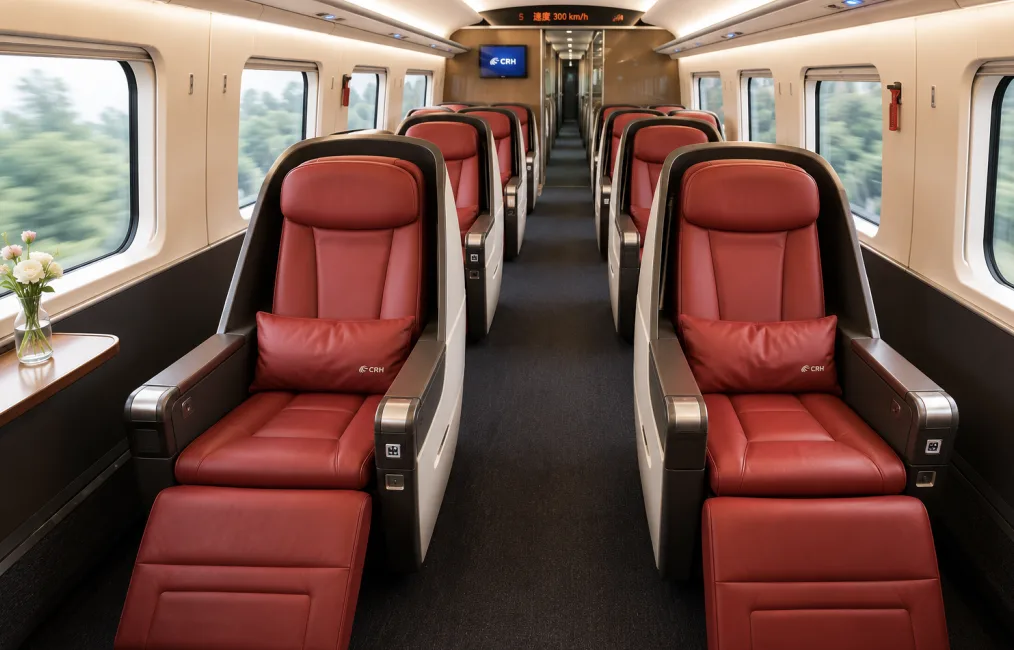
China's G trains and D trains offer multiple class carriages for passengers across all major high speed trains in China. Second class seats are the standard option in a 3+2 class carriage layout with reclining seats and power sockets — second class seats are the most affordable China train tickets on all high speed trains. First class seats offer a wider 2+2 class carriage with more legroom and recline — first class seats are ideal for journeys of 3 to 5 hours and cost around 1.5× the price of second class seats on most China Railway high speed trains. Business class seats occupy a premium 2+1 class carriage with large lie-flat-capable seats, complimentary meals, and extra amenities — business class seats are the top tier on most G trains. First class seats, business class seats, and soft sleepers are all included in the range of China train tickets available via Rail Ninja, Trip.com, and 12306 for all China Railway high speed trains. On select Fuxing trains between Beijing and Shanghai, a superior VIP class is also available above business class, offering the most exclusive train travel experience on any China Railway trains. For overnight D trains, soft sleepers come in standard (4-berth open), luxury (2-berth private cabin), and deluxe EMU configurations. All tickets for China Railway high speed trains — whether for second class, first class, business class, or soft sleepers — show the specific car number, seat number, and departure time and must be booked per passenger with a valid passport.
The Fuxing (Rejuvenation) is China's fully indigenous high speed train series, developed by CRRC and introduced from 2017, representing China Railway's complete mastery of high speed rail technology with all intellectual property owned domestically. The CR400AF Fuxing train operates at a top speed of 350 km/h in commercial operation — the fastest scheduled train speed in the world. The CR400BF is a longer 17-carriage version with capacity for up to 1,283 passengers. The newest CR450AF prototype reached a top speed of 453 km/h in testing in December 2024 and is designed for 400 km/h operation on new high speed lines. Fuxing trains depart from Beijing South Station, Shanghai Hongqiao Station, and Guangzhou South Station on all flagship China Railway high speed services. The boarding process for Fuxing trains follows the same security check and waiting room system as all other China Railway high speed trains.
Yes, China Railway operates international train services to several neighboring countries. Hong Kong is connected via the Guangzhou–Shenzhen–Hong Kong Express Rail Link, with G trains running from Hong Kong West Kowloon Station to Beijing, Shanghai, and Guangzhou — one of the busiest international high speed rail connections in the world. China also operates international trains to Laos (the China–Laos Railway from Kunming to Vientiane), Vietnam (Hanoi), Mongolia, Russia (Trans-Mongolian and Trans-Siberian routes from Beijing to Moscow), and Kazakhstan. Cross-border trains require a valid passport; passengers must clear immigration and customs at the border station or at Hong Kong West Kowloon before boarding. China train tickets for international routes are available through China Railway's 12306 platform and via Rail Ninja for some cross-border services.