
Everything You Need to Know About Train Travel in Germany
Trains in Germany are one of the finest ways to move through the heart of Europe — fast, reliable, and connecting every major city, regional town, and local destination with one of the most extensive rail networks on the continent. Whether you're travelling between Berlin and Munich on an ICE DB train, exploring the Rhine Valley on a scenic regional train, crossing into neighbouring countries on an international service, or commuting across a city on the regional transport or S-Bahn, trains in Germany cover it all. The German rail network makes it possible to travel the entire country without a car, with modern rolling stock, comfortable seating, and free WiFi on most long distance services — all bookable in English through HighSpeedTrains.
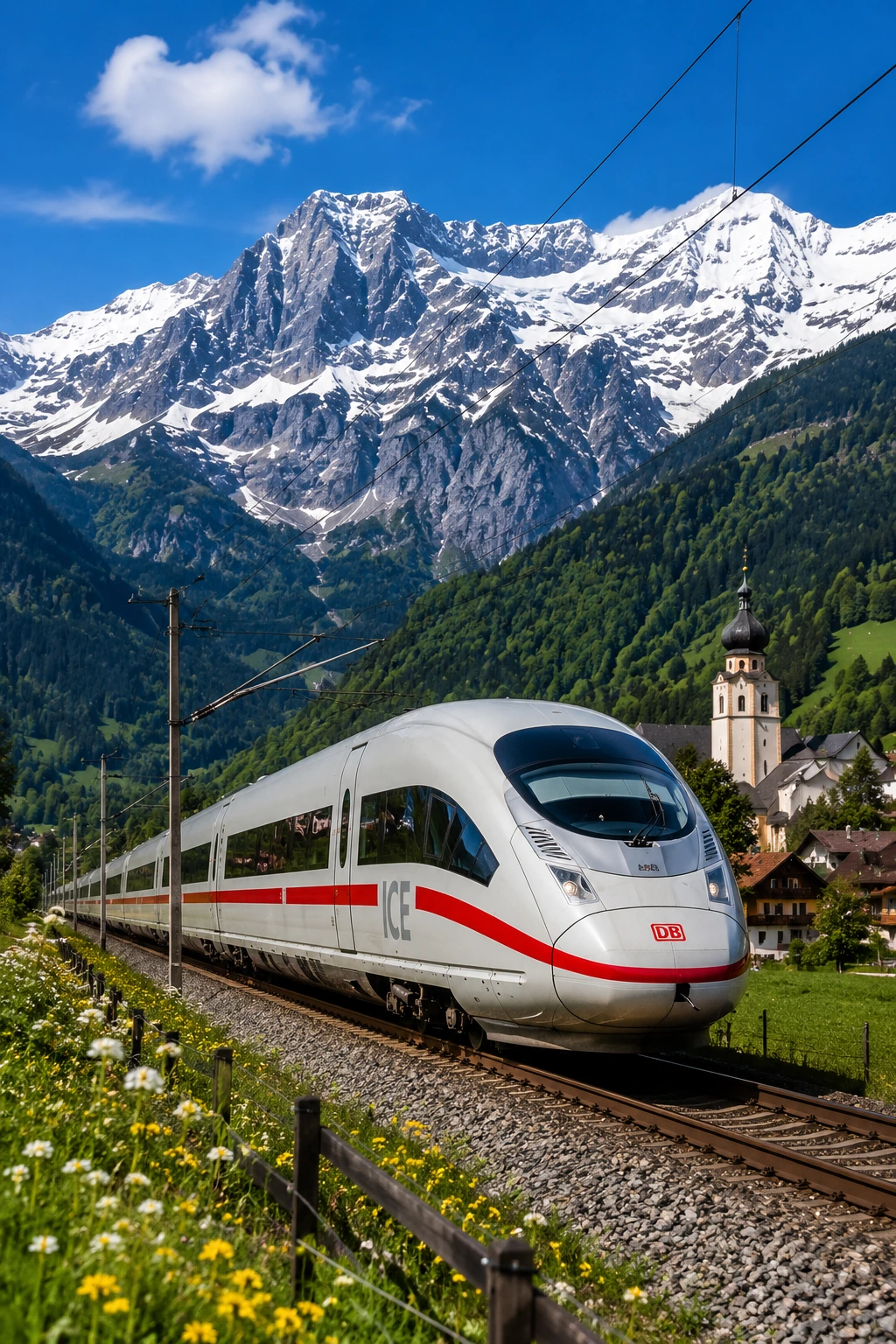
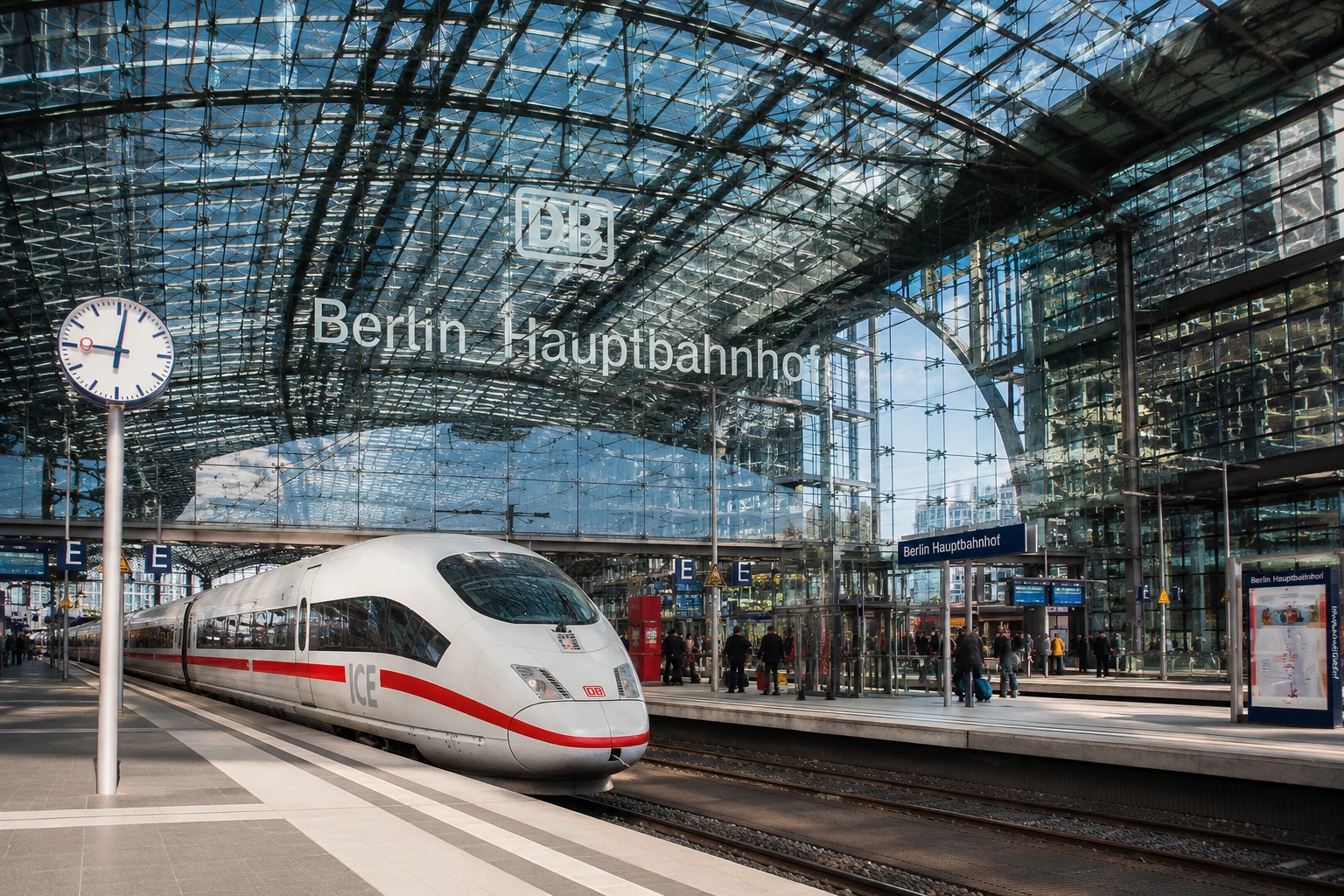
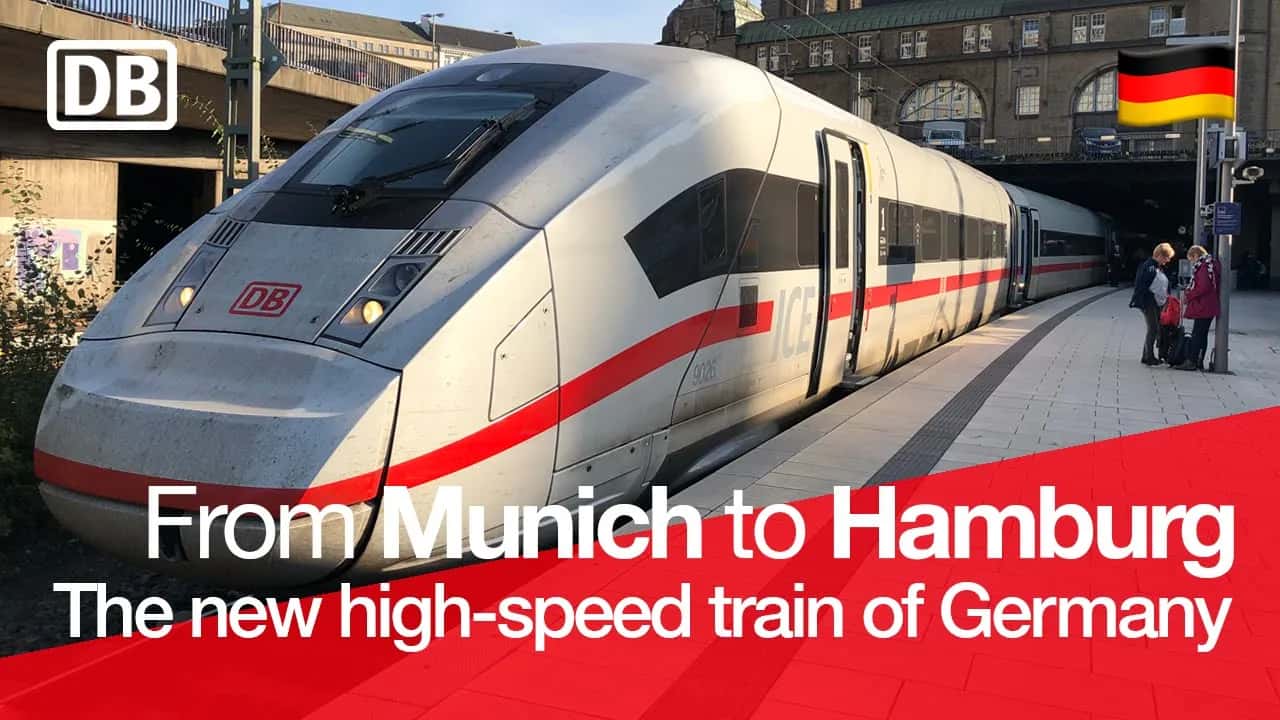
The backbone of the Germany trains are operated by Deutsche Bahn — the state railways responsible for the vast majority of long distance trains, regional, and night trains across the country. German railways connect all major German cities and extend into neighbouring European countries via international trains, making Germany one of the most well-connected rail hubs on the continent. ICE trains — Intercity-Express — are the flagship high speed trains, reaching speeds of up to 300 km/h on dedicated high speed lines between major German stations including Berlin Hbf, Munich, Frankfurt, Hamburg, and Cologne.
Beyond ICE trains, the network includes Intercity trains on conventional long distance routes, EC trains serving cross-border destinations, regional express trains connecting larger cities to local towns, S-Bahn urban services, and overnight trains covering longer corridors. German train tickets for all service types can be compared and booked in advance through HighSpeedTrains, with instant e-tickets and no queuing at the station.
Find More About German High-Speed Trains
ICE trains are Germany's high speed trains and the fastest way to travel between major German cities. Running at speeds of up to 300 km/h on dedicated high speed lines, ICE services connect Berlin, Munich, Frankfurt, Hamburg, Cologne, Stuttgart, and Düsseldorf with journey times that make them a compelling alternative to air travel on most domestic routes. Berlin to Munich takes around 3 hours 45 minutes; Frankfurt to Cologne around 1 hour; Hamburg to Berlin around 1 hour 45 minutes — all on high speed rail.
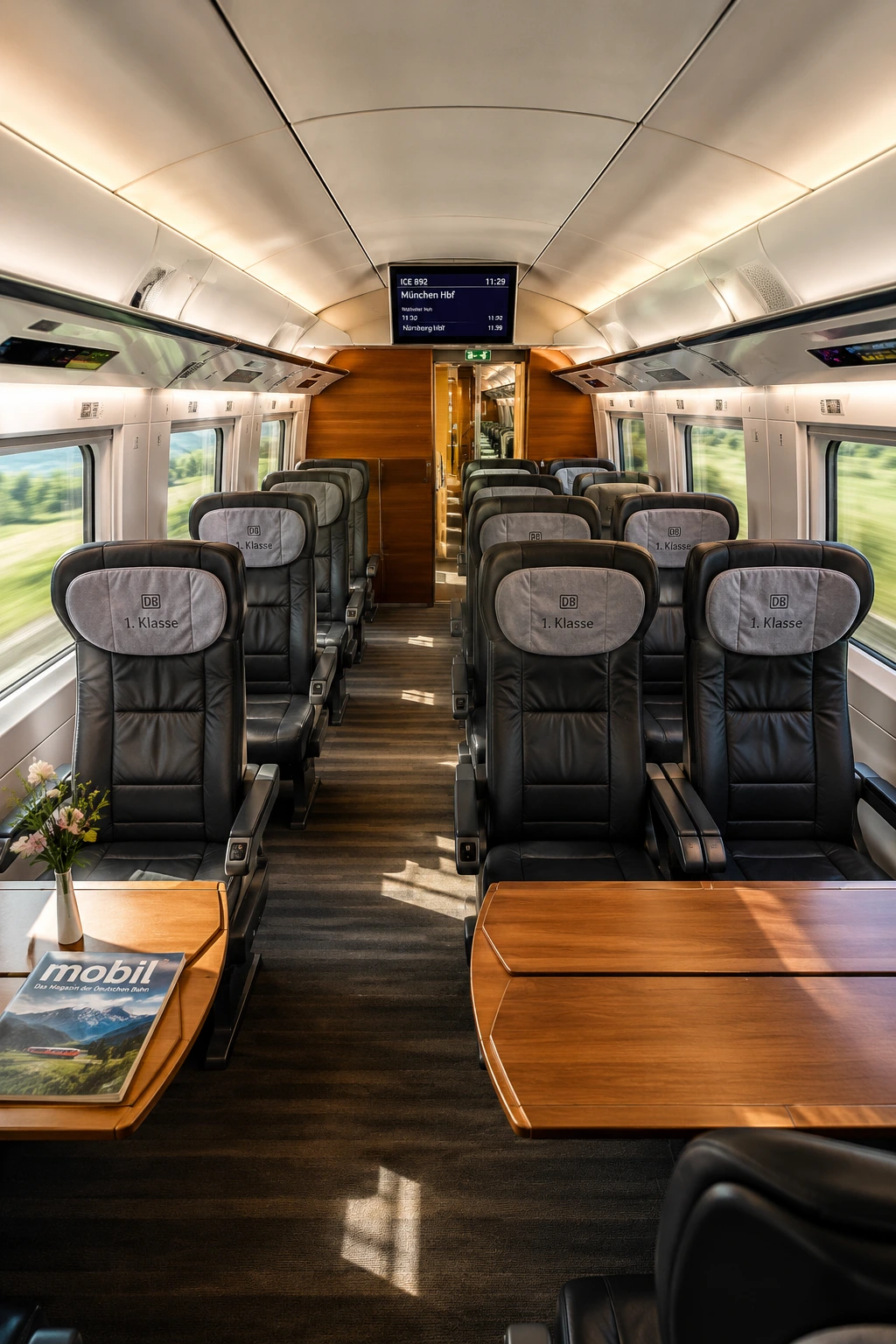
ICE trains offer two classes of travel. Second class provides spacious, comfortable seating with free WiFi, power sockets, and access to a restaurant car on most long distance services. First class adds wider seats, more legroom, at-seat service on selected routes, and a quieter onboard environment — the preferred choice for business travellers on longer journeys. A seat reservation on ICE trains is optional but strongly recommended, particularly on busy routes and during peak travel periods. You can add a seat reservation at the time of booking through HighSpeedTrains.
Popular ICE routes include Berlin to Munich, Munich to Berlin, Frankfurt to Munich, and Munich to Frankfurt. All are bookable with an instant e-ticket through HighSpeedTrains.
Intercity trains — IC trains — serve long distance routes across Germany on conventional lines, offering a comfortable alternative to ICE services on corridors not served by high speed rail. IC trains include a restaurant car on most routes and offer both first and second class seating. EC trains are the international equivalent, connecting major German cities with destinations in Austria, Switzerland, Italy, and other European countries on the same comfortable intercity format.
Regional express trains and regional trains form the widest part of the German rail network, connecting larger cities with smaller towns and local destinations across all regions of the country. These services are ideal for day trips, scenic train routes through the German countryside, and reaching destinations beyond the main high speed corridors. Seat reservations are not required on regional trains, and most accept the same ticket formats as long distance services, making it straightforward to combine regional and long distance journeys on a single trip.
S-Bahn services operate in major German cities including Berlin, Munich, Frankfurt, Hamburg, and Cologne, providing fast and frequent urban rail connections across each city's wider metropolitan area. Night trains cover longer overnight corridors, offering sleeper cabins and couchette options for travellers who prefer to travel through the night and arrive rested at their destination the following morning.
Popular questions
Trains in Germany fall into several categories. ICE trains are the fastest, running at up to 300 km/h on high speed lines between major German cities. Intercity trains serve long distance routes on conventional lines, while EC trains extend international connections to neighbouring European countries. Regional express trains and regional trains connect larger cities with local towns across the German rail network. S-Bahn services handle urban commuter travel in major cities. Night trains cover longer overnight routes with sleeper and couchette options. All train types can be searched and booked through HighSpeedTrains.
The easiest way to buy tickets for trains in Germany is to book online in advance through HighSpeedTrains. You'll receive an instant e-ticket, choose your preferred seat, and avoid queuing at the station. Booking tickets early is particularly worthwhile on ICE trains and popular long distance routes, where the best fares are released well ahead of the departure date. German train tickets are also available at station ticket machines and counters, but online booking gives you the most flexibility and the widest choice of train times and travel classes.
A seat reservation on ICE and IC trains is optional but recommended, especially during busy periods, on scenic train routes, and on overnight trains where sleeper cabins book up well in advance. On regional trains and S-Bahn services, seat reservations are not available or required — passengers may sit in any empty unreserved seat in the appropriate class. If your journey involves a change between a high speed and a regional service, note that these may require separate tickets depending on the fare type selected. When you buy tickets through HighSpeedTrains, you can add a seat reservation for ICE and IC services at the time of booking.
A German rail pass provides unlimited travel on most trains in Germany within a set number of travel days. It covers ICE trains, IC trains, regional express trains, and most other services across the German rail network. A Eurail pass or Eurail one country pass for Germany works in the same way, giving European residents and international travellers a flexible option for multi-day rail travel. Note that a seat reservation on ICE trains still applies separately even with a rail pass, and must be booked in advance. A country pass or travel pass can be a strong choice if your travel plans involve multiple long distance journeys across Germany in a short period.
The Quer Durchs Land Ticket is a day pass for regional trains across Germany, allowing unlimited travel on regional express and local trains throughout the country on a single day. It does not cover ICE trains or long distance IC trains, but gives excellent flexibility for travellers who want to explore German cities and local towns using regional high speed services only. It can be used by up to five people travelling together, making it well suited for groups. Check availability and current ticket conditions at the time of booking.
Free WiFi is available on most ICE trains and many IC trains across the German rail network. On ICE high speed services, the onboard WiFi connects without a password on most routes, making it easy to work or stay connected during long distance journeys. Regional trains and S-Bahn services may not always offer WiFi depending on the route and rolling stock. Power sockets are available at most seats on ICE trains, making them well suited for business travellers on longer journeys between major German train stations.
Yes — a Eurail pass or German rail pass is valid on most trains in Germany, including ICE high speed trains, IC trains, EC trains, and regional services. A seat reservation on ICE and IC trains still applies and must be booked separately even with a pass. If you're travelling as a non-European resident, a Eurail pass covering Germany allows unlimited travel across the German rail network within the validity period. European residents can use a similar country pass under the same conditions. Reserve seats for specific train departures in advance to guarantee your preferred seat on busy routes.
The main German train stations used for long distance travel include Berlin Hbf — Germany's largest and most central station — along with Munich Hauptbahnhof, Frankfurt Hauptbahnhof, Hamburg Hauptbahnhof, and Cologne Hauptbahnhof. All major German stations are located in or near the city centre and are directly connected to local S-Bahn, U-Bahn, tram, and bus services, making onward travel straightforward on arrival. Most stations have ticket machines, luggage storage, shops, and dining facilities.
Yes — Germany is one of the best-connected countries in Europe for international train travel. EC trains and ICE services link German cities with destinations in France, Belgium, the Netherlands, Austria, Switzerland, and beyond. Thalys trains connect Cologne and Düsseldorf with Brussels, Paris, and Amsterdam, offering a direct connection between Germany and western Europe without changing trains. Night trains extend the network further, with overnight services to Vienna, Zurich, Rome, and other destinations. All international trains departing from Germany can be searched and booked through HighSpeedTrains.
The S-Bahn is the urban rail network operating in Germany's major cities, including Berlin, Munich, Frankfurt, Hamburg, and Cologne. S-Bahn services run frequently throughout the day and connect city centre stations with suburban areas, airports, and surrounding towns. In most cities, S-Bahn trains share platforms or interchange directly with ICE, IC, and regional train services, making it easy to connect between long distance and local services as part of the same trip. S-Bahn tickets are separate from long distance German train tickets and are purchased locally at the station or via city transport apps.
Yes — night trains serve several routes across Germany and into neighbouring European countries. Overnight trains offer sleeper cabins with private accommodation, couchette compartments with shared berths, and standard reclining seats. They are a popular option for travellers who want to cover long distance journeys without losing a day of travel time — departing one city in the evening and arriving at the next destination from the early morning departure onwards. Cabin bookings are compulsory and should be made well in advance, particularly during busy travel periods when sleeper cabins fill up quickly.
The Flexpreis ticket is a fully flexible German train ticket valid on any specific train or any service on the same route on the date of travel, with no fee for changing train times. It covers ICE, IC, and EC trains across the German rail network and is the most practical option for travellers whose travel plans may change. Unlike fixed-price tickets, the Flexpreis gives you the freedom to board the next train on your route if your original departure is missed or delayed — making it ideal for one trip or multi-leg journeys where flexibility matters. A return ticket on the Flexpreis fare also allows outbound and inbound changes independently.
The Deutschland Ticket is a monthly flat-rate pass for unlimited travel on regional trains, S-Bahn, U-Bahn, trams, and local buses across Germany. It covers all regional public transport but does not include ICE trains, IC trains, or long distance IC services. It is a strong option for frequent travellers who rely on regional and urban services day-to-day, and offers unlimited availability across the entire regional network for a fixed monthly cost. For long distance ICE and IC journeys, separate tickets are required in addition to the Deutschland Ticket.
Deutsche Bahn is the primary operator of trains in Germany, running ICE high speed services, IC long distance trains, EC international trains, regional express services, and S-Bahn urban networks across the country. Most German trains — including the vast majority of long distance and regional services — are Deutsche Bahn trains. There are also other operators running regional services in certain parts of the country under concession agreements, though Deutsche Bahn trains remain the dominant option on most routes. All major services including Deutsche Bahn trains and other operators can be compared and booked through HighSpeedTrains.
German train tickets on ICE routes are released well in advance, and booking tickets early gives you the widest choice of departure times and travel classes before popular connections fill up. This is especially important on routes like Berlin to Munich and Frankfurt to Hamburg during peak travel periods. For overnight trains, advance booking is essential as sleeper cabins and couchette berths have limited availability. Book your Germany trains through HighSpeedTrains for an instant e-ticket and full seat selection.