
Santiago de Compostela to Madrid Trains
Santiago de Compostela to Madrid Trains
Aside from its delicious cuisine and exceptional wines, Spain's allure extends to an impressive network of high-speed trains that efficiently connect its major cities. Trains departing almost every hour connect the Santiago de Compostela to Madrid region, providing exceptional connectivity. As well as being convenient and efficient, train travel is also cost-effective. Further, the central location of train stations in each city makes this form of transportation the obvious choice. The train can be a significantly more convenient and faster mode of transportation than traveling by road, making journeys between Santiago de Compostela and Madrid, for example, much shorter and more convenient.

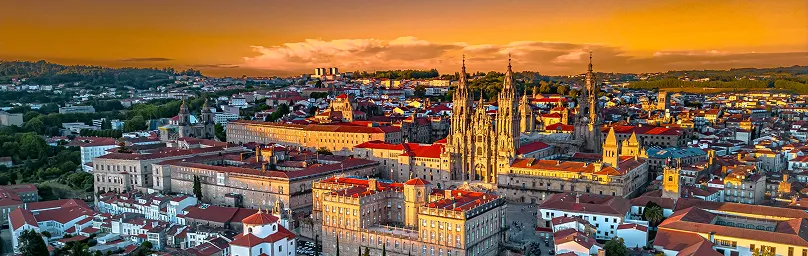
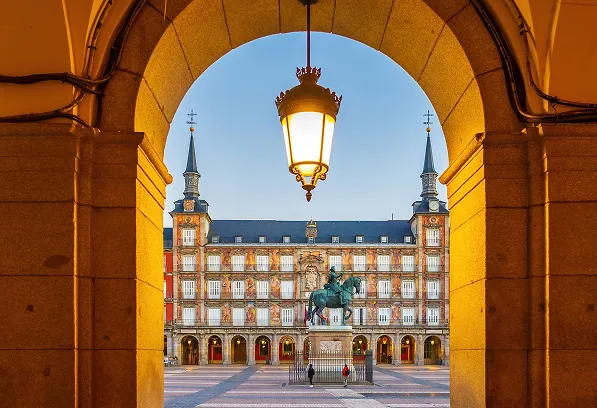
The distance from Santiago de Compostela to Madrid by train is 599 kilometres (approximately 372 miles), making it one of the longest domestic rail journeys in Spain and a genuine showcase of how far the country's high-speed network has come in connecting its most geographically distant cities. The road distance between the two cities is around 370 miles, and driving takes approximately 6 hours under normal conditions, twice the time of the fastest train, and with the added burden of tolls, fuel costs, and navigating both cities by car. The train beats driving on both time and money: it arrives nearly two hours faster and costs around $96 less when fuel and tolls are factored in, while depositing passengers directly in the city centre rather than requiring them to hunt for parking. For a journey of this length between two cities with central train stations, the high-speed train is the clear and logical default for the vast majority of travellers.
The shortest travel time on the Santiago de Compostela to Madrid route is 3 hours and 4 minutes, with most direct AVE and Alvia services completing the journey in around 3 hours to 3 hours and 30 minutes depending on the specific service and number of intermediate stops. Direct services run with AVE, Renfe AVLO, Renfe Alvia, and Renfe Viajeros, giving travellers a range of price points and comfort levels to choose from on the same corridor. With 10 average daily departures, the first train leaving Santiago de Compostela at 05:47 and the last at 20:05, the timetable offers practical options for both early-start business travel and more relaxed leisure departures. It is worth noting that the high-speed line to Galicia is a more recent addition to Spain's AVE network than routes to cities like Seville or Malaga, and some stretches of the route still pass through tunnels and sections of conventional track, which is why journey times are somewhat longer than the straight-line distance alone might suggest.
Tickets on the Santiago de Compostela to Madrid route start from $65 when booked in advance, with fares rising closer to the departure date and on peak travel days. The average price across all services and booking windows sits at around $53, with the cheapest advance fares available from around $24 on budget services like Renfe AVLO, a meaningful difference that rewards early planners on this route. Booking as far in advance as possible is the single most effective way to find a cheap ticket, as the lowest-priced seats are released first and sell out quickly, particularly on morning departures popular with business travellers and on Friday and Sunday services. Renfe's own website and international rail booking platforms both give access to the full range of operators on this route, and comparing prices across AVE, AVLO, and Alvia services on your specific travel date is always worth doing, as the fare spread between services can be considerable.
Yes, there is a direct train from Santiago de Compostela to Madrid, with the journey taking around 3 hours on the fastest services and running every day of the week. The route is operated by Renfe under several service types, the AVE being the fastest and most premium, the AVLO offering a budget-friendly alternative, and the Alvia bridging the gap between high-speed and conventional rail, all of which run direct without requiring a change of train. Services depart from Santiago de Compostela station and arrive at Madrid Chamartín, which is one of Madrid's two main intercity terminals and well connected to the rest of the capital by metro. With 10 average daily departures spread between 05:47 and 20:05, there is enough frequency throughout the day that most travellers can find a service that suits their itinerary without having to plan the entire trip around a single departure window.
The journey offers picturesque views as it traverses the lush Galician countryside, with rolling hills and verdant landscapes in the first portion of the route before transitioning into the more expansive plains of Castile and León, a contrast that captures two of Spain's most distinct regional landscapes within a single three-hour journey. The opening stretch out of Santiago de Compostela through Galicia is the most visually rewarding, with the deep green of northwestern Spain's hills and valleys providing a markedly different setting from the sun-bleached plateau that dominates central Iberia. There are also several stretches of track that pass through tunnels, particularly in the Galician section, where the topography required significant engineering, so the window views are intermittent rather than continuous throughout. The honest assessment is that the Santiago de Compostela to Madrid train is a comfortable and efficient journey with genuinely beautiful passages, particularly in Galicia, but travellers seeking a dedicated scenic experience might supplement it with slower regional services or bus tours that take in the coastal and rural landscapes of the northwest at a more leisurely pace.