
Location and Rail Connections
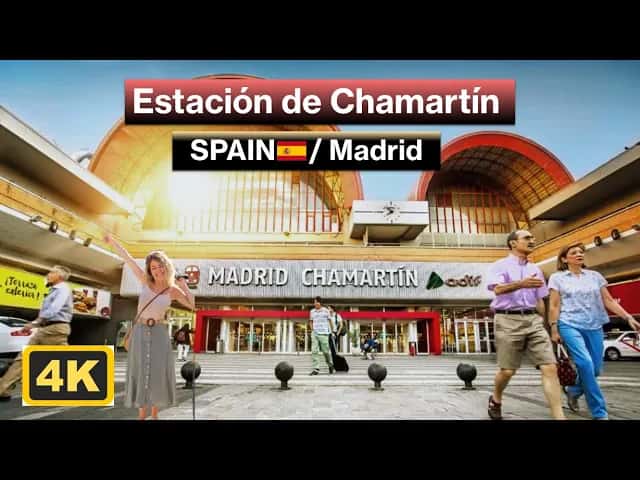
Chamartín station — officially Madrid-Chamartín, and sometimes referred to as Madrid Chamartín Clara Campoamor — is a major railway terminus located at Calle de Agustín de Foxá, Madrid, Spain. The station is designed as an integrated transport interchange, connecting long-distance, regional, and high-speed trains with multiple bus and taxi connections, along with the Madrid Metro.
Chamartín station sits close to Paseo de la Castellana, one of Madrid's most important avenues, and is within reach of several notable landmarks. The Kio Towers, recognizable for their leaning design, are close to the station, and the Four Towers Business Area is also located near Chamartín, forming part of Madrid's modern skyline near Plaza de Castilla. Santiago Bernabéu Stadium is a short distance away, and Fundación Canal, which hosts art exhibitions, is another nearby cultural stop for travelers with time before their train.
Chamartín station has 25 platforms for various train services, including high-speed trains connecting to Alicante and northern cities, and long-distance trains serving destinations like Valencia and León. Key destinations from Chamartín also include cities such as León and A Coruña, reflecting the station's role as a major hub in Spain's rail network. Cercanías trains provide fast access to the city center, and Cercanías Madrid services connect Chamartín with the wider Madrid region, making the station just as important for daily commuters as for long-distance and high-speed travelers.
Station Scale, Metro, and Facilities
Chamartín station's concourse covers an area of about 18,000 m², making it one of the largest railway stations in Spain. As part of Spain's high-speed rail network, Chamartín handles a wide mix of long-distance, regional, and Cercanías commuter trains alongside its high-speed AVE services. The station connects to Metro Lines 1 and 10, giving passengers direct access to the wider Madrid metro network, and several EMT bus lines stop directly at Chamartín station.
A taxi from Chamartín to Puerta del Sol costs around €25, with the station itself sitting about 5.6 km from Puerta del Sol. As an integrated transport interchange, Chamartín station brings together trains, metro, buses, and taxis in one location, making onward travel across Madrid straightforward regardless of which mode of transport you prefer.
Facilities at Chamartín station include waiting areas, shops, and dining options, along with various food outlets and vending machines throughout the concourse. The Sala Club lounge offers complimentary snacks and Wi-Fi for eligible travelers wanting a quieter space to wait, and the station features toilets and baby changing facilities.
Address
Agustín de Foxá, 40, Madrid, Spain
Popular questions
Yes. High-speed train passengers must pass through airport-style baggage screening before accessing the departure platforms.
Yes. Free Wi-Fi is available in most public areas of the station.
Metro, Cercanías trains, taxis, and airport bus connections are available. Travel time is typically 15–30 minutes depending on the route.
Chamartín station is officially known as Madrid-Chamartín, and is sometimes referred to as Madrid Chamartín Clara Campoamor. This additional naming isn't universally used in everyday conversation, so most travelers and signage simply refer to it as "Chamartín" or "Madrid Chamartín."
Chamartín serves both — it's a major hub for long distance trains and high-speed trains to destinations like Alicante, Valencia, and León, while also handling regional trains and Cercanías Madrid commuter services connecting the wider Madrid region.
Yes, Chamartín connects directly to a metro station served by Metro Lines 1 and 10, giving passengers fast access into central Madrid and beyond.
Luggage lockers are currently unavailable at Chamartín station due to construction work. Travelers needing to store bags should check for alternative storage options nearby before arriving, since this isn't guaranteed to be available on-site.
Chamartín station is about 5.6 km from Puerta del Sol in Madrid's city centre, with a taxi journey costing around €25, or Cercanías and metro connections available for a more affordable option into the centre.
Yes, "Chamartín," "Madrid Chamartín," and "Madrid Chamartín Clara Campoamor" all refer to the same railway station in Madrid, Spain.
Chamartín train station and Madrid Atocha station are Madrid's two main railway terminals, connected to each other by regional and long-distance trains passing through the city. Many long-distance and high-speed routes call at both Chamartín and Atocca, so it's worth checking which train station your ticket refers to.
Yes, a taxi rank is available outside Chamartín for passengers heading into central Madrid. While Chamartín doesn't connect directly to Principe Pio, regional trains from Chamartín do reach destinations like El Escorial and San Sebastian de los Reyes north of the city, alongside longer routes further north and south across the wider region.
Yes, Madrid Chamartin sits toward the north of central Madrid, with metro, bus, and rail connections reaching the east, west, and south of the city without much difficulty, making it a convenient hub regardless of which direction you're travelling from.
Yes, restaurants, cafes, and shops are available throughout the station's main hall, and Chamartín remains accessible at night for late arrivals and early departures, though some individual shops may close earlier in the evening.
Transfer between platforms at Chamartín is generally straightforward, with clear signs directing passengers to the correct gate and platform number. A short walk through the main hall connects most of the station's 25 platforms.
Yes, Renfe operates the majority of long-distance, regional, and high-speed trains from Chamartín, and Renfe's official page allows passengers to check tracks, departures, and departing times before arriving at the station.
Chamartín connects to numerous Spanish cities, including routes toward Salamanca and Segovia on regional lines, alongside long-distance and high-speed connections to destinations further afield like Alicante and northern Spain.
Yes, an entrance near the Kio Towers skyscrapers offers a direct route into Chamartín from that side of Paseo de la Castellana, useful if you're arriving from the Four Towers Business Area or nearby streets.
Madrid Chamartín Clara Campoamor is the fuller name generally understood to be in honour of Clara Campoamor, a pioneering Spanish advocate for women's suffrage, though this detail isn't always confirmed on official signage. Some visitors do visit the station simply to see its scale and architecture, even without a train to catch, and a short walk around the terminus building and nearby hotel is often enough to appreciate its size. Terminus platforms and the surrounding walk make Chamartín feel like more than just a stop along the way.
Once you reach Chamartín, the rest of your journey — whether continuing by metro, bus, taxi, or a connecting train — is generally straightforward, given the station's role as a fully integrated transport interchange for Madrid and the wider region.
A hotel is located on the station's west side for travelers who want to stay close by. It's worth noting that luggage lockers are currently unavailable due to construction work — travelers needing to store bags should check current alternatives before relying on the station itself.