
Everything You Need to Know About Irish Train Travel
Ireland trains are one of the best ways to explore the island — connecting Dublin with Cork, Galway, Limerick, Belfast, and other major cities on a railway network that spans over 2,500 km of track across both the Republic of Ireland and Northern Ireland. Whether you're booking an intercity train from Dublin to Cork, travelling north to Belfast on the cross-border Enterprise service, heading west to Galway along the shores of Galway Bay, or exploring Northern Ireland's spectacular coastline by rail, Irish trains offer a scenic and comfortable way to travel between the island's most celebrated destinations. Train travel in Ireland runs daily between 5am and midnight, with frequent services on all major intercity routes and commuter trains connecting cities to surrounding towns throughout the day. All Ireland train tickets can be booked in advance through HighSpeedTrains.
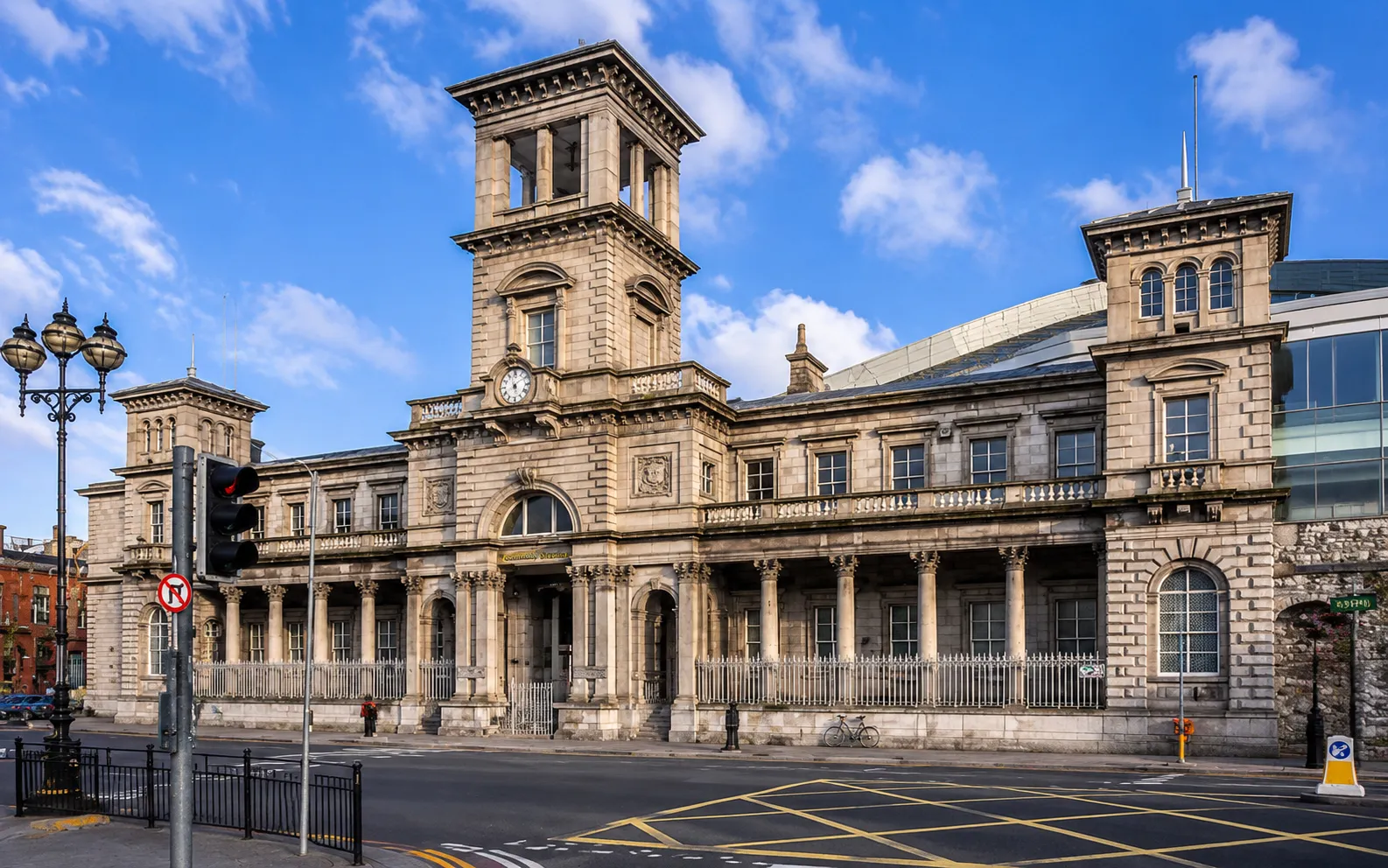
Irish trains are operated by two main companies — Iarnród Éireann (Irish Rail) in the Republic of Ireland, and Translink in Northern Ireland. Almost all rail lines in Ireland radiate from Dublin, which operates as the central hub of the network. Dublin Heuston station — opened in 1846 and equipped with nine platforms — serves intercity routes to Cork, Limerick, Galway, Waterford, and Tipperary. Dublin Connolly station — Ireland's busiest train station, opened in 1844 — serves Belfast, Sligo, Wexford, and the DART electrified commuter line along Dublin's coastline. Together these two stations handle the vast majority of intercity and commuter passenger traffic across the Irish rail network.
The Irish rail network is currently undergoing its most significant period of change in decades. The All-Island Rail Review — a major government-commissioned rail review — recommends reopening many railway lines, extending the network to a total of 3,000 km of track, and tripling annual rail usage from 65 million to 180 million passengers. New intercity trains capable of reaching speeds of 200 km/h are planned, along with the reopening of the Western Rail Corridor and new lines connecting cities and towns currently without rail access. These infrastructure changes are expected to transform public transport across the island in the coming years.
Dublin to Belfast, Giant's Causeway and Northern Ireland Railways

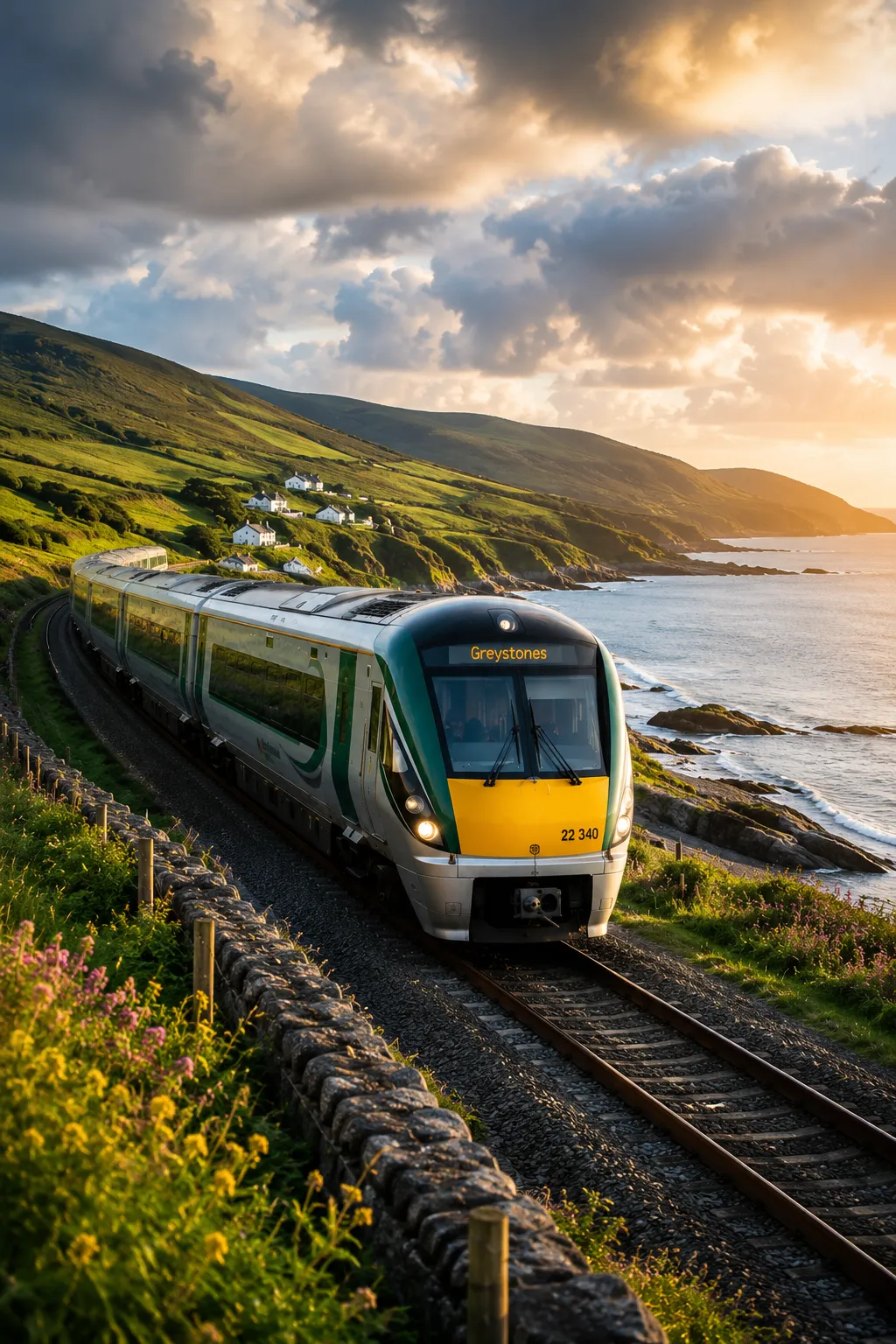
Northern Ireland railways are operated by Translink under the NI Railways brand, connecting Belfast with Londonderry, Newry, Larne, and Bangor on a well-maintained regional network. The most scenic route in Northern Ireland — and one of the most celebrated rail journeys on the island — is the Belfast to Londonderry line, which passes along the Foyle estuary and close to the famous Giant's Causeway on the Causeway Coast. The section from Derry to Coleraine offers views of sandy Benone Strand and the dramatic North Antrim coastline, making it one of the most visually rewarding train journeys in Europe.
Dublin to Galway trains also depart from Heuston, taking approximately 2 hours 45 minutes along a route that offers scenic views of the Irish countryside and, on the approach to Galway, stretches of Galway Bay on the western coast. Dublin to Limerick services run via Limerick Junction, where passengers can connect to Limerick city centre and onward services through the south and west of the country.
The Dublin to Belfast route is the island's flagship intercity connection, with multiple services operating daily between Dublin Connolly and Belfast Grand Central. Popular cross-border routes include Dublin to Belfast and Belfast to Dublin. Other key routes include Dublin to Galway, Galway to Dublin, and Dublin to Cork. Book all Ireland train tickets through HighSpeedTrains.
Popular questions
Ireland trains fall into several categories. Intercity trains connect Dublin with Cork, Galway, Limerick, Waterford, Belfast, and other major cities on the main routes radiating from the capital. The Dublin to Cork and Dublin to Belfast services are the busiest intercity routes on the island. Commuter services operate around Dublin and other large cities, connecting the city centre with surrounding towns. The DART is an electrified commuter rail service running along Dublin's coastline between Greystones in the south and Malahide and Howth in the north. NI Railways operates regional services across Northern Ireland.
The easiest way to buy tickets for Ireland trains is to book online in advance through HighSpeedTrains. You'll receive an instant e-ticket, choose your seat and travel class, and avoid queuing at the railway station. Booking in advance is particularly recommended on intercity routes like Dublin to Cork, Dublin to Belfast, and Dublin to Galway, where trains can fill up at peak times and on public holidays. Train tickets are also available at station counters and ticket machines, and passengers on commuter and DART services can pay using the reusable Leap Card for convenient contactless travel.
The DART — Dublin Area Rapid Transit — is an electrified commuter rail service running along Dublin's coastline and through the city centre, connecting Greystones in County Wicklow in the south with Malahide and Howth in north County Dublin. It is one of Ireland's most used rail services, carrying large numbers of commuters and leisure passengers daily along a route that offers scenic views of Dublin Bay and the Irish Sea. The DART operates with high frequency throughout the day, with trains running every few minutes at peak times in the city centre. DART tickets can be purchased at stations or using the Leap Card for contactless travel.
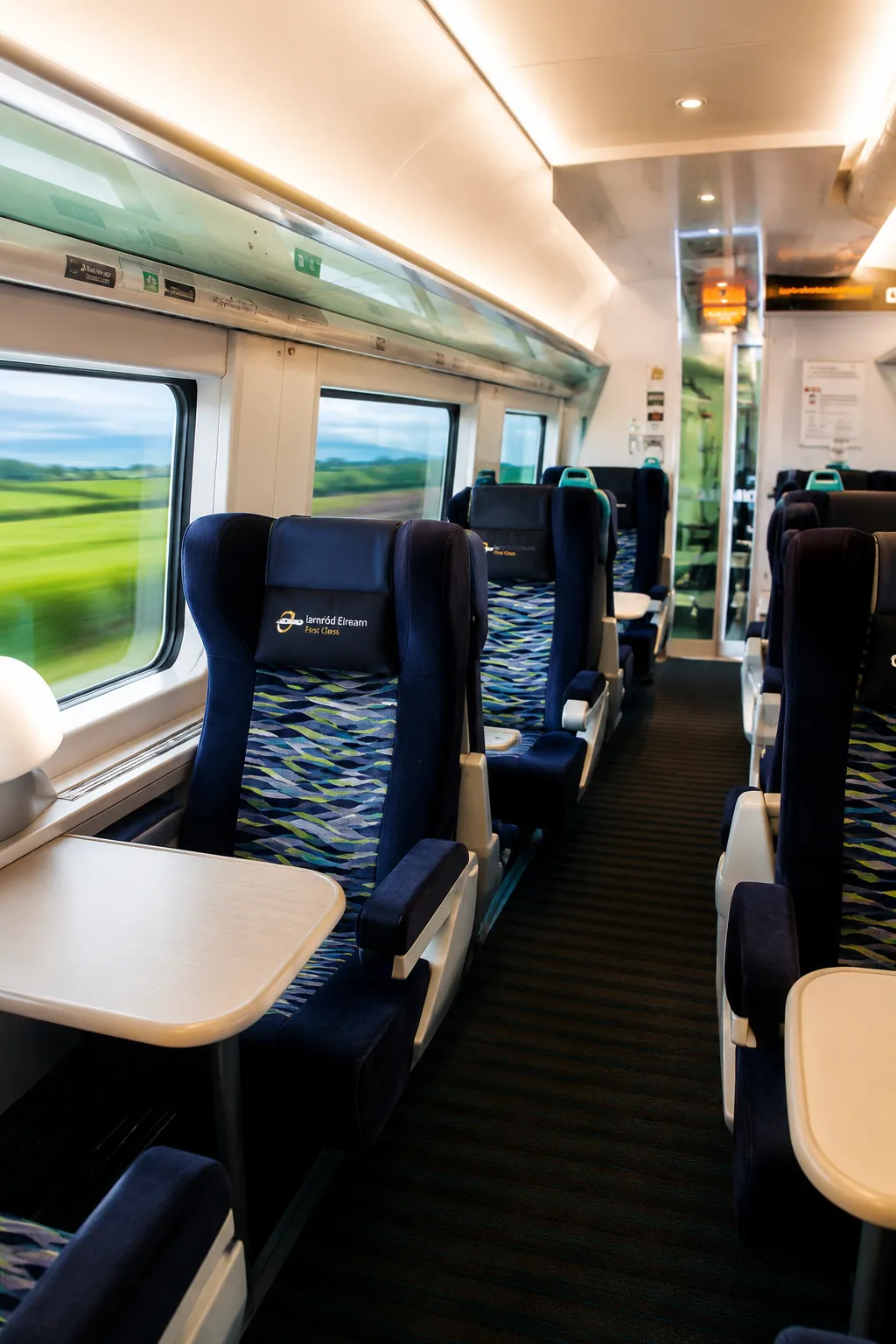
The Dublin to Cork train takes approximately 2 hours 50 minutes on intercity services, covering a distance of 266 km between Dublin Heuston station and Cork Kent station. Services run every hour throughout the day, making it the most frequent intercity route on the Irish rail network. Trains on the Dublin Cork route are operated using Mark 4 coaches with a top speed of 125 mph, and offer first class and standard class seating with a cafe bar, restaurant car, air conditioning, and free WiFi on board. Book your Dublin to Cork train ticket through HighSpeedTrains.
The Dublin to Belfast route is the island's most important cross-border intercity service, connecting Dublin Connolly with Belfast Grand Central in approximately 2 hours 10 minutes. The journey passes along the east coast of Ireland with picturesque views of Malahide, the Irish Sea coastline, and the rolling countryside of Counties Louth and Down. Multiple daily departures operate in both directions, with first class and standard class seating available on board. Belfast Grand Central station — opened in October 2024 — is the new hub for Northern Ireland railways and provides onward connections across the NI Railways network.
The All-Island Rail Review is a major government-commissioned rail review examining the future of rail infrastructure across both the Republic of Ireland and Northern Ireland. Published recommendations include reopening many railway lines that were closed in previous decades, extending the total rail network to 3,000 km of track, and tripling annual rail passenger numbers from 65 million to 180 million. Key recommendations include reopening the Western Rail Corridor to provide a direct rail link between Galway, Limerick, and Cork, and introducing new intercity trains capable of speeds of 200 km/h on upgraded lines. The review also addresses rail freight, high speed rail feasibility, and improved rail links to Dublin Airport. Implementation is expected to take place in phases over the coming decades.
Ireland does not currently have dedicated high speed rail lines, but intercity trains on the main corridors operate at speeds of up to 125 mph using Mark 4 rolling stock. The All-Island Rail Review recommends developing new infrastructure to allow speeds of 200 km/h on upgraded lines, which would significantly reduce journey times on key routes like Dublin Cork and Dublin Belfast. A high speed line connecting Dublin with Belfast and Cork is among the long-term proposals under consideration as part of the wider rail infrastructure programme. Until new lines are built, the existing intercity train network provides fast and comfortable services on all major routes.
Yes — direct intercity trains run between Dublin Connolly and Belfast Grand Central multiple times daily, making the cross-border route one of the most convenient on the island. The Enterprise service provides a direct connection between the two cities in around 2 hours 10 minutes, with first class and standard travel classes available on board. From Belfast, NI Railways connects onward to Londonderry, Larne, Bangor, and Newry. The Dublin to Belfast route is fully bookable through HighSpeedTrains, with instant e-tickets and seat selection at the time of purchase.
The Western Rail Corridor is a partially dormant railway line running along the west coast of Ireland, connecting Limerick with Galway via Ennis, Athenry, and intermediate stations. The southern section between Limerick and Ennis is currently in operation, but the northern section from Ennis to Galway has been closed for many years. The All-Island Rail Review recommends reopening the full Western Rail Corridor as a priority, which would provide a direct rail link between Limerick and Galway — two of Ireland's largest cities — without requiring passengers to travel via Dublin. Reopening the corridor is seen as a major step toward improving rail connectivity across the west of Ireland and supporting the transport strategy for the region.
Ireland has some of the most scenic train routes in Europe. The Dublin to Galway service offers views of the midlands and the waters of Galway Bay on approach to the city. The Dublin to Belfast route passes along the east coast with sea views near Malahide and the coastal scenery of County Louth. In Northern Ireland, the Belfast to Londonderry line passes along the Foyle estuary and through the Causeway Coast, with the section from Derry to Coleraine offering views of the sandy Benone Strand — widely regarded as one of the most beautiful stretches of rail scenery in the British Isles. The route near the Giant's Causeway is particularly popular with tourists.
Ireland train tickets on intercity routes are available well in advance of the departure date, and booking early gives you the widest choice of departure times and travel classes. This is particularly important on busy routes like Dublin to Cork — which runs hourly but fills up at peak times — and on the Dublin to Belfast service, which has strong demand from both leisure and business travellers throughout the week. On public holidays and during major events, intercity trains across the Irish rail network can book up quickly. Book your Ireland train tickets through HighSpeedTrains for an instant e-ticket and full seat selection at the time of purchase.