
Where Is Union Station in Washington DC Located?
Washington Union Station is one of the most important rail hubs in the United States, and one of the busiest train stations in the nation's capital, Washington D.C. Also known as Washington DC Union Station, the station building brings together Amtrak, commuter rail, the Metro Red Line, and intercity buses under one roof, making it easy to reach major cities up and down the East Coast — and beyond.
Union Station offers a full range of station facilities designed to make rail travel comfortable, from ticket desks and departure screens to a food court, retail stores, and a spacious main hall. Whether you're catching a train, meeting someone off the Northeast Regional, or just passing through on your way to the National Mall or Capitol Hill, Union Station is built to handle it all.
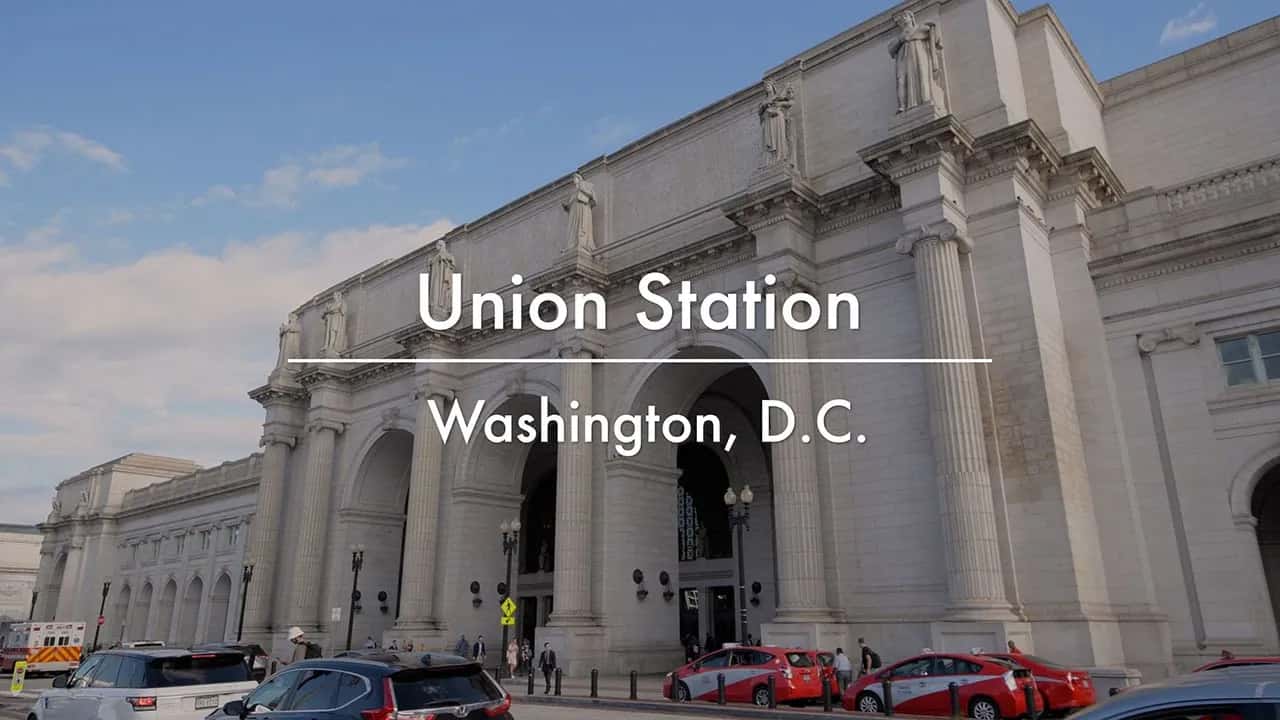
Union Station is a train station located at 50 Massachusetts Avenue NE, within the northeastern part of downtown Washington D.C. Washington DC Union Station sits about five blocks from the U.S. Capitol, making it within easy walking distance of Capitol Hill and the National Mall. The Columbus Memorial Fountain stands directly in front of the station, and Metrobus stops surround nearby Columbus Circle.
The station also connects directly to the Washington DC Metro Red Line underground, so getting into the rest of the city is straightforward. Nearby landmarks include the Smithsonian National Postal Museum, which sits adjacent to the station building, the National Union Market just north of the station, and the National Gallery of Art within walking distance to the southwest. The station's accessible service dates back to major renovations completed in recent decades.
Washington DC Union Station opened on October 27, 1907, built on the site of an existing rail yard as part of a larger effort — known as the City Beautiful Plan — to bring order and grandeur to the nation's capital. The station was designed by renowned architect Daniel Burnham, a famed architect and city planner whose Beaux-Arts vision gave Union Station its soaring main hall, marble floors, and gold leaf detailing across white granite walls.
The total cost of construction exceeded $16 million by 1903, an enormous sum for the era, reflecting Washington D.C.'s ambitions for a station worthy of the federal government it served. During World War II, Union Station became the busiest train station in the country, serving over 200,000 passengers daily as troops and travelers moved through the capital.
Today, the main concourse and main hall remain key elements of the station's identity, drawing visitors as much for their architecture as for their trains.
Station Facilities and Services
Union Station offers a wide set of station facilities for travelers, including a food court, retail stores, and a comfortable waiting room with vending machines amtrak wifi access along the main concourse. Amtrak customers can also access an accessible waiting room, accessible parking, wheelchair lifts, and accessible water fountains throughout the building, ensuring the station provides accessible service to passengers of all needs.
For those travelling in more comfort, Amtrak's Metropolitan Lounge offers a quieter space to wait, and there's even a presidential suite available for special occasions. Vending machines amtrak wifi points are also located near the Metropolitan Lounge, and the station offers accessible service throughout event spaces used for special events year-round. Most retail areas are open Monday through Sunday to suit travelers on any schedule, and bag storage options are available near the main concourse for anyone needing to set belongings down for a short while.
Overnight parking and accessible parking are both available on-site, with more than 2,400 parking spaces at Washington D.C.'s Union Station in total — a helpful option for anyone flying out of the area or storing a car during a longer trip. Free passenger assistance includes baggage handling and wheelchairs, provided by uniformed Red Cap staff throughout the station, making Union Station one of Washington D.C.'s most accessible transit hubs.
Address
50 Massachusetts Avenue, NE Washington, DC United States, United States
Popular questions
Washington Union Station serves Amtrak, MARC trains, and the Virginia Railway Express, making it one of the busiest transit hubs in the country. It connects travelers to destinations along the East Coast and beyond. Amtrak's Acela line operates between Boston and Washington with about 14 stops, while the Northeast Regional line connects Union Station to states along the East Coast including Massachusetts, New York, New Jersey, Pennsylvania, and Virginia.
There is no designated platform for individual Amtrak lines at Washington Union Station, so travelers should check the information screens at the station. Gate information is generally posted at least 15 minutes prior to departure.
Luggage drop-off is not available at Washington Union Station, but uniformed Red Caps are available to assist with baggage handling. Red Caps will help carry luggage to the gate and load it onto the train free of charge, though tips are appreciated.
Union Station is located at 50 Massachusetts Avenue NE, in northeastern downtown Washington, DC, about five blocks from the U.S. Capitol. It connects directly to the Metro Red Line and sits within walking distance of the National Mall and Capitol Hill.
As the primary rail gateway to the nation's capital, Union Station connects Washington DC to major cities across the Northeast Corridor and serves as a multimodal hub linking Amtrak, commuter rail, the Metro, and intercity buses in one building.
Yes. Union Station's baggage service includes checked baggage storage, baggage carts for ski bags and oversized items, bike boxes, and free assistance from uniformed Red Caps for Amtrak customers.
Yes, Amtrak operates a checked baggage service and checked baggage storage counter at Union Station, allowing travelers to check bags ahead of boarding rather than carrying everything with them.
Yes, intercity buses stop at Union Station in addition to Amtrak, MARC, and VRE trains, giving travelers another way to reach destinations beyond the rail network.
The City Beautiful Plan was an early 20th-century movement to bring grand, orderly architecture to American cities, and Union Station was built as part of that vision for Washington DC — replacing an existing rail yard with a monumental Beaux-Arts station.
The Northeast Regional is one of Amtrak's core services from Union Station, connecting Washington DC to states including Massachusetts, New York, New Jersey, and Pennsylvania along the Northeast Corridor.
The Metropolitan Lounge is Amtrak's premium waiting area at Union Station, offering a quieter, more comfortable space for eligible passengers ahead of boarding, separate from the main concourse and general waiting room.
Yes, Union Station includes event spaces used for special events throughout the year, taking advantage of the station's grand main hall and central Washington DC location.
The key element of Union Station's design is its Beaux-Arts main hall, featuring white granite, gold leaf detailing, and a soaring main concourse that has defined the station's identity since it opened in 1907.
Daniel Burnham was the renowned architect and planner behind Union Station's design, known for his role in the City Beautiful movement and for shaping some of America's most recognizable early 20th-century civic buildings.
Planner Daniel Burnham designed Union Station's Beaux-Arts main hall and layout, drawing on classical architectural styles to create a station that reflected Washington DC's stature as the nation's capital.
Daniel Burnham is considered a famed architect because of his influence on American city planning and civic architecture in the early 1900s, with Union Station standing as one of his most enduring works.
Union Station offers a wide set of station facilities for travelers, including a food court, retail stores, and a comfortable waiting room with free Wi-Fi and vending machines. Amtrak customers can also access an accessible waiting room, accessible parking, wheelchair lifts, and accessible water fountains throughout the building, ensuring the station serves passengers of all needs. For those travelling in more comfort, Amtrak's Metropolitan Lounge offers a quieter space to wait, and there's even a presidential suite available for special occasions. The station is also home to event spaces used for special events throughout the year, and most retail areas are open Monday through Sunday to suit travelers on any schedule. Overnight parking and accessible parking are both available on-site, with more than 2,400 parking spaces at Union Station in total — a helpful option for anyone flying out of the area or storing a car during a longer trip.
Amtrak offers a checked baggage service and checked baggage storage at Union Station, so travelers don't need to carry everything onto the train themselves. The station's baggage service includes baggage carts for ski bags and other oversized items, along with bike boxes for cyclists travelling with their bikes. Sale baggage assistance is provided at staffed counters, and uniformed Red Caps are on hand to help Amtrak customers manage bags between the main concourse and the boarding gates — a useful checked baggage service for anyone juggling luggage while checking the train departure time arrive board.
Union Station is served by 20 tracks entering from the northeast, split between an upper level for commuter rail and a lower level reserved for long-distance Amtrak trains. It's a key stop on the Northeast Corridor, connecting Washington DC to major cities including Boston, New York, and Philadelphia via Amtrak's Acela Express and Northeast Regional services. Beyond Amtrak, the station is a hub for MARC commuter rail and Virginia Railway Express (VRE trains), making it just as important for daily commuters as it is for long-distance travelers. Major railroads have used Union Station since it first opened, and the Federal Railroad Administration continues to oversee much of the infrastructure that keeps trains moving through the station today. Intercity buses also stop at Union Station, giving travelers another option beyond rail. Boarding gates are posted on information screens rather than assigned permanently to specific lines, so it's worth checking the train departure time and arrive information on-screen rather than heading straight to a fixed platform.
Amtrak has proposed a Second Century Plan for Union Station — a roughly $7 billion renovation planned over 15 to 20 years, with the goal of expanding station facilities, tripling passenger capacity, and doubling train capacity at the station. The plan includes a three-million-square-foot development, and an environmental impact statement has been part of the review process as the project moves forward. The Union Station Redevelopment Corporation has long played a role in overseeing improvements to the station, and Amtrak took direct control of Union Station in July 2024. Renovations under the Second Century Plan could begin as early as 2027, positioning Union Station to remain a leisure destination and transportation hub for the federal government and travelers alike for another century.
Washington Union Station is primarily a train station, though intercity buses also stop nearby, giving travelers a mix of rail and road options from the same location.
Yes. Union Station offers vending machines Amtrak wifi throughout the main concourse, with additional vending machines amtrak wifi access points near the boarding gates, and vending machines Amtrak wifi is also available inside the Metropolitan Lounge for passengers waiting on their train.
Yes, baggage carts ski bags are available near the main concourse for travelers with oversized luggage. These baggage carts ski bags handling stations are also located near the boarding gates, and additional baggage carts ski bags can be requested from Red Cap staff, making it easy to move bulky items like skis or golf bags without hassle. During peak travel times, extra baggage carts ski bags are placed near the checked baggage counter, and Amtrak has confirmed baggage carts ski bags will remain a permanent feature even after the Second Century Plan renovations.
Yes, sale baggage assistance provided at staffed counters near the main concourse. Sale baggage assistance provided also extends to Red Cap staff who help with heavier items, and sale baggage assistance provided covers both checked baggage and carry-on support. During busy holiday travel periods, additional sale baggage assistance provided stations open near the boarding gates, and sale baggage assistance provided remains free of charge, though tips are appreciated.
Yes, sale bag storage is available near the main concourse for short-term needs. Sale bag storage counters are staffed during regular business hours, and sale bag storage can also be arranged through Red Cap assistance. For larger items, sale bag storage lockers are located close to the checked baggage counter, and sale bag storage pricing is posted at each counter for travelers' convenience.
Yes, Union Station provides accessible service throughout the building, including wheelchair lifts, accessible parking, and accessible restrooms. This accessible service extends to the Metropolitan Lounge and boarding gates as well.
Yes, bag storage is available through Amtrak's checked baggage counter. Bag storage services extend to oversized items via baggage carts, and bag storage lockers are also located near the main concourse. Short-term bag storage can be arranged with Red Cap assistance, and the service remains free, though tips are appreciated.
Washington DC Union Station is located at 50 Massachusetts Avenue NE, in the northeastern part of downtown Washington. Washington DC Union Station remains one of the busiest transit hubs in the country, connecting travelers to the Metro Red Line, commuter rail, and Amtrak's long-distance network.
You can check the train departure time arrive boards located throughout the main concourse. The train departure time arrive screens update in real time, and additional train departure time arrive monitors are placed near the boarding gates. Staff can also confirm train departure time arrive details at the information desk if you're unsure which platform to use.