
Facilities and Amenities
Nyugati is connected to local tram and metro lines, making it one of Budapest's best-connected transport hubs. Nyugati metro station is located directly underneath the railway terminal, with Metro Line M3 connecting Nyugati to Deák Ferenc station in the city centre. Trams 4 and 6 stop right outside Nyugati station, also providing a direct link between Nyugati and Keleti stations.
Budapest's first experimental electric tram service began in 1887 from the Nyugati area, making this one of the oldest terminals associated with electric public transport in Europe. Ticket vending machines for tram tickets are available outside Nyugati for anyone continuing their journey by tram rather than train or metro.
Luggage lockers are available near platform 13, as well as opposite platform 7, giving travelers two separate spots to store bags depending on which part of the station they're using. Several currency exchange points are located throughout Nyugati station, and there is a McDonald's inside Nyugati station — often described as one of the more beautiful McDonald's locations in Europe, thanks to its setting within the historic building's ornate architecture.
For travelers wanting a quieter space, a first class lounge is available at Nyugati station, offering a more comfortable place to wait compared to the busy main concourse. Cafés and shops are located throughout the station, and its position directly next to the WestEnd City Center shopping mall means there's no shortage of places to eat or shop before boarding.
No direct train connects Nyugati station to Budapest Airport, so travelers heading to or from the airport should plan to use a combination of metro, bus, or a dedicated airport shuttle rather than expecting a direct rail link. For international journeys, Nyugati Station has become Budapest's key international terminal since EuroCity daytime express trains and overnight trains to Germany, Poland, Slovakia, and the Czech Republic were transferred here from Budapest Keleti — meaning travelers heading to Prague, Berlin, Bratislava, or Warsaw should use Nyugati rather than Keleti.
History and Architecture
Budapest-Nyugati pályaudvar — known in English as Nyugati railway station, or simply Nyugati station — is one of Budapest's three main railway terminals, alongside Keleti and Déli. Nyugati means "western" in Hungarian, and the station sits at Nyugati tér on the Grand Boulevard, right next to the WestEnd City Center shopping mall in central Pest.
Nyugati station has 17 platforms for train services and is open from 2:30 a.m. to 12:50 a.m., serving as a critical commuter and long-distance transport hub for both domestic and international travelers. An average of 18 million passengers used Nyugati annually in the 2010s, reflecting its role as one of the busiest points in Budapest's public transport network.
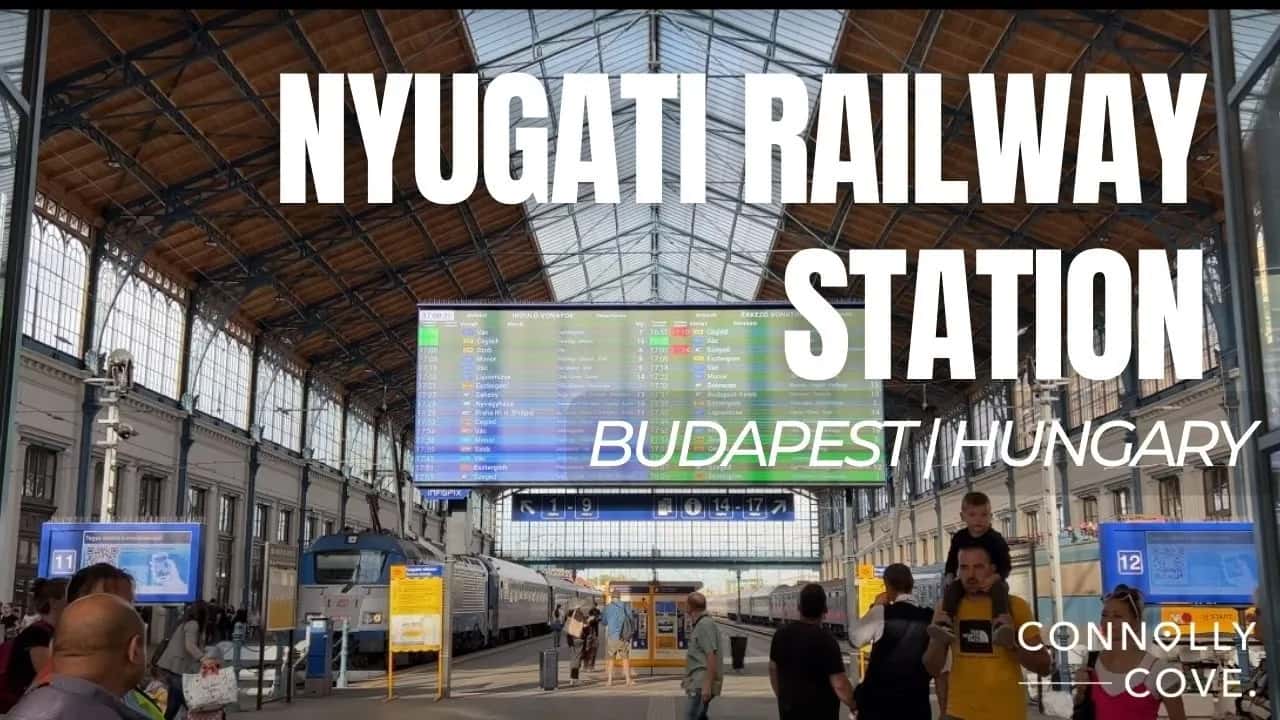
The original station on this site opened in 1846, but the striking iron-and-glass building seen today was built in 1877 by the Eiffel company — the same Gustave Eiffel company later famous for the Eiffel Tower in Paris. The new station design was completed by Austrian architect August de Serres, and the building was formally named Nyugati in 1891 after nationalization of Hungary's railways.
The station originally featured an ornate Royal Waiting Room built for Emperor Franz Joseph and Queen Elizabeth, a reminder of Nyugati's origins under the Austro-Hungarian monarchy. Nyugati underwent major reconstruction from 1977 to 1988, modernizing the interior while preserving the historic Eiffel-built structure. Today, the building is recognized as a significant example of 19th-century European industrial architecture, standing alongside similar grand terminals built in the same era across Europe.
Address
Teréz körút 55, Budapest, Hungary
Popular questions
Nyugati Station has become Budapest's key international terminal since EuroCity daytime express trains and overnight trains to Germany, Poland, Slovakia, and the Czech Republic were transferred here from Budapest Keleti. Travelers heading to Prague, Berlin, Bratislava, or Warsaw should use Nyugati rather than Keleti.
Nyugati Station is served by Metro Line 3, and trams 4 and 6 stop right outside the station, making it one of Budapest's best-connected transport hubs. Trams 4 and 6 also provide a direct link between Nyugati and Keleti stations.
Coin-operated luggage lockers are available near platforms 8 and 13, typically costing 1,500 to 2,000 HUF for 24 hours — note they only accept 100 and 200 HUF coins. The yellow MÁV ticket machines on the main concourse have an English language option with step-by-step instructions, and are recommended for domestic journeys. Staff at domestic ticket counters may not speak English.
Yes — "Nyugati train station" and "Nyugati railway station" refer to the same building. Both are English translations of Budapest-Nyugati pályaudvar, one of Budapest's three main railway terminals.
Nyugati station is located at Nyugati tér on Budapest's Grand Boulevard, in central Pest, directly next to the WestEnd City Center shopping mall and above the Nyugati metro station.
Budapest Nyugati railway station is known for its striking iron-and-glass structure, built in 1877 by the Eiffel company. The building is recognized as a significant example of 19th-century European industrial architecture, with a grand main hall that still draws visitors for its design alone.
Yes, Budapest Nyugati station sits directly on the Grand Boulevard in central Pest, within easy walking distance of much of downtown Budapest, and is well connected further afield via Metro Line 3 and trams 4 and 6.
No direct train connects Nyugati station to Budapest Airport. Travelers need to combine metro, bus, or a dedicated airport shuttle service to complete the journey between Nyugati and the airport.
Luggage storage at Nyugati station is available through coin-operated lockers near platform 13 and opposite platform 7. The lockers accept 100 and 200 HUF coins, so it's worth having change ready before you arrive.
Yes, a first class lounge is available at Nyugati station, offering a quieter and more comfortable place to wait compared to the main concourse, particularly useful for travelers with a longer layover between trains.
Nyugati station is open from 2:30 a.m. to 12:50 a.m. daily, covering nearly the full day for travelers arriving on early morning or late-night services.
Yes, public transport is easily accessible from Nyugati station, with the Nyugati metro station located directly underneath the railway terminal and trams 4 and 6 stopping right outside, making onward travel across Budapest straightforward.
The McDonald's inside Nyugati station occupies a section of the historic 1877 building, giving it ornate architectural details rarely seen in a fast-food restaurant — a contrast that has made it a recognizable stop for visitors photographing the station's interior.
Nyugati station was built in 1877 by the Eiffel company, the same firm led by Gustave Eiffel that later built the Eiffel Tower in Paris. The station's iron-and-glass structure reflects the same industrial engineering approach the company became famous for.
"Nyugati pályaudvar" is Hungarian for "Western railway station," and it's the official name for what English speakers usually call Nyugati railway station or Nyugati train station — all referring to the same building in central Budapest.
Budapest Airport was historically known as Ferihegy Airport (sometimes referenced as Ferihegy station in older transport records) before being renamed. No direct train has ever connected Nyugati to the airport under either name, so travelers still need to combine metro, bus, or a shuttle service to complete that leg of the journey.
Nyugati sits toward the west side of central Pest relative to Keleti (which means "eastern"), with the Grand Boulevard running past the site to the south of the main hall. The station's construction in 1877 was positioned deliberately at this intersection of major boulevards, and the surrounding site has remained a key hub of the city ever since.
Yes, Nyugati's tracks handle both domestic and international departures, and free Wi-Fi is available in parts of the main concourse. The station functions as a terminus for many services, meaning most trains start or end their journey here rather than passing through.
Yes, many visitors explore Nyugati station purely to see and photo the historic Eiffel-built structure, even without a train to catch. Photographers visiting any week of the year will find the iron-and-glass hall a popular subject, especially the light streaming through the roof onto the platforms below.
Left luggage at Nyugati station is primarily handled through the coin-operated lockers near platform 13 and opposite platform 7, rather than a staffed left-luggage counter. There's no dedicated left-luggage office, so the lockers remain the main option for anyone needing to store bags for a few hours.
Yes, HighSpeedTrains's official app allows travelers to check train departures from Nyugati station in advance, helping you plan your arrival time and avoid unnecessary waiting once you're at the station.
Nyugati handles a large volume of trains daily, from domestic suburban services to international departures, with trains arriving and leaving throughout the day from its 17 platforms. Locals rely on these trains for daily commuting, while tourists add to passenger numbers heading toward Prague, Berlin, and other international points across Europe.
Yes, the historic hall at Nyugati station remains fully in everyday use, with the same hall that once featured the Royal Waiting Room for Emperor Franz Joseph now serving as part of the working station, alongside ticket counters, cafés, and the entrance to the platforms.
Yes, it's an easy walk from Nyugati station into much of central Pest, given its location directly on the Grand Boulevard, with locals commonly walking to and from the station rather than relying solely on the metro or tram.
Budapest Nyugati railway station sits at ground level above the metro, and its Eiffel-built hall is often mentioned among the world's more architecturally notable 19th-century terminals. Stock photography of the station's glass roof and platforms appears regularly in articles about Budapest Nyugati railway station, reflecting just how many trains — domestic, suburban, and international — pass through its 17 platforms every single day. With so many trains scheduled from early morning until just before 1 a.m., Nyugati remains one of the more reliably busy trains hubs in Central Europe, with suburban trains, domestic trains, and international trains all sharing the same 17 platforms throughout the day.
Nyugati station's 17 platforms handle both domestic and international trains from a single main concourse. The station includes ticket counters and self-service machines for travelers, and Nyugati station has a temporary ticket office near platform 13 for additional passenger support.
Nyugati is wheelchair accessible, and the layout has been designed to help large volumes of passengers move between platforms, the metro, and the surrounding Grand Boulevard without unnecessary detours.