
History and Architecture
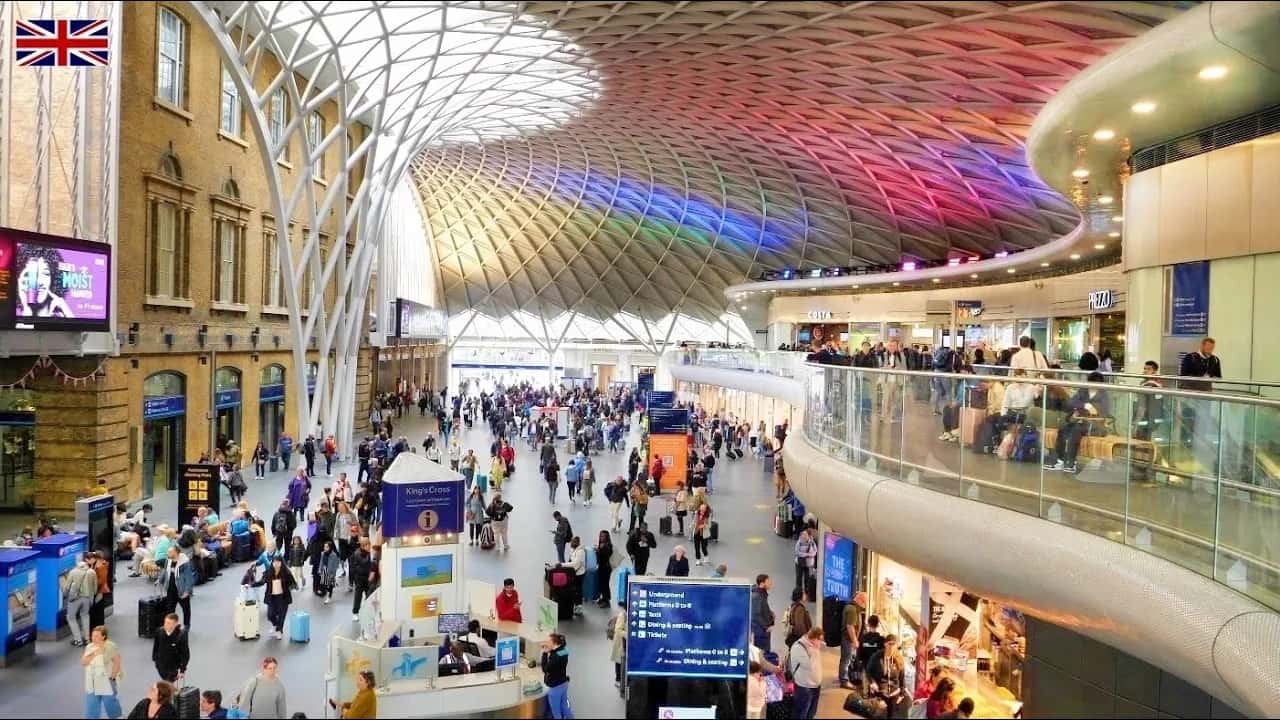
King's Cross station opened on 14 October 1852 as the terminus for the Great Northern Railway, and at the time was the largest railway station in England. Designed by architect Lewis Cubitt, the station underwent a major revitalization project between 2007 and 2013, restoring its original brick façade and adding a striking semi-circular steel-and-glass western concourse that has become one of the most photographed spaces in London rail travel.
Today, London King's Cross is one of the UK's busiest railway termini, connecting to five train operating companies and, via nearby airports, to five international airports. The station has 11 platforms numbered 0 to 10 and sits directly above the King's Cross St. Pancras tube station, giving passengers a seamless connection between national rail and the London Underground.
King's Cross station's history stretches back to its role as the terminus for the Great Northern Railway, later absorbed into the London and North Eastern Railway network. The station has seen its share of difficult moments alongside its architectural achievements: it was bombed during World War II, killing twelve people, and the King's Cross fire in 1987 killed 31 people, a tragedy that led to major fire safety reforms across the UK's railway stations.
The 2007–2013 revitalization project transformed both the station and the surrounding King's Cross district, restoring Lewis Cubitt's original brick façade and turning the area into a mixed-use district with public spaces, shops, and offices. The British Library sits nearby, adding to the area's cultural draw for visitors who venture beyond the station concourse itself.
Trains and Rail Connections
King's Cross serves as the southern terminus of the East Coast Main Line, with 11 platforms numbered 0 to 10 handling services from London North Eastern Railway (LNER), Hull Trains, Grand Central, Great Northern, and other train operating companies. Direct trains from King's Cross reach Edinburgh in under 5 hours, with further rail links to major cities including Leeds and York, along with stops such as Letchworth Garden City on Great Northern's suburban services.
As one of the UK's busiest railway stations, King's Cross's mix of long-distance East Coast services and Great Northern commuter trains makes it a genuinely varied hub, with the appropriate train operator and relevant train operator for your journey clearly signed on departure boards throughout the main concourse.
King's Cross station has 24 dining options available, including popular choices like Starbucks, Costa, and Giraffe World Kitchen, alongside The Parcel Yard pub, which offers meals and drinks inside the station itself. Shops include WHSmith and Pandora, giving travelers plenty to browse on the main concourse or at mezzanine level.
A ticket office and multiple ticket machines are available for those buying tickets in person, and the station's travel centre offers further assistance for more complex journeys. LNER's first class lounge and a separate family lounge — the latter designed for children to play — are both available at the station, alongside a customer information point, customer information desk, and station help points staffed by station staff for general enquiries. National Rail Enquiries also maintains a rail information point at the station for travelers who need broader journey planning help.
King's Cross station is designed with accessibility in mind: step-free access is available via 9 lifts, and accessible toilets are provided throughout the station, including radar key facilities and an access ramp where needed. Wide ticket gates accommodate wheelchair users and travelers with luggage, and disabled passengers coming through the station can request disability assistance in advance through the station's disabled assistance service.
An assistance meeting point is available for passengers who have requested support, though the assistance meeting point varies depending on which train operator you're travelling with — so it's worth confirming the correct location when booking your assistance.
Address
Kings Cross Local authority, London Borough of Camden, United Kingdom
Popular questions
King's Cross Station is located in central London, adjacent to St Pancras International, with excellent connections to the London Underground and national rail network.
Yes. King's Cross St Pancras Underground Station serves several lines, including the Circle, Hammersmith & City, Metropolitan, Northern, Piccadilly, Victoria, and Elizabeth line connections nearby.
For most domestic rail services, arriving 20–30 minutes before departure is recommended. During peak travel periods or if you need assistance, allowing extra time is advisable.
"King's Cross railway station" and "Kings Cross" (often written without the apostrophe) refer to the same station. Both names describe the terminus opened in 1852 for the Great Northern Railway, now served by LNER and other operators.
King's Cross connects to five train operating companies, including LNER (London North Eastern Railway), Hull Trains, Grand Central, and Great Northern, alongside other services running on the East Coast Main Line.
Yes, LNER operates a first class lounge for eligible passengers, and a separate family lounge is available for children to play, giving families a comfortable space to wait before boarding.
Great Northern, the modern successor to the historic Great Northern Railway that originally built King's Cross as its terminus, still operates commuter and suburban services from the station, including routes toward Letchworth Garden City.
Yes, both Hull Trains and Grand Central operate long-distance services from King's Cross, alongside LNER and Great Northern, giving passengers several train operator options depending on their destination.
Yes, the British Library sits close to King's Cross station, within easy walking distance, making it a convenient stop for visitors combining a trip to the library with a train journey.
A dedicated drop off area is available near the station's main entrance for taxis and private vehicles, alongside the taxi rank, making it straightforward to arrange a quick pickup without needing to use the car park.
"Cross station" is sometimes used as informal shorthand for King's Cross station, though the full name King's Cross station remains standard on tickets, signage, and journey planning tools to avoid confusion with other stations.
Yes, Platform 9 3/4 is featured in the Harry Potter books, described as the magical departure point for the Hogwarts Express. London King's Cross station recreated this in real life with a sign and luggage trolley fixed to the wall between platforms 9 and 10, making it one of the station's most photographed spots.
Yes. London King's Cross station, London King's Cross, and Kings Cross (with or without the apostrophe) all refer to the same railway terminus in central London. London Kings Cross appears in slightly different forms across timetables, maps, and everyday conversation, but they all point to the same building.
The London Underground ticket hall sits beneath King's Cross station, connecting directly to the King's Cross St. Pancras tube station, while London bus routes stop just outside on Euston Road and York Way. Together, these give travelers fast onward connections across Greater London without needing a taxi.
Yes, King's Cross has a car park with 322 spaces, a taxi rank for passengers who'd rather not drive, and a dedicated drop off area near the main entrance for quick pickups. Ticket gates and wide ticket gates near the main concourse make it easy to move through to the platforms once you've parked or been dropped off.
King's Cross offers step free access via lifts throughout the station, along with accessible toilets, a radar key facility, and an access ramp where needed. Disabled passengers coming through the station can request disability assistance in advance, and a disabled meeting point is available, though the assistance meeting point varies by train operator, so it's worth checking which relevant train operator or appropriate train operator you're travelling with beforehand.
Station staff are available at the customer information point and customer information desk on the main concourse, and a dedicated King's Cross information point provides help with directions, tickets, and general enquiries. National Rail Enquiries also operates a rail information point at the station for broader journey planning, and a web form is available online for anyone who prefers not to speak to station staff directly.
Yes, King's Cross has more than one lounge option: LNER's first class lounge (sometimes just called the class lounge) offers a quiet space for eligible passengers, and it sits separately from the family lounge designed for children to play. Both lounges are located within the main concourse, opposite the main departure boards.
Excess Baggage is located near platform 9, offering secure luggage storage for travelers who want to explore London without carrying bags all day. There are also toilets nearby on the mezzanine level, close to the main shops and dining options.
King's Cross station itself operates extended hours daily, though the travel centre and certain customer help points may follow more limited Monday to Friday hours — it's worth checking current opening times before planning to visit outside of typical business hours, whether you're arriving open Monday morning or later in the week.
King's Cross sits toward the northern edge of central London, with Pancras Road and the streets surrounding the station connecting it to St Pancras International just next door. It's a well-connected point whether you're heading further into the city or out toward the north east of England on the East Coast Main Line.
Yes, King's Cross is considered one of the busiest railway stations in the country, reflecting both its role as a national rail terminus and its position above one of London's busiest Underground interchanges.
Yes — kings cross station, written without an apostrophe, is simply a common alternative spelling of King's Cross station. Search engines, signage abbreviations, and casual writing often drop the apostrophe, but kings cross station and King's Cross station both mean the same building in central London.
Just as with "kings cross station," you'll often see "London Kings Cross" written without the apostrophe across websites, apps, and signage — London Kings Cross, London Kings Cross station, and London King's Cross all mean the same terminus. Ticket machine screens at the station sometimes default to this simpler, apostrophe-free spelling, and London Kings Cross remains perfectly understood by taxi drivers, station staff, and journey planners regardless of which version you use. Whether your ticket, your map app, or your monday friday commute refers to London Kings Cross or London King's Cross, you'll end up at exactly the same platforms.
Yes, "train station" and "railway station" are used interchangeably for King's Cross in everyday conversation, even though "railway station" is the more traditional British term. Whether you call it a train station or a railway station, it's the same terminus serving LNER, Great Northern, Hull Trains, and Grand Central.
Yes, train companies operating from kings cross — including LNER, Great Northern, Hull Trains, and Grand Central — generally share the same ticket gates and station complex, rather than each operating from a separate part of the building. This keeps the kings cross station experience straightforward even if you're travelling with a less familiar operator.
The kings cross information point is staffed for most of the day, and kings cross station signage directs travelers there from anywhere in the main concourse. For accessibility, step free level access is available between the concourse and every platform, and there also toilets located just off the main concourse opposite the departure boards, in addition to those found near the mezzanine level. If you're visiting kings cross station on a weekday, most facilities — including the travel centre — keep standard monday friday hours, though core kings cross station services like ticket gates and platforms operate every day, monday friday and throughout the weekend alike.
Anyone unfamiliar with kings cross station layout will find that kings cross station's main concourse, opposite the western concourse's glass roof, is really the centre of everything: kings cross station's shops, kings cross station's lounges, and kings cross station's help points all radiate outward from this one central space, making kings cross station easier to navigate than its size might suggest — a genuine kings cross station, not just a kings cross platform or two, in every sense of the word.
London King's Cross station is the name many international visitors use when searching for directions, and London King's Cross itself has become shorthand for the whole area around the terminus, not just the platforms. Whether you write it as London King's Cross station, London Kings Cross, or simply King's Cross railway station, all of these point travelers to the same building beside St Pancras.
For anyone new to the area, London King's Cross is easy to reach from most of London, and London Kings Cross appears on maps, apps, and taxi apps interchangeably with the other spellings. London King's Cross station's ticket office and ticket machine banks are found on the main concourse, and additional ticket machine units are available near the western entrance for a quicker top-up on the way to the platform. The taxi rank outside London King's Cross station serves a steady stream of taxis throughout the day, and a second, smaller taxi rank is sometimes used during especially busy periods.
Bus stops near London Kings Cross connect to routes across the city, and Pancras Road, running alongside the station, links London King's Cross station directly to St Pancras International. Most customer help points at London King's Cross station operate standard monday friday hours, though core services remain available every day of the week, including outside typical monday friday office hours. A short walk from London Kings Cross also brings you past the same train station facilities described throughout this page — ticket office, ticket gates, and the wider King's Cross railway station complex all sit within a few minutes of each other.