
What to Know About Budapest Kelenföld Station & Nearby Attractions
Budapest Kelenföld is one of the busiest train stations in Hungary and a major multi-modal transit hub, located on the Buda side of the city in District XI. The station building sits about 3.9 km from the city centre, and while it isn't as central as Budapest Keleti or Nyugati stations, it plays a key role for anyone travelling to or from western Hungary, Lake Balaton, or international destinations such as Vienna, Munich, Zurich, and Salzburg.
Budapest Kelenföld station has 16 platforms served by lifts, making it accessible for travellers with reduced mobility, along with ramps and step-free access throughout the station building. The station is monitored with regular police patrols, so it's generally a safe place to wait between connections.
Inside, you'll find ticket offices for both domestic and international travel, free Wi-Fi throughout the concourse, and paid toilets (HUF 200). There's also a Lost and Found Office if you've left something behind, and parking is available directly outside the station for anyone arriving by car.
If you do have a reason to stop in the area, or simply want to explore before continuing your journey, several well-known Budapest sights are within easy reach:
- Gellért Hill – panoramic views over the whole city
- Gellért Thermal Bath – one of Budapest's most historic bathhouses
- Buda Castle – a landmark overlooking the Danube
- Hungarian National Gallery – located within the Buda Castle complex
- Budapest History Museum – also on Castle Hill, close to the station
International and Long-Distance Connections
Budapest Kelenföld isn't in central Budapest, but it's well connected. Metro Line M4 runs directly from the station into the city centre, and tram lines 1, 19, and 49 also serve the station, giving you several ways to reach Buda Castle, Gellért Hill, or the city's main squares without much walking. Taxis wait just outside the main entrance if you'd rather skip public transport and go directly to your accommodation.
If you're short on time, the metro is usually the fastest option — but the number 49 tram is a reliable and scenic alternative that many travellers recommend for a first look at the city.
Because Budapest Kelenföld sits on the western edge of the city, it's a natural stop — and sometimes terminus — for trains heading toward Vienna, Munich, Zurich, Salzburg, and Innsbruck, as well as domestic services to western Hungary and the Lake Balaton region. This makes it a useful station to know about even if you don't plan to explore the surrounding area, since it can save time on certain international routes.
Address
Etele tér 1115, Budapest, Hungary
Popular questions
In 95% of cases, if a long-distance train calls at Kelenföld Station, it continues to — or has come from — Budapest Keleti or Budapest Déli in the city centre. It is generally better to use those centrally-located termini rather than Budapest Kelenföld, which is outside the centre and requires taking the metro the rest of the way in.
Kelenföld Station is particularly useful if you are travelling between Zurich, Munich, Salzburg, or Vienna and the Lake Balaton area, as it allows an easy same-station change rather than continuing into central Budapest and switching between stations.
Kelenföld has 16 platforms, all served by lifts, so travellers with luggage or reduced mobility can move between them without needing to use stairs.
Yes — the station has free Wi-Fi throughout, and toilets are available for a fee of HUF 200.
Yes, parking is available directly at Budapest Kelenföld station, making it a convenient option for travellers arriving by car.
Kelenföld is located on the Buda side of the city, in District XI, on the streets surrounding Etele tér. It sits outside the main city centre, which is why most travellers heading downtown continue on by metro or tram rather than staying in the immediate area.
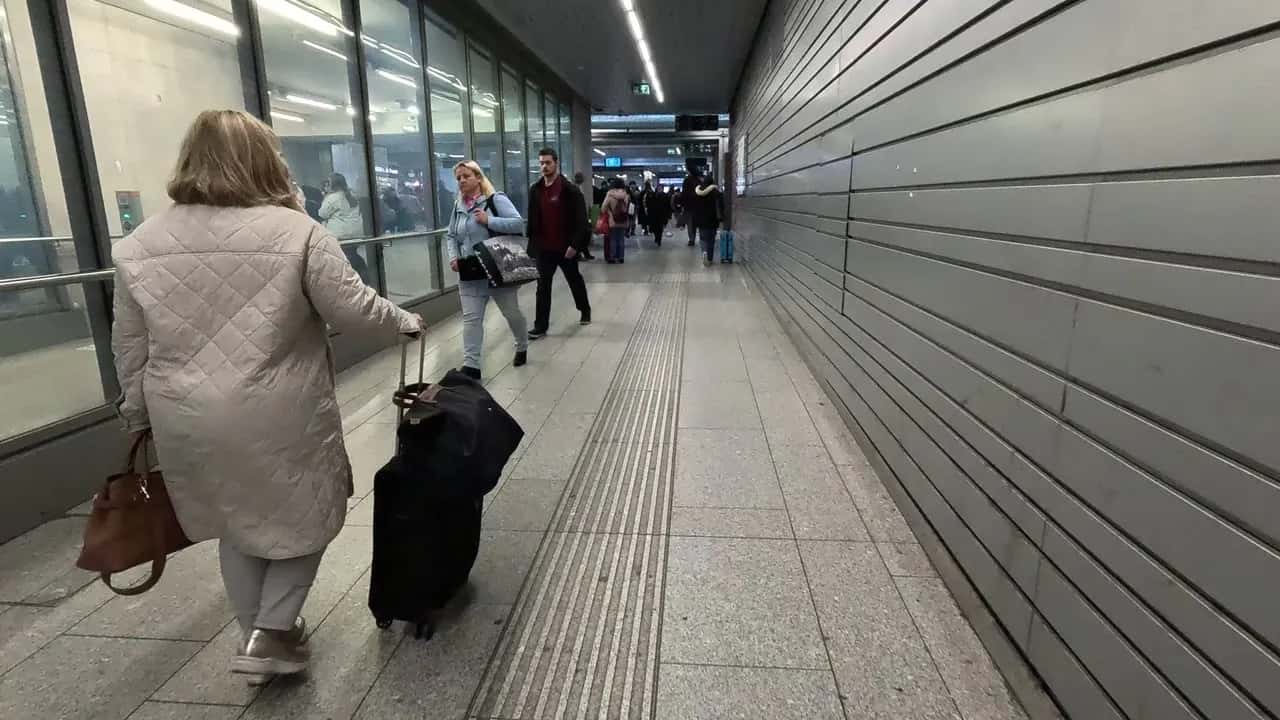
An underpass beneath the platforms leads up to the main concourse and out onto the surrounding streets. It's a short, well-signed walk, even if you've just arrived with luggage and aren't familiar with the station layout.
If you've just arrived and aren't sure where to go, check the departure boards in the concourse or ask station staff — most have some English and can point travellers in the right direction. It's worth building in a short wait between connections rather than cutting it close.
Yes, station staff and the ticket offices generally have an English option, and information desks in the concourse are a good place to check timetables or ask for travel recommendations before you continue your journey.
Kelenföld is one of the busiest stations in Hungary, served by a steady flow of passengers each day thanks to its role as a domestic terminus and a stop for international trains passing through Budapest.
Yes — the station has seen modernisation over the years to improve platform access, passenger services, and facilities for travellers, similar to renovations carried out at Budapest Keleti, though exact renovation dates aren't consistently documented.
Yes. If your route is heading toward Vienna, Munich, Zurich, or Salzburg, Kelenföld is often the terminus or key change point on the line, and staying there to connect directly can save time compared with travelling into the city centre first.
There isn't much of note directly around Kelenföld itself, but with a bit of time you can reach Gellért Hill or Buda Castle for a view over the city before heading back to catch your next train.
Budapest Kelenfold and Keleti station serve different purposes. Keleti station is the main international terminus, sitting right in the city centre, while Kelenföld's location on the western edge of Buda makes it more of a suburban interchange. If your goal is central Budapest, Keleti station is generally the better choice than stopping at Kelenföld.
The departure boards inside the station update in real time, and Hungary's national rail operator (MÁV) also runs an online timetable page where you can check departures and platforms for Budapest Kelenfold before you set off.
If you forget an item on board, head to the Lost and Found Office at the station as soon as you can. Staff can help track down belongings left on trains that terminated at or passed through Kelenföld.
Unless you're specifically changing trains or exploring nearby Buda sights, there's little reason to stay at Kelenföld for long. Most people just pass through, set down briefly for a connection, and continue on to the city centre or their next destination.
The station itself isn't staffed 24 hours a day. Ticket offices and information desks run on set hours, roughly from early morning through late evening, though platforms stay accessible throughout main rail operating hours — including through busy periods like August, when tourist numbers peak.
Yes — plenty of people pass through Budapest Kelenfold daily, both commuters using the metro and tram connections and long-distance passengers changing trains, especially during peak hours and the summer travel season.