
History and Construction
West Kowloon Station is Hong Kong's only high-speed rail station, serving as the terminus of the Express Rail Link connecting Hong Kong to mainland China. Located centrally in West Kowloon, the station is close to Kowloon Station and Austin Station, and sits near the West Kowloon Cultural District, Victoria Harbour, and Hong Kong Island beyond.
The station is a landmark piece of architecture as much as a transport hub, built as part of a wider push to reshape the city's urban realm around West Kowloon. Since opening, West Kowloon Station has become the gateway for millions of travellers moving between Hong Kong and mainland China every year.
West Kowloon Station opened on 4 September 2018, with high-speed trains beginning operations the following day on 23 September 2018. Construction was delayed from 2012 to 2015 due to a series of issues, including major flooding on 30 March 2014 that further set back the project. The final construction cost came in around 30% over the initial estimate, reflecting the scale and complexity of building a station of this size beneath a dense urban area.
The station later closed on 30 January 2020 due to COVID-19, before reopening on 15 January 2023 as cross-border travel resumed. Throughout its history, West Kowloon Station has remained Hong Kong's only high-speed rail station, underlining its unique role in the city's transport network.
Station Architecture and Design
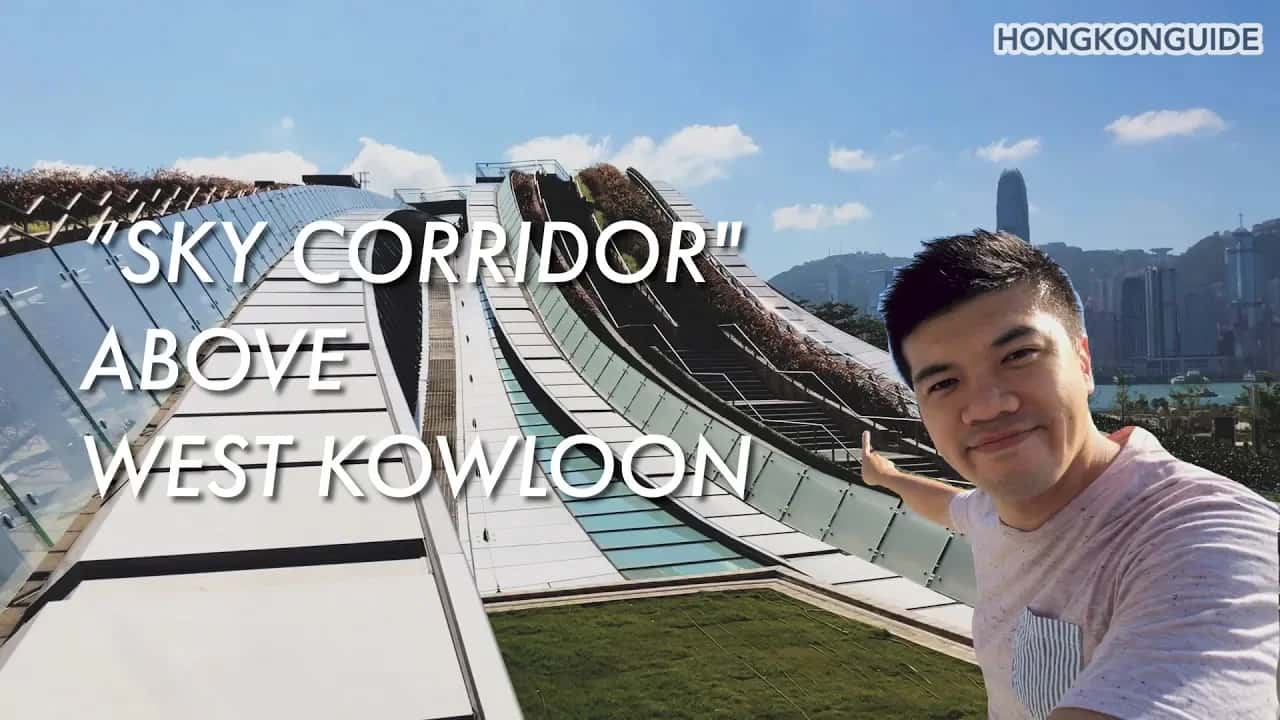
West Kowloon Station is built around a giant curtain wall and a striking curved ceiling, with a sky corridor and massive columns supporting the structure's open, light-filled interior. The design brings in natural daylight through nine sets of skylights, reducing the need for artificial lighting across much of the station's public space.
The station has fifteen tracks and multiple operational floors handling everything from ticketing to immigration to retail. A green plaza sits atop part of the structure, adding to the city's urban realm above the underground platforms, while the arrival concourse below offers a spacious, uncluttered first impression for travellers stepping off a train from the mainland.
A defining feature of West Kowloon Station is its co-location arrangement, implemented on 4 September 2018, which allows passengers to complete both Hong Kong exit and mainland China entry procedures in the same building before boarding. The Mainland Port Area, where mainland Chinese laws are enforced, spans 1,000,000 square feet within the station.
Immigration processing typically takes 30 to 45 minutes on weekdays, so passengers should arrive 90 to 120 minutes before departure to allow enough time, especially during busy travel periods. This arrangement means there's no additional immigration queue to deal with on arrival at your mainland destination, since the process is completed entirely at West Kowloon Station.
Address
West No.1, Austin Road, Mong Kok, Hong Kong, Hong Kong SAR China
Popular questions
West Kowloon Station is Hong Kong's only high-speed rail hub, offering short-haul services to Shenzhen (about 14 minutes), Guangzhou (about 1 hour), Jiangmen, and Xiamen, as well as long-distance routes to Beijing, Shanghai, Chongqing, Hangzhou, and more than 80 cities across mainland China. Overnight sleeper trains to Shanghai and Beijing have also been added.
West Kowloon Station operates a "co-location" immigration check, meaning passengers complete both Hong Kong exit and mainland China entry procedures at the station before boarding — no additional immigration queue on arrival. The process normally takes 30 to 60 minutes, so allow extra time during festive seasons and public holidays.
Take the MTR to either Kowloon Station or Austin Station, then walk to West Kowloon Station via pedestrian zones, footbridges, and underground passages. The walk takes 8 to 10 minutes from Kowloon Station and just 2 to 3 minutes from Austin Station.
No. Kowloon Station is a separate MTR station served by the Tung Chung Line and Airport Express, connected to West Kowloon Station by a pedestrian link of about 8 to 10 minutes. West Kowloon Station specifically refers to Hong Kong's high-speed rail terminus.
"Hong Kong West Kowloon Station" is the station's full official name, and "Kong West Kowloon Station" is simply a shortened or mistyped version of the same phrase used in casual searches. Both refer to the same high-speed rail terminus in West Kowloon.
West Kowloon Station has fifteen tracks, supporting a large volume of daily high-speed rail services to destinations across mainland China.
Numerous bus routes service the area surrounding West Kowloon Station, giving travellers additional options beyond the MTR for reaching the station from various parts of Kowloon and Hong Kong Island.
West Kowloon Station functions as a full rail station and immigration facility combined, integrating high-speed rail platforms, a Mainland Port Area, ticketing, retail, and dining all within one building — considerably more complex than a typical rail station.
West Kowloon Station opens at 6 AM daily for ticket purchases, and the last train of the day arrives before midnight, giving travellers a wide window to plan their journey.
Yes, West Kowloon Station sits close to the West Kowloon Cultural District, making it a convenient starting point for visitors combining a high-speed rail journey with a visit to the district's museums, performance venues, and public spaces along Victoria Harbour.
Any Hong Kong resident can use West Kowloon Station just as easily as a visitor from overseas — it's the only station in the city offering this kind of high-speed rail access, and every Hong Kong resident travelling to the mainland passes through the same Mainland Port Area regardless of nationality. Many Hong Kong residents use the station regularly for business trips, and for a Hong Kong resident living nearby, it's often the fastest way to reach cities across the country.
West Kowloon Station is not directly connected to Hung Hom Station, though both serve as major rail hubs in Kowloon. Travellers coming from Hung Hom Station would typically transfer via the MTR network to Kowloon Station or Austin Station before making the short walk to West Kowloon Station.
The station's giant curtain wall and structural design have occasionally drawn comparisons to famous engineering landmarks like the Eiffel Tower, thanks to the exposed structural elements and scale of the building, though West Kowloon Station's architecture reflects a distinctly modern, Hong Kong take on that kind of large-span design rather than directly echoing the Eiffel Tower itself.
West Kowloon Station offers full service dining and retail options across its concourse, including convenience stores and sit-down restaurants, rather than only basic facilities. This full service approach means travellers can eat a proper meal or pick up essentials without leaving the station before their train.
From Tsim Sha Tsui, the walk or a short MTR ride to Kowloon Station or Austin Station is generally the quickest route, followed by the pedestrian link into West Kowloon Station. From Tsuen Wan, travellers typically take the MTR toward Kowloon Station or Austin Station first, since there's no direct route from Tsuen Wan straight into West Kowloon Station.
West Kowloon Station sits generally to the south of Kowloon Station, connected by pedestrian links running north to south between the two buildings. The station is well equipped with step-free access, elevators, and barrier-free routes throughout, ensuring smooth access for all types of travellers.
Yes, passengers can transfer between MTR lines and West Kowloon Station's high-speed rail platforms via the connected pedestrian network, all within the same general site as Kowloon Station and Austin Station. This makes it possible to plan a trip that includes both local MTR connections and cross-border rail travel without leaving the immediate area.
West Kowloon Station was built to create direct high-speed rail connections between Hong Kong and destinations across the country, positioning the city within a much larger national network. This has helped create new travel patterns for residents and visitors alike, cutting hours off journeys that once required multiple transfers.
West Kowloon Station's design incorporates natural daylight to reduce energy use across much of its public space, and its footprint is substantial given the number of platforms, concourses, and the Mainland Port Area contained within a single site. Despite this large footprint, the station's layout is generally regarded as one of the more world-class high-speed rail terminals in the region, and it's often cited as an example of energy-conscious design applied at a national, world-facing scale.
Travellers approaching from Tsim Sha Tsui will find north-south pedestrian access reasonably well equipped with signage the whole way to West Kowloon Station, and the station remains the only station in the area offering this kind of seamless cross-border access. A food court and several casual dining options sit near the main concourse, giving travellers a place to eat before continuing their trip. These connections — MTR, pedestrian links, and the high-speed rail platforms — all create a smooth trip for travellers heading north or south through the station, and few other transport hubs create this level of connections in one site. As the only station of its kind in Hong Kong, it's little surprise the court outside the main entrance and the world-class design inside continue to draw attention from architecture fans as well as everyday travellers.
West Kowloon Station offers high-speed rail services to Shenzhen, Guangzhou, and destinations as far as Beijing, with the network expected to connect to over 70 stations across mainland China by 2026. Major cities accessible from the station include Guangzhou, Shenzhen, and Beijing, alongside dozens of other cities on short and long-haul routes.
Tickets can be purchased at ticketing counters and automated ticket machines inside the station, or booked online in advance through designated platforms — often the better option, since online booking can offer discounts and save time compared to buying on the day. The station opens at 6 AM daily for ticket purchases, and the last train of the day arrives before midnight.
West Kowloon Station is connected to both Kowloon Station and Austin Station via pedestrian links, footbridges, and underground passages, making it easy to reach by MTR. Kowloon Station is served by the Tung Chung Line and Airport Express, while Austin Station sits on the Tuen Ma Line, giving travellers several route options depending on where they're coming from.
The station also sits near Lin Cheung Road and Austin Road West, with a dedicated drop-off area for taxis and private vehicles. Numerous bus routes service the area surrounding the station, offering additional options for travellers not using the MTR.
West Kowloon Station features various retail and dining options, including convenience stores and restaurants, spread across the station's multiple floors. Free Wi-Fi is available throughout the building, and accessibility features include over 60 elevators along with a barrier-free design, ensuring the station remains manageable for travellers with reduced mobility, heavy luggage, or families in tow.