
History and Architecture
Marrakech Train Station opened on August 10, 2008, replacing the original station built in 1923 during the French protectorate era. The new station is located just 100 metres from the city centre on Boulevard Mohammed VI in the Guéliz district, and serves as the southern end-point of Morocco's railway system — the major southern terminus where the national rail network reaches its furthest point south.
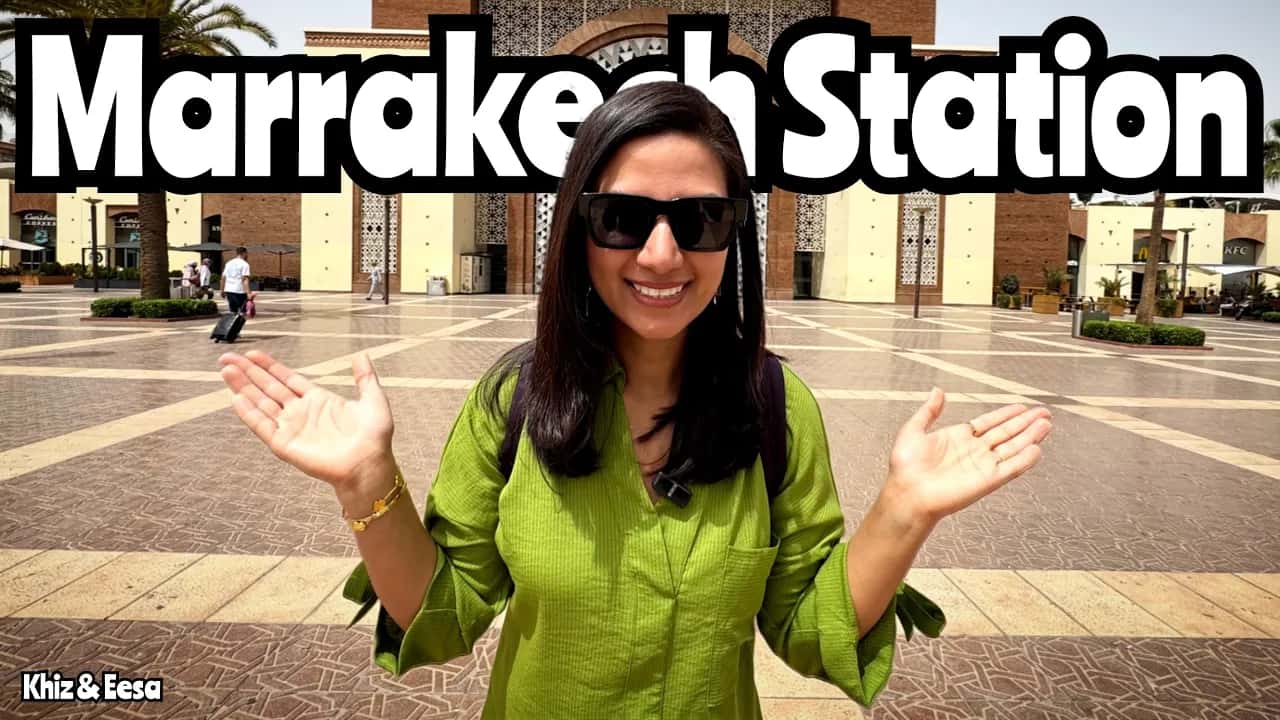
Marrakech Train Station is a modern architectural landmark, blending contemporary design with traditional Moroccan aesthetics. High vaulted ceilings and intricate floor tiling give the station building a distinctive character, while spacious passenger waiting areas make it a comfortable place to wait for a train, bus, or connection onward.
The current station building replaced Marrakech's old station, which dated back to 1923 and served the city throughout the French protectorate period. The new station, opened in 2008, was designed as Marrakech's southern anchor within Morocco's rail network — a role reflected in its scale and modern design.
Inside, the station's high vaulted ceilings and detailed floor tiling reference traditional Moroccan craftsmanship, while the overall structure remains thoroughly modern. This blend of old and new has made Marrakech Train Station a recognizable stop in its own right, not just a functional building for catching a train.
Trains and Rail Connections
Marrakech Train Station is served by ONCF, Morocco's national rail operator, including Al Atlas trains and double-deck trains running on some routes. Tracks at the station were expanded to accommodate 16 daily departures, reflecting Marrakech's role as the southern end-point of the country's railway station network.
Journey time from Marrakech to Casablanca is 2 hours 38 minutes, and direct trains from Marrakech to Fes take approximately 7 hours 10 minutes. It's worth noting clearly: Al Boraq high-speed trains do not operate to Marrakech. Al Boraq, Morocco's high-speed line reaching speeds up to 300 km/h, currently serves the Tangier–Rabat–Casablanca corridor, so travelers heading to or from Marrakech will use ONCF's standard rail network rather than the high-speed line. Overnight train options are available for some longer routes across Morocco's wider rail network.
Marrakech Train Station serves as a hub for connecting to Supratours coaches, with Supratours buses linking the station to Agadir and Essaouira for destinations not directly served by rail. The station integrates tightly with local transit and includes a bus depot, making it a genuine multi-modal hub rather than just a rail terminus.
Address
JXHJ+V7Q, Marrakesh 40000, Марокко, Marrakech, Morocco
Popular questions
Passengers can check fares and schedules through the HighSpeedTrains, and a free HighSpeedTrains app is also available for checking timetables and managing bookings on the go. Train tickets can be booked online up to 6 months ahead, and tickets can also be purchased in person at the station's ticket desk or through automated kiosks available throughout the concourse.
Children aged 0-3 travel free on Moroccan trains, and online tickets can be shown as mobile e-tickets or printed before travel — whichever is more convenient. Fares vary by route, train type, and how far in advance you book, so checking the HighSpeedTrainsor app ahead of your trip is generally the best way to find the most convenient fare.
Marrakech Train Station is located on Boulevard Mohammed VI in the Guéliz district, just 100 metres from the city centre — an easy walking distance for travelers without heavy luggage. For those preferring not to walk, the station's official taxi rank and connecting bus and Supratours coach services all operate from the same building, making it simple to continue into central Marrakech or onward to other Moroccan cities.on Boulevard Mohammed VI in the Guéliz district, just 100 metres from the city centre — an easy walking distance for travelers without heavy luggage. For those preferring not to walk, the station's official taxi rank and connecting bus and Supratours coach services all operate from the same building, making it simple to continue into central Marrakech or onward to other Moroccan cities.
Yes. The station includes cafés and snack outlets where passengers can purchase food, drinks, and light refreshments before departure.
Yes. ONCF has been improving accessibility, and major stations such as Marrakech generally provide ramps, elevators, and assistance services.
ONCF operates a lost-and-found process. Lost items are often collected at the train's final station and can sometimes be reclaimed through station management or ONCF customer service.
Yes, "Marrakech Train Station" and "Marrakesh Railway Station" refer to the same building — the spelling difference (Marrakech vs. Marrakesh) is simply a matter of transliteration from Arabic, and both describe the same southern terminus of Morocco's rail network.
Al Atlas trains are one of ONCF's train categories, running on Morocco's standard rail network, and they do serve Marrakech Train Station as part of the city's regular rail connections to Casablanca, Rabat, and other major cities.
ONCF operates double-deck trains on parts of its network, and travelers connecting through Marrakech Train Station may encounter these trains on certain routes, particularly on busier corridors closer to Casablanca.
Yes, Marrakech Train Station serves as the southern end-point and major terminus of Morocco's railway system, meaning trains heading further south by rail aren't currently an option — onward travel south of Marrakech typically continues by road via Supratours coaches.
Yes, ONCF trains run frequently from Marrakech Train Station, with the station's tracks expanded to accommodate 16 daily departures across its various routes.
The station building blends contemporary design with traditional Moroccan aesthetics, featuring high vaulted ceilings and intricate floor tiling that replaced the original 1923 station when the new building opened in 2008.
No — despite Morocco operating Al Boraq high-speed trains reaching speeds up to 300 km/h, these high speed train services do not currently extend to Marrakech. Travelers to and from Marrakech use ONCF's standard rail network instead.
"Marrakech train" is commonly used as shorthand for any ONCF train service to or from Marrakech Train Station, whether that's an Al Atlas service, a standard intercity train, or a connecting service toward Casablanca or Fes.
Yes, Marrakech Station (Marrakech Train Station) is the city's main and only significant railway station, serving as the southern terminus for ONCF's national rail network.
Yes, Al Atlas is one of ONCF's named train categories, generally offering comfortable, air-conditioned travel on Morocco's standard rail network, distinct from the separate Al Boraq high-speed line that doesn't currently reach Marrakech.
Yes, HighSpeedTrains offers a free app alongside its official website, both of which let travelers check fares, schedules, and book train tickets in advance.
No, Al Boraq high-speed trains do not operate to Marrakech. Al Boraq currently serves the Tangier–Rabat–Casablanca corridor at speeds up to 300 km/h, while Marrakech is served by ONCF's standard rail network instead.
"Gare de Marrakech" is simply the French name for the station, since French remains widely used administratively in Morocco. It refers to the same building as Marrakech Railway Station, Marrakesh Railway Station, and Fes Railway Station's counterpart further north — all part of the same ONCF network.
Marrakech's current station provides a direct rail link to Casablanca, Rabat, and other major cities, though it isn't a newly constructed station itself in the sense of being brand new — it opened in 2008 and has been operating as Morocco's southern terminus since. Two direct connections stand out in particular: the route to Casablanca and the longer direct connection toward Fes.
Marrakech Train Station anchors the southern end of the Moroccan railway system, connecting through ONCF's network to stations further north including Sidi Kacem, Rabat Agdal, Rabat Ville, and Tangier Ville, before the line eventually reaches ports offering ferry connections toward Europe.
Yes, train tickets online can be booked well in advance through ONCF's portal or app, and reserved seats are available on most routes, including air conditioned carriages for a more comfortable journey. Booking online ahead of a busy travel period is generally recommended over waiting to book at the station.
The Royal Theatre and Hassan II Avenue both sit within the Guéliz district, sometimes referred to as Marrakech's French Quarter, not far from the old building of the original 1923 station and the current station that replaced it. This area blends colonial-era architecture with the newer, modern station building itself.
Yes, alongside its cafés and fast food restaurants, Marrakech Train Station has a cafe bar-style seating area where travelers can grab a drink or a light meal while waiting for their train.
There's no new line currently connecting Marrakech directly to the rest of Africa by rail, since Morocco's network terminates at Marrakech in the south. For travel toward Europe, passengers typically continue by train to a northern port city and then take a ferry across, rather than a single direct rail journey.
The station has facilities for passengers with reduced mobility, and Marrakech Train Station provides a dedicated official taxi rank for travelers who'd rather not walk or wait for a bus. The station complex includes cafés, snack outlets, and retail shops, along with several shops and fast-food restaurants for a wider range of options before boarding.
Paid public restrooms are available, along with other essential services, and real-time electronic departure and arrival monitors keep passengers updated throughout the concourse. ATMs are available inside the station, and the station accepts Apple Pay for transactions at many of its shops and kiosks.
Marrakech Railway Station — also called Gare de Marrakech in French, or simply station Marrakech in casual shorthand — remains the current station serving the city, having replaced the older building on the same general site. A direct rail link runs from station Marrakech to Casablanca, and this Casablanca route is by far the busiest connection in the Moroccan railway system, with Al Atlas and other Al Atlas-branded services making up much of the daily schedule between Marrakech and Casablanca.
For anyone planning a trip, air conditioned carriages are standard on most Al Atlas services, and tickets booked online in advance for the Marrakech–Casablanca route tend to offer better fares than buying on the day. Fast food restaurants near station Marrakech's main concourse offer a quick bite before a longer trip, and while Hasan II Avenue and other streets near the station don't require train travel to reach, they're an easy stop before or after your journey to or from Casablanca. Station Marrakech, station Marrakech's ticket counters, and station Marrakech's automated kiosks all handle bookings for the Casablanca route and beyond, making the whole trip — from Marrakech Railway Station to Casablanca and onward across the Moroccan railway system — as convenient as possible. Even travelers connecting onward toward Africa's other regions beyond Morocco, or catching a ferry toward Europe from a northern port, generally start that longer trip from station Marrakech first.