
Station Layout and Design
Berlin Hauptbahnhof station has two platform levels and three business levels, making it one of the more complex stations to navigate in Germany. The upper platform level sits 10 metres high with six tracks served by three island platforms, while the lower platform level runs 15 metres deep with eight tracks served by four island platforms. Platforms 1–8 are known as Berlin Hbf (tief), meaning "deep," reflecting their position below ground level.
From the main entrance, travelers can reach the main concourse on the ground floor before heading up or down to their platform level. The station's north side connects to additional street-level access points, while the business levels above house shops, offices, and services away from the platforms themselves.
Around 486,000 train stops occur annually at Berlin Hauptbahnhof, supporting long distance trains, regional trains, and intercity trains alongside Germany's high-speed ICE network — a scale of operation that explains why the station needed such a multi-level design in the first place.
History and Architecture
Berlin Hauptbahnhof — also known as Berlin Central Station or simply Berlin Hbf — is one of the largest transit hubs in Europe, handling around 1,800 trains daily and serving roughly 350,000 passengers each day. The station connects domestic and international destinations, integrating high-speed ICE trains with local transit services including the U-Bahn, S-Bahn, tram, and bus networks.
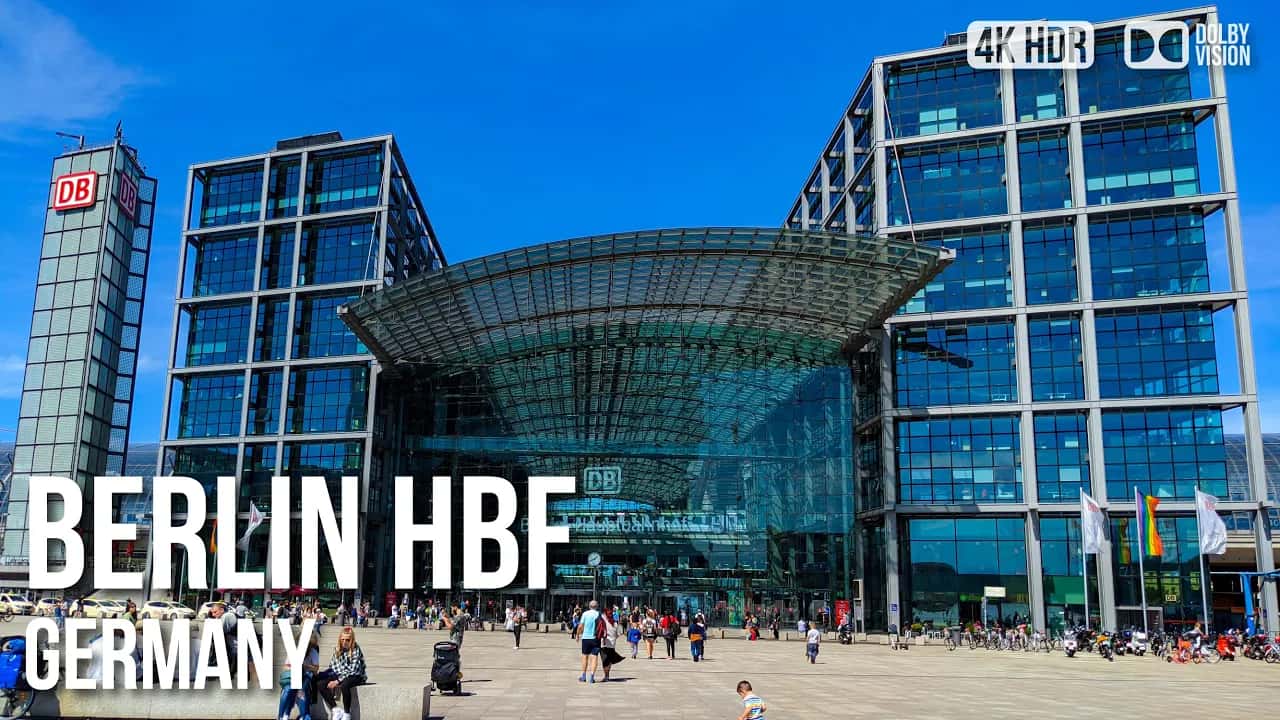
Berlin Hauptbahnhof opened on 28 May 2006 after eleven years of construction, replacing the site's earlier Lehrter Bahnhof, which had opened back in 1871. The station was designed by the Hamburg architectural firm Gerkan, Marg and Partners, led by architect Meinhard von Gerkan, and features a striking 321-metre-long glass roof structure that has become one of Berlin's most recognizable modern landmarks. Deutsche Bahn, Germany's national rail operator, oversaw the construction of the current station.
Berlin Hauptbahnhof is located near the former route of the Berlin Wall, adding historical weight to its position in the heart of a reunified city. The building's five primary tiers and glass-and-steel construction reflect a deliberately modern design, standing in contrast to many of Germany's older, more traditional important train stations.
Address
Hauptbahnhof, Europaplatz 1, Berlin, Germany
Popular questions
The Airport Express (FEX) and various regional train lines provide direct routes from Berlin Hauptbahnhof to Brandenburg Airport, typically taking under 30 minutes.
Luggage lockers are available at Berlin Hauptbahnhof, but for security reasons they are located in the car park outside the main building — walk to the first, second, or third floor of Area C. Note that the lockers only accept 1 and 2 euro coins.
Yes, Berlin Hauptbahnhof is simply the German name for Berlin Central Station. "Hauptbahnhof" translates directly to "main station" or "central station," and both terms refer to the same building.
Unlike many single-level central stations, Berlin Hauptbahnhof spans two platform levels and three business levels, combining a below-ground deep level with an elevated upper platform level, all connected by a distinctive glass roof structure spanning 321 metres.
Yes, Central Station Berlin (Berlin Hauptbahnhof) is directly connected to Berlin Brandenburg Airport via the Airport Express, with journeys taking around 30 minutes.
Berlin Hauptbahnhof station includes far more than just platforms — multi-level shopping arcades, office spaces, a supermarket, dining options, customer service centers, and a DB Lounge are all part of the same building, spread across its five primary tiers.
Berlin Ostbahnhof is a separate station from Berlin Hauptbahnhof, though both are part of the same Berlin rail network and connected via regional trains, S-Bahn services, and other public transport links across the city.
Berlin Gesundbrunnen is another of Berlin's important train stations, distinct from Berlin Hauptbahnhof but connected to it through the city's S-Bahn and regional rail network, making it easy to transfer between the two if your journey requires it.
Berlin Hauptbahnhof is considered one of the important train stations in Europe due to its scale — handling 1,800 trains daily and around 486,000 train stops annually — as well as its role integrating high-speed ICE services with local U-Bahn, S-Bahn, tram, and bus connections in one building.
U-Bahn line U5 connects Hauptbahnhof to Alexanderplatz, and S-Bahn lines S3, S5, S7, and S9 all stop at the station, giving travelers fast connections across the rest of Berlin. Beyond Hauptbahnhof itself, Berlin's rail network includes several other important train stations, including Berlin Ostbahnhof, Berlin Gesundbrunnen, Berlin Südkreuz, Berlin Spandau, and Berlin Charlottenburg, each serving different parts of the city.
Berlin Hauptbahnhof includes multi-level shopping arcades and office spaces spread across its business levels, along with numerous dining options ranging from fast-food outlets to cafes. A large REWE supermarket is located on level -1, giving travelers an easy option for groceries or snacks before boarding. The station has two customer service centers open 24/7, along with a DB Travel Center and DB information desks for booking assistance and general enquiries. Business and first-class travelers can also make use of a DB Lounge for a quieter space to wait. Automated luggage lockers are available on-site, with left luggage lockers located on level +1, alongside a staffed left luggage office also on level +1. Free Wi-Fi is available for the first 30 minutes of use, and accessibility features include wheelchair-friendly lifts and mobility support staff.
Berlin Hauptbahnhof sits close to some of the city's best-known landmarks. The Reichstag building is just a 10-minute walk from the station, while Brandenburg Gate and the surrounding government district are about 15 minutes away on foot. The Spree river runs alongside the station, with riverside paths leading to Haus der Kulturen der Welt for those who want a scenic walk. Culture and history fans can also visit Hamburger Bahnhof, a major museum near the station housed in a former railway building, or the Naturkundemuseum, which features a unique dinosaur skeleton among its exhibits.
Brandenburg Gate is about a 15-minute walk from Berlin Hauptbahnhof, making it an easy on-foot destination for travelers with some time before or after their train.
Deutsche Bahn operates the majority of long-distance and regional services at Berlin Hauptbahnhof, including the high-speed ICE network, though local U-Bahn, S-Bahn, tram, and bus services are run by Berlin's separate public transport operators.
"Berlin Hbf" is simply the common abbreviation for Berlin Hauptbahnhof, used on timetables, signage, and tickets throughout Germany's rail network. Both refer to the exact same station.
Yes, Berlin Hauptbahnhof sits close to Berlin's government district, with the Reichstag building just a 10-minute walk away and Brandenburg Gate roughly 15 minutes away, making the station a convenient starting point for visiting this part of the city.
Yes, a DB Lounge is available at Berlin Hauptbahnhof for eligible business and first-class travelers, offering a quieter space to wait away from the busy main concourse.
DB information desks are located at Berlin Hauptbahnhof alongside the DB Travel Center, where staff can help with ticketing, schedules, and general enquiries about Deutsche Bahn services departing from the station.
Yes, Berlin Central Station functions as Berlin's main railway station and main train station, though the city is also served by other stations such as Berlin Alexanderplatz, Berlin Spandau, and Berlin Südkreuz. Berlin Central Station remains the largest and most connected of these, sitting at a central point between west Berlin and central Berlin, near where the former West Berlin and East Berlin divide once ran.
Berlin Central Station is considered one of the most modern central station designs in Germany, with a five-tier layout that goes well beyond a typical central station. While many German cities have a single central station serving one core function, Berlin Central Station integrates long-distance, regional, S-Bahn, and U-Bahn services within one central station building.
Berlin Hauptbahnhof station is served by S-Bahn trains including lines S3, S5, S7, and S9, alongside U-Bahn line U5, plus long distance trains, intercity trains, and regional trains on the main and lower levels. Trams and buses also connect to the station at street level, rounding out Berlin Hauptbahnhof station's role as a full public transport interchange.
Yes, a train journey or rail journey from Berlin Hauptbahnhof can reach major cities such as Hamburg and Amsterdam directly, alongside domestic destinations across Germany. Rail traffic through the station includes both long-distance trains and regional trains, giving travelers a wide range of onward connections for a longer train journey or a shorter rail journey within Germany.
Yes, a car park is available at Berlin Hauptbahnhof, and for security reasons the station's luggage lockers are located within this car park structure — specifically in Area C — rather than inside the main station building itself.
Yes, the Spree river runs alongside Berlin Hauptbahnhof, with riverside paths connecting the station to nearby attractions such as Haus der Kulturen der Welt on the north side of the building.
The main entrance to Berlin Hauptbahnhof leads directly into the main building at ground floor and street level, with clear signage guiding travelers up or down to the correct platform level from there.
Berlin Hauptbahnhof station has platforms split across two levels, generally oriented so that trains heading north and south use the upper level, while east-west long-distance and regional services typically use the lower, underground level of the station.
Yes, a map of Berlin Hauptbahnhof, along with contact details and ticket information, is available online through Deutsche Bahn's official website. Booking a ticket online in advance is generally recommended, and the same online resources also cover the bahn line schedules for S-Bahn and regional transport connecting to the station.
Yes, free Wi-Fi is available for the first 30 minutes at Berlin Hauptbahnhof, and the station connects to Berlin's metro-style U-Bahn network as well as the S-Bahn, tram, and bus lines, making it easy to continue your journey across the city without needing a separate ticket for each mode of transport.
Berlin Hbf is served by several S Bahn lines, and these S Bahn trains connect the main station to destinations north, south, east, and west across the city, alongside further S Bahn trains reaching suburbs beyond central Berlin. Trains heading north from Berlin Hbf serve different regions than trains heading south, while services running east tend to connect to different regional networks than those heading west — together, trains in every direction help make Berlin Hbf, sometimes still referred to informally as Berlin Central Station, one of the most connected main station hubs in the country. Even more S Bahn options exist for travelers heading further south toward destinations beyond the immediate city limits, and additional S Bahn timetables covering weekend and holiday S Bahn schedules are posted throughout the station, alongside standard S Bahn maps at every platform entrance.
Underground, the lower platform level adds another layer to this network, with additional underground connections available via the U-Bahn beneath Berlin Hbf. A map of the full network, including public transport options heading north, south, east, and west, is available through Deutsche Bahn, and checking that map alongside your ticket details before travelling can help you find the fastest route, whether you're headed toward Hamburg, Amsterdam, or elsewhere via Berlin Hbf's extensive transport connections.